A battlecard nobody owns
It was true when it was written. Two quarters later nobody knows whether it still is, because nothing on it says who checks and when.
What we say about a competitor, and which calls actually mentioned them.
Profiles keep company, stack, pricing, feature, messaging and evidence research, verified source by source with an owner and a review date. A battlecard covers one competitor and one use case, and takes a position: compete, complement or decline. The explorer turns a mention count back into the recorded conversations behind it.
What goes wrong when this work lives in spreadsheets, documents and one person's memory.
It was true when it was written. Two quarters later nobody knows whether it still is, because nothing on it says who checks and when.
It gets reviewed by nobody, because reviewing it means checking three arguments at once. One competitor, one use case.
A tally of who came up on calls is not evidence that we win. The page labels what we wrote and what we observed, and never adds them together.
In the app
Captures of Growth-OS itself, rendered with sample data rather than our own records.
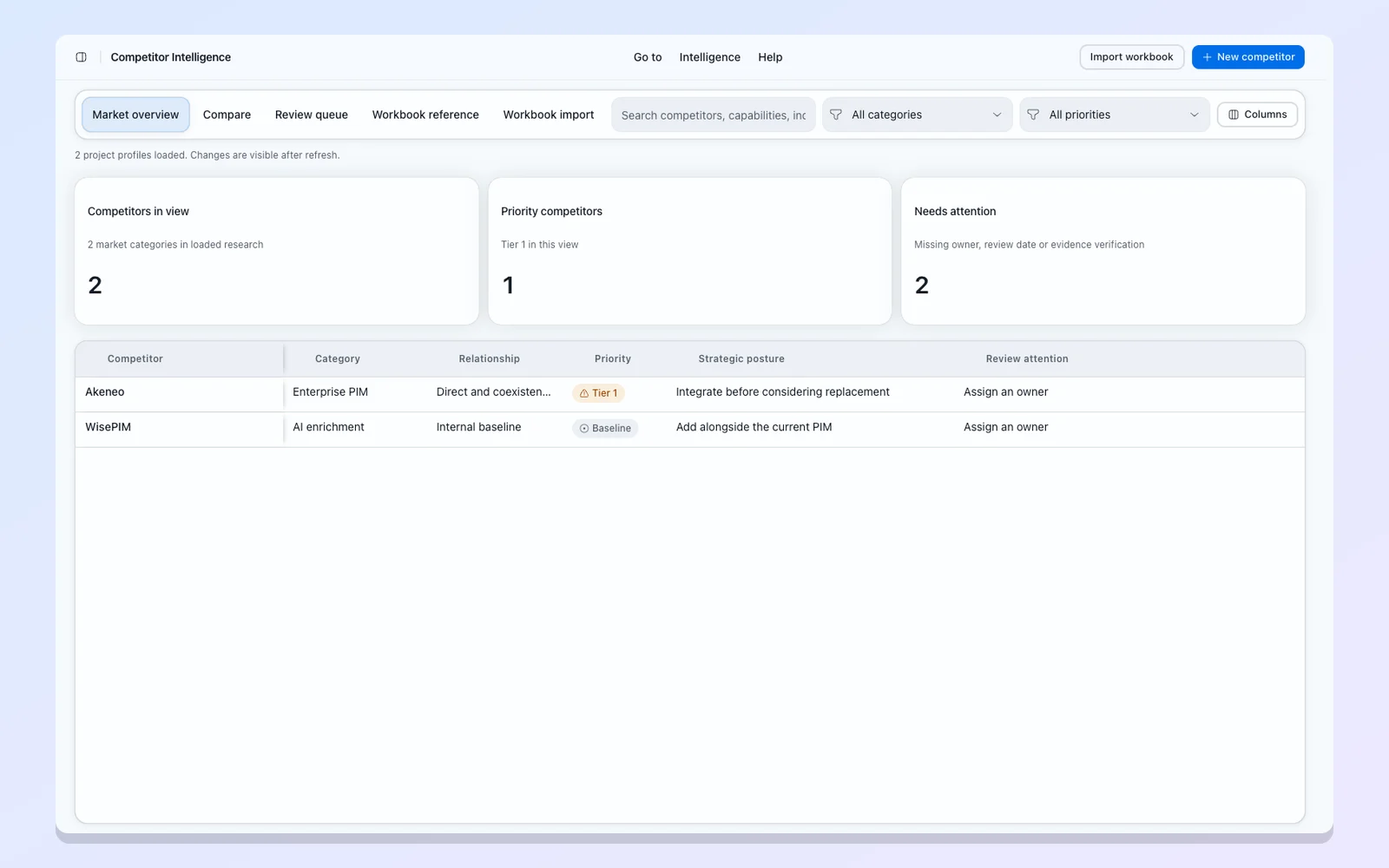
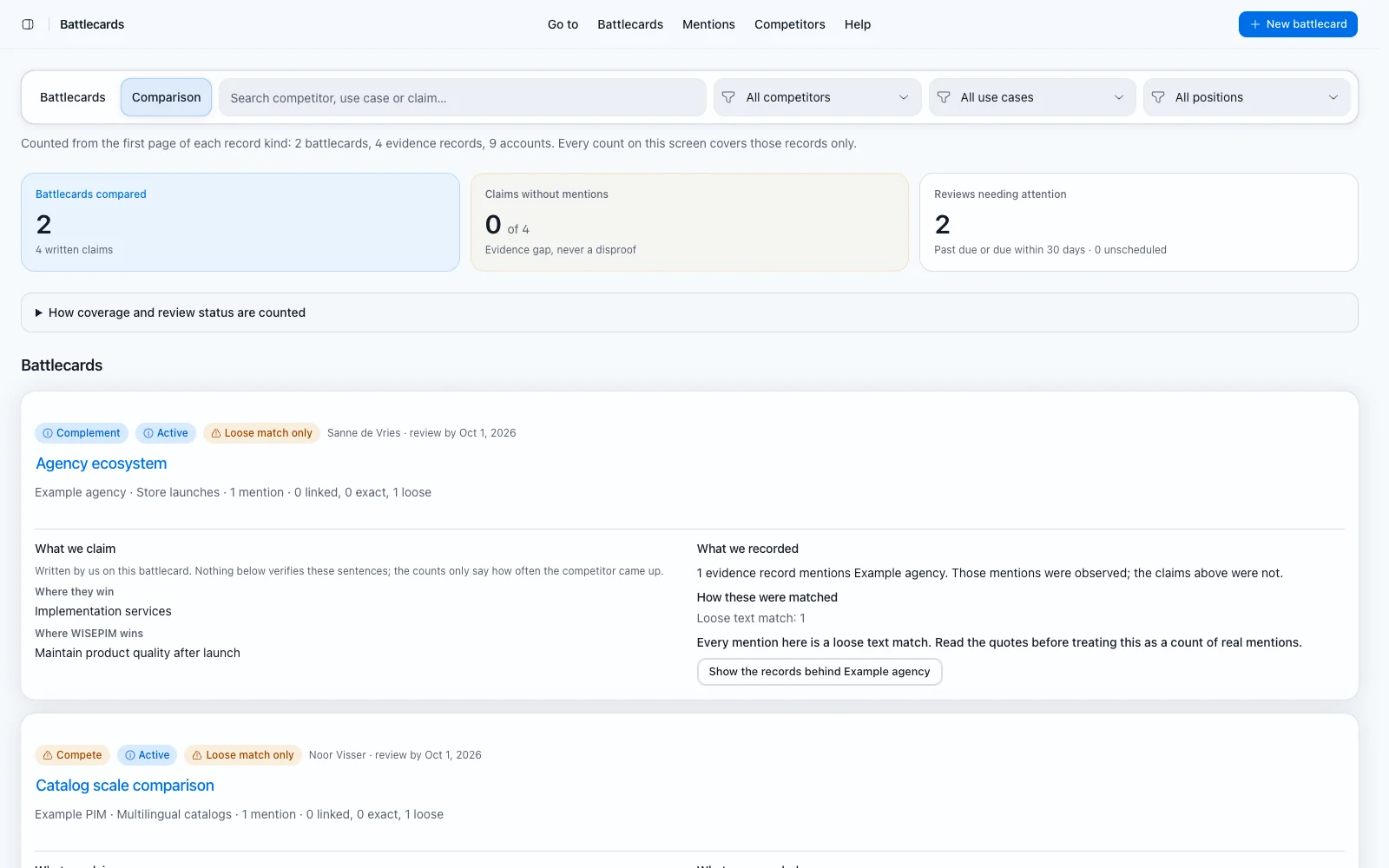
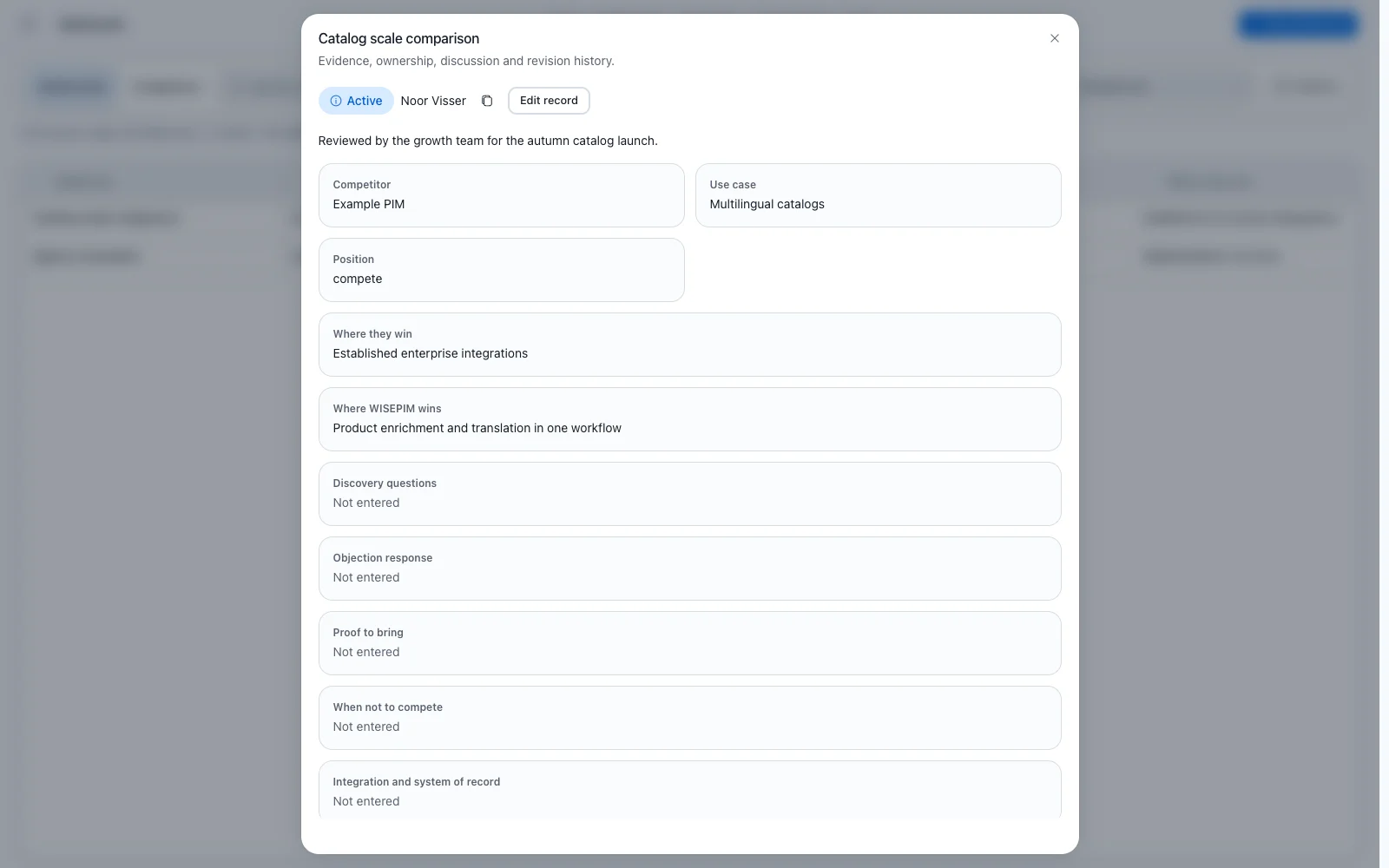
From an empty record to something you can act on, in the order you do it.
Load or write the profile
A new project receives the bundled research edition. You can import a workbook up to ten megabytes, or write the profile by hand.
Review it source by source
Set verification per source, assign an owner, and schedule the next review date.
Write the battlecard
One competitor, one use case, a position, an owner and a review date. Spell the competitor the way people actually say it.
Check the claim against the calls
Open the explorer, filter to one competitor, read the mention count, expand it, and open the evidence record behind the quote.
Highlights
What we wrote about a competitor and what a customer actually said are two different columns, and nothing blends them into one number.
Expand a mention count to see the match basis, the claim type, the retained quote, and the account's platform and CRM stage.
Import a workbook and every row keeps its sheet, its row number, its source values and its dates. Imports start unreviewed, and reimporting never overwrites a saved profile.
Honest limits
Where they win and where we win are our own sentences. Nothing in Growth-OS verifies them.
Name matching is a heuristic with three bases, and the loose text match is badged as a caution. Absence of mentions is a gap in what we recorded, not evidence against the claim.
These pages share records with this one, so what you write here shows up there.
The page opens on this project's records. The in-app guide describes every field.