The same company fact in four places
Platform in a spreadsheet, catalog size in a Notion page, stage in one person's head. Three months later they disagree and nobody knows which one to believe.
One record per company, read by four other pages.
Companies holds the eight fields we actually use about an account: domain, ecommerce platform, catalog size, languages, CRM stage, pain points, the Attio record id and whether it is excluded from campaigns. CRM turns the same records into a pipeline board or a table without losing your filters. People is the read-only directory of who works there.
What goes wrong when this work lives in spreadsheets, documents and one person's memory.
Platform in a spreadsheet, catalog size in a Notion page, stage in one person's head. Three months later they disagree and nobody knows which one to believe.
Unknown is not a failure. Here it leaves the denominator instead of quietly counting against the account.
Unknown is not consent. An account whose campaign exclusion has not been answered stays out of every audience until somebody answers it.
In the app
Captures of Growth-OS itself, rendered with sample data rather than our own records.
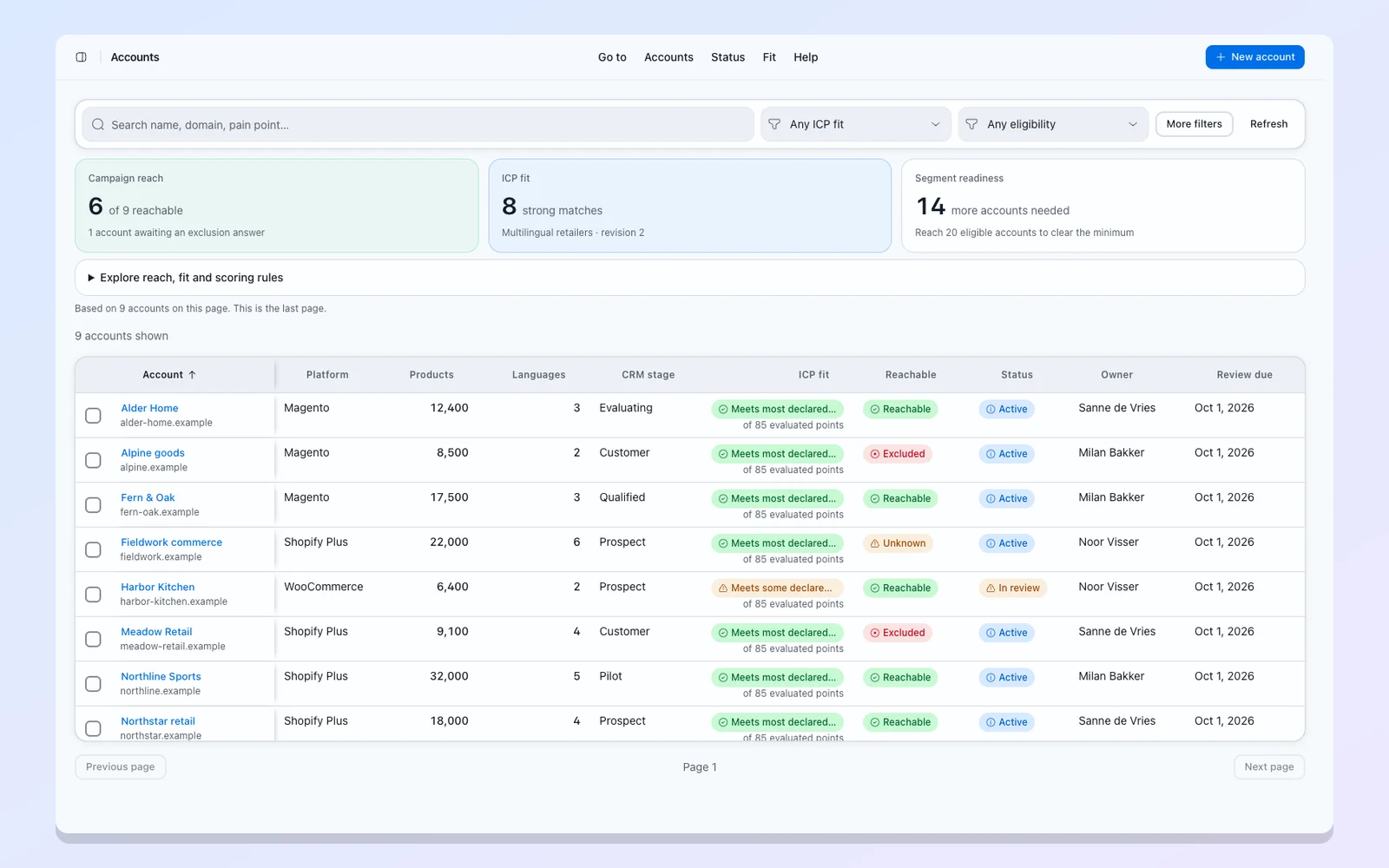
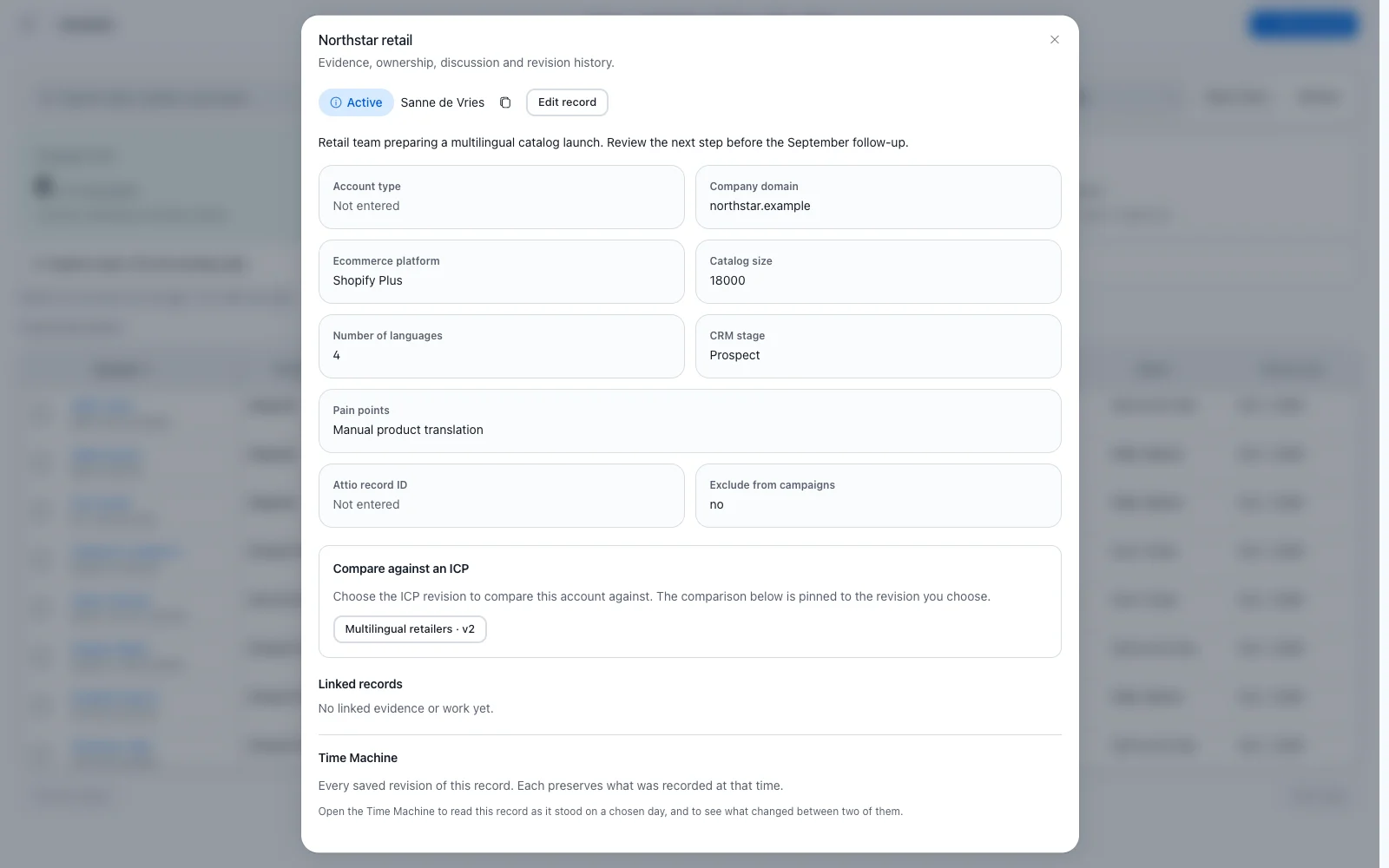
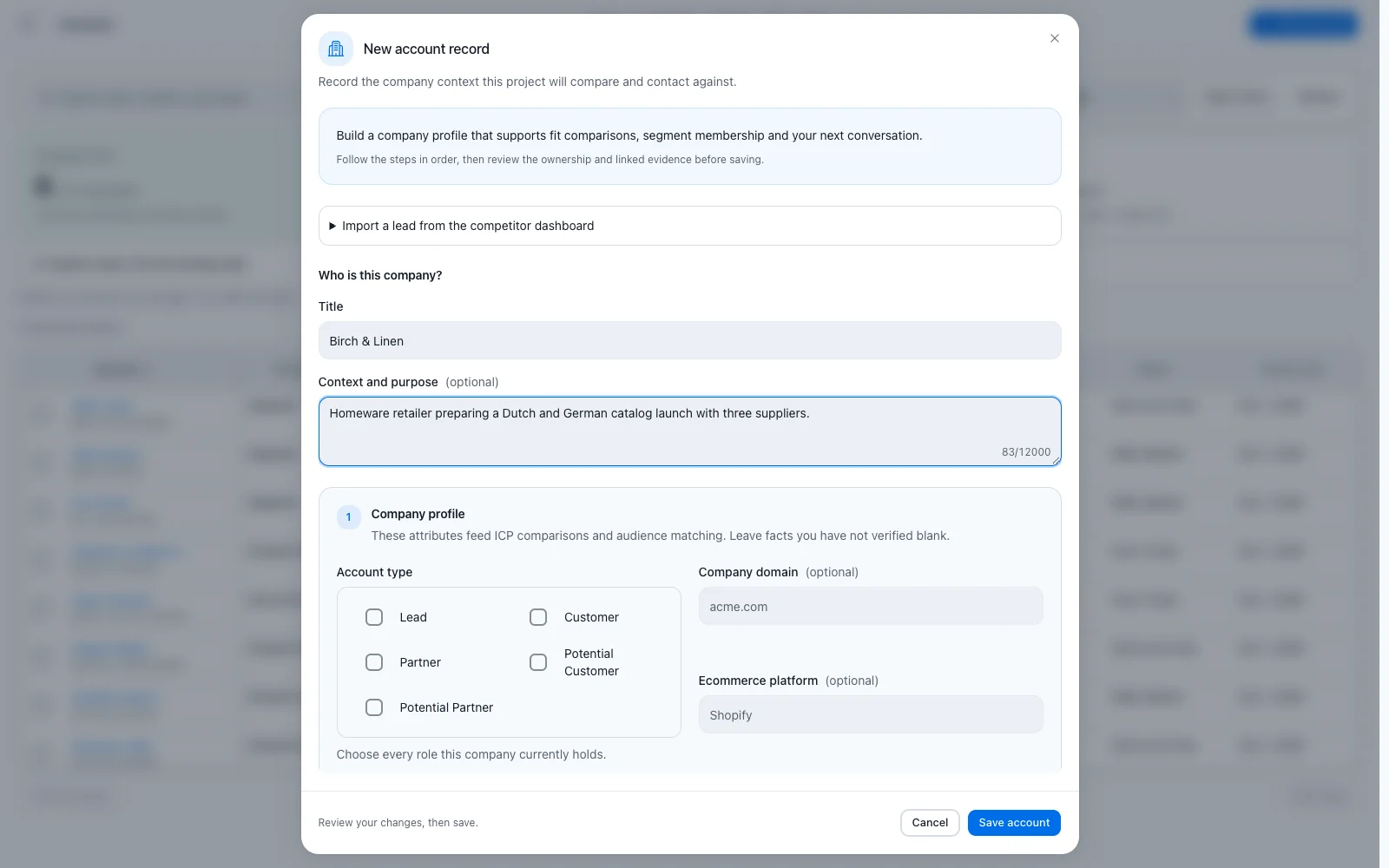
From an empty record to something you can act on, in the order you do it.
Create the company
The title and the campaign exclusion answer, the two things nothing else can derive.
Type the three technographic inputs
Ecommerce platform, catalog size and number of languages, as the account states them rather than as we guess them.
Work the pipeline
Move the stage on the board or in the table, write the pain points, and attach notes, tasks and follow-ups with a due date.
Compare against an ICP
Open the record, pick an ICP revision, and read the criterion by criterion decomposition instead of a single number.
Highlights
Leads ranks against those fields, Battlecards tallies platform and CRM stage, Events resolves attendee names against titles and domains. Nobody re-asks the same question.
A field you have not filled in reads as not entered, so an unanswered question is never mistaken for an unasked one.
Drag a card between stages, or set the stage from a picker with the keyboard. Columns resize, hide, pin and sort, and your filters survive the switch.
Honest limits
Nothing syncs on its own. Growth-OS is designed to read Attio, and the Sources page shows what is actually connected. The Attio record id is a field you type.
Counts and totals cover the companies loaded on screen, up to two thousand, and amounts in different currencies are never added together.
These pages share records with this one, so what you write here shows up there.
The page opens on this project's records. The in-app guide describes every field.