A mistyped rule quietly widens the reach
One unreadable line, and a segment meant for mid-market catalogs reaches everybody. You find out from the reply.
Who fits, why, and who a segment reaches right now.
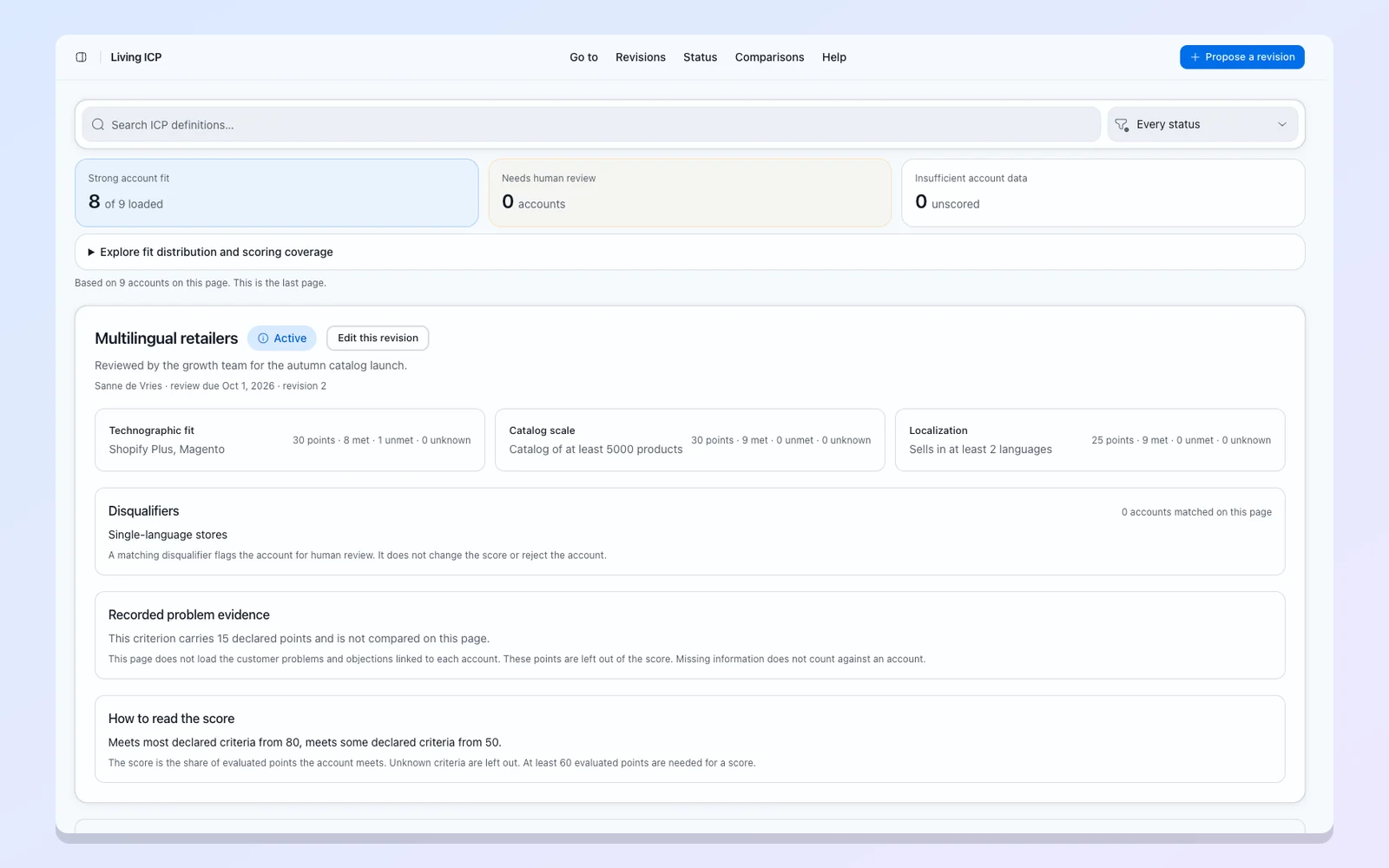
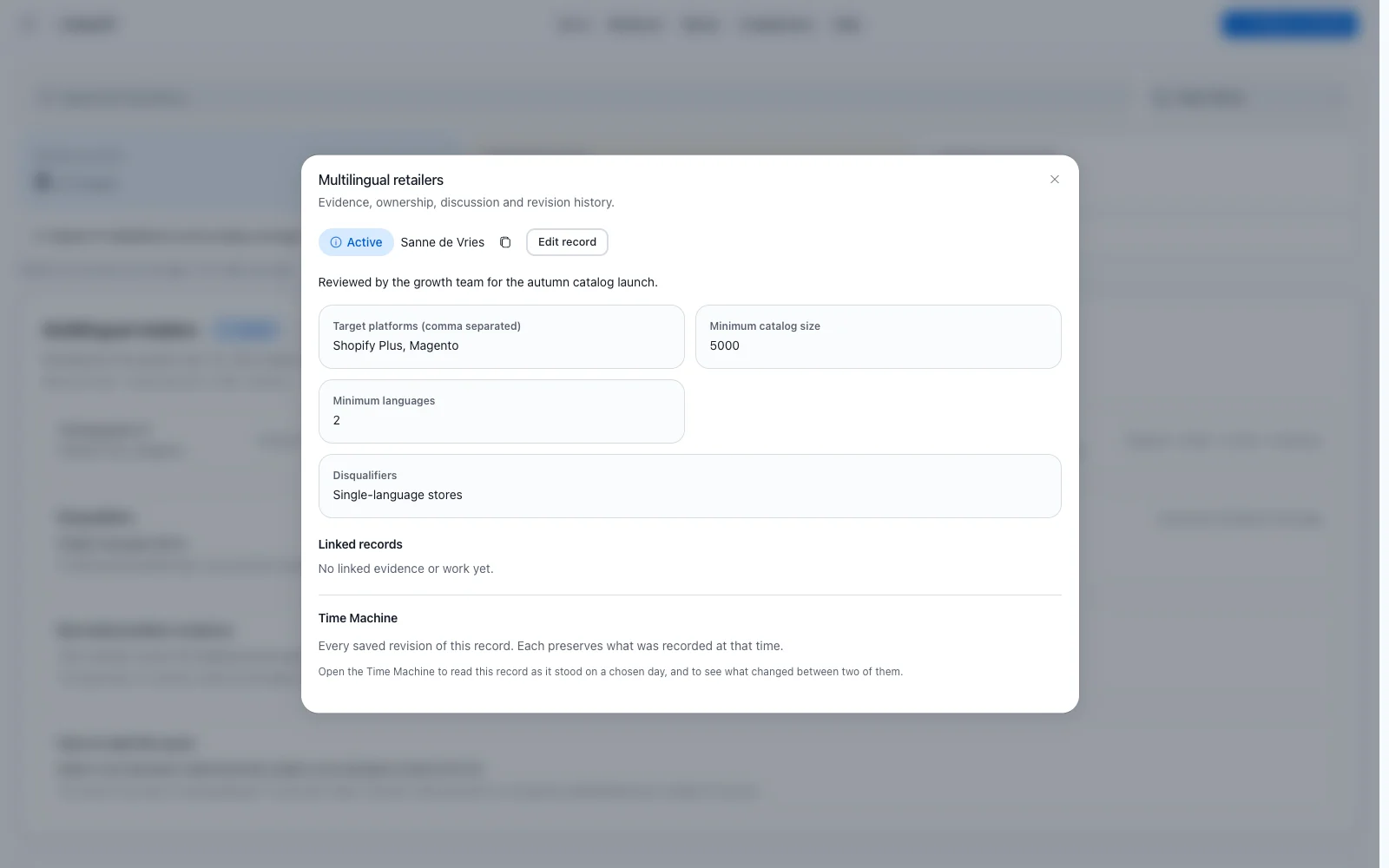
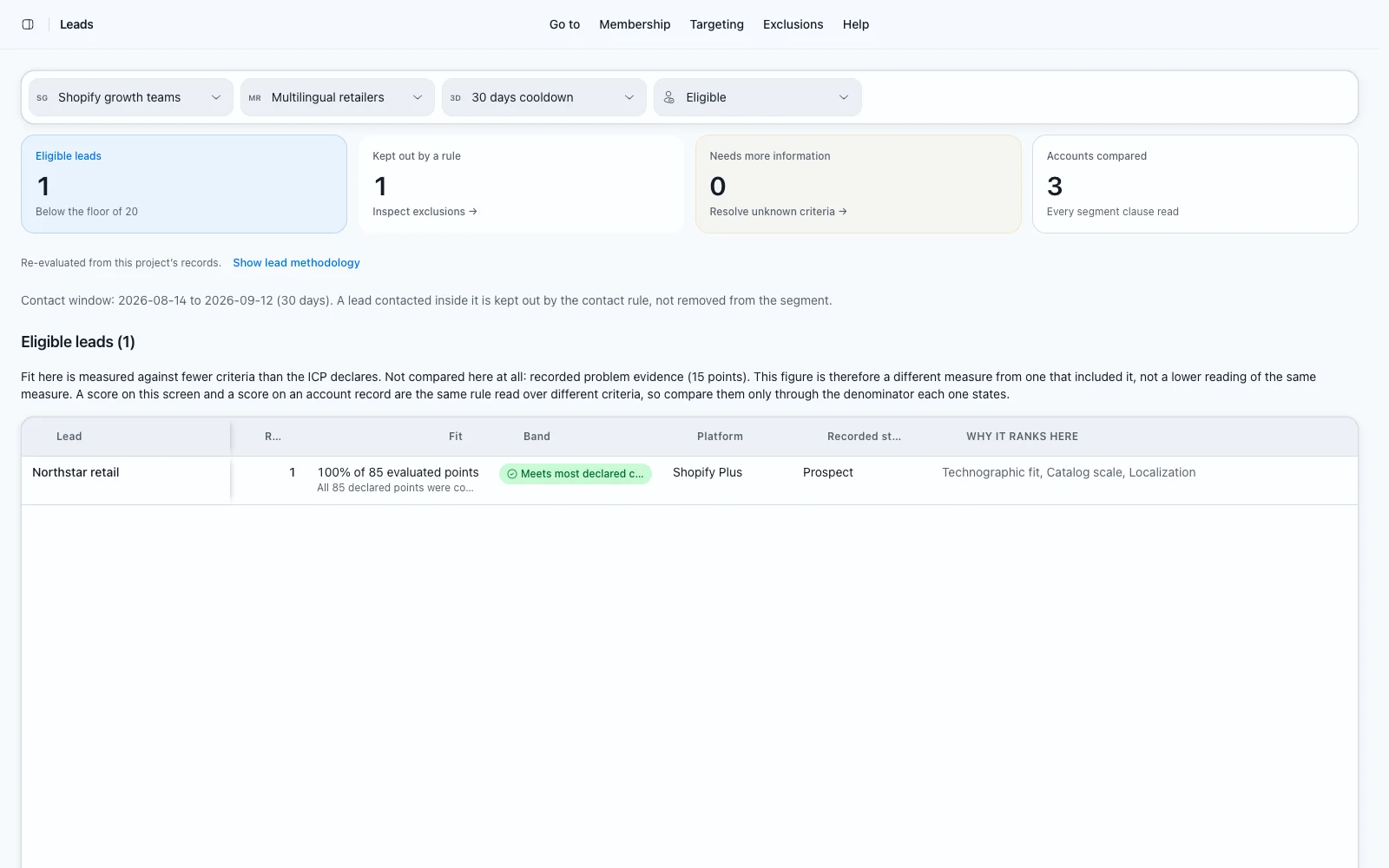
The ICP record declares target platforms, a minimum catalog size and a minimum number of languages. Segments are written as clauses, one per line. Leads re-reads those clauses every time you open it, prints which ones parsed and which did not, and shows the accounts the segment currently reaches with the exclusion rule that kept each of the others out.
What goes wrong when this work lives in spreadsheets, documents and one person's memory.
One unreadable line, and a segment meant for mid-market catalogs reaches everybody. You find out from the reply.
A single number hides which criterion failed. A decomposition can be disagreed with, which is the point of showing one.
Comparisons stay pinned to the ICP revision they were made against, so raising the bar today does not rewrite what you decided in March.
In the app
Captures of Growth-OS itself, rendered with sample data rather than our own records.
From an empty record to something you can act on, in the order you do it.
Write the ICP
Title, the target platform list, the two minimums, then the disqualifiers last.
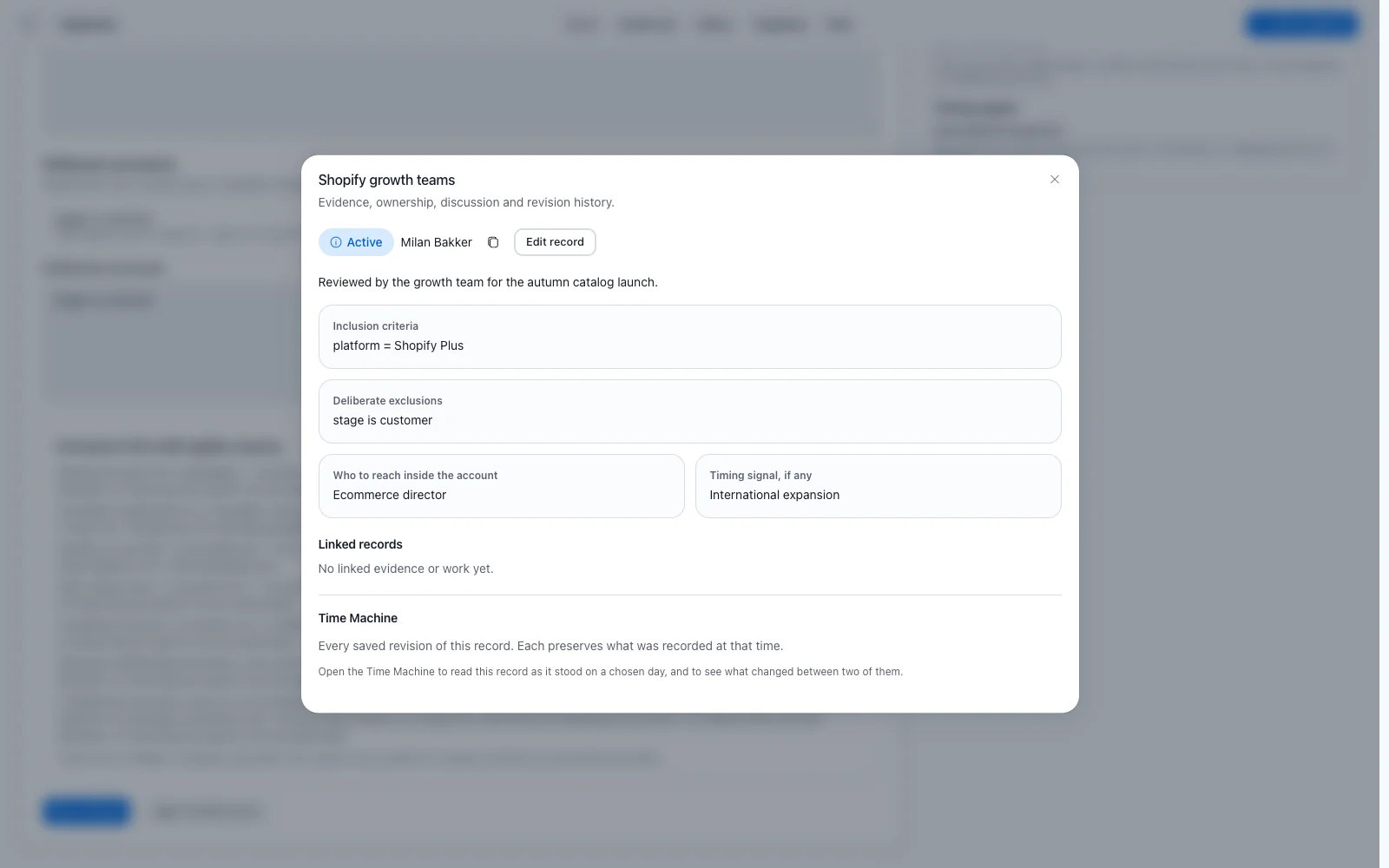
Write the segment as clauses
One per line: field, comparator, value. Deliberate exclusions go in their own field rather than hiding inside the inclusion text.
Open Leads
Pick the segment, pick the ICP revision to rank against, and set the contact window to seven, thirty or ninety days.
Read the refusals first
Unread clauses, exclusions and the cannot-tell list come before the ranking. Fix the source record, not the figure.
Highlights
Technographic fit, catalog scale, localization and problem evidence. Open a row and see which criterion was met, which was not, and where the input was unknown.
Leads names the line number, the text as written, the reason and a hint, instead of silently dropping it and widening who gets contacted.
Every read re-evaluates the segment. A saved list cannot go stale, because there is no saved list.
Honest limits
ICP fit is a deterministic rule comparison against one saved revision. It is not trained, fitted or predictive, and it is never a verdict on a deal.
Coverage describes the accounts you recorded, never the market. Forty account records produce a funnel about forty companies.
These pages share records with this one, so what you write here shows up there.
The page opens on this project's records. The in-app guide describes every field.