Our growth work lives in one place. Not spread across ten tools.
Growth-OS holds our companies and pipeline, meetings turned into quoted evidence, decisions with the reasoning behind them, objectives, bets and experiments, campaigns, content, competitor intelligence and finance. Our own records, in one workspace.
Every insight carries its exact quote · No campaign sends anything · Every AI proposal waits for a person
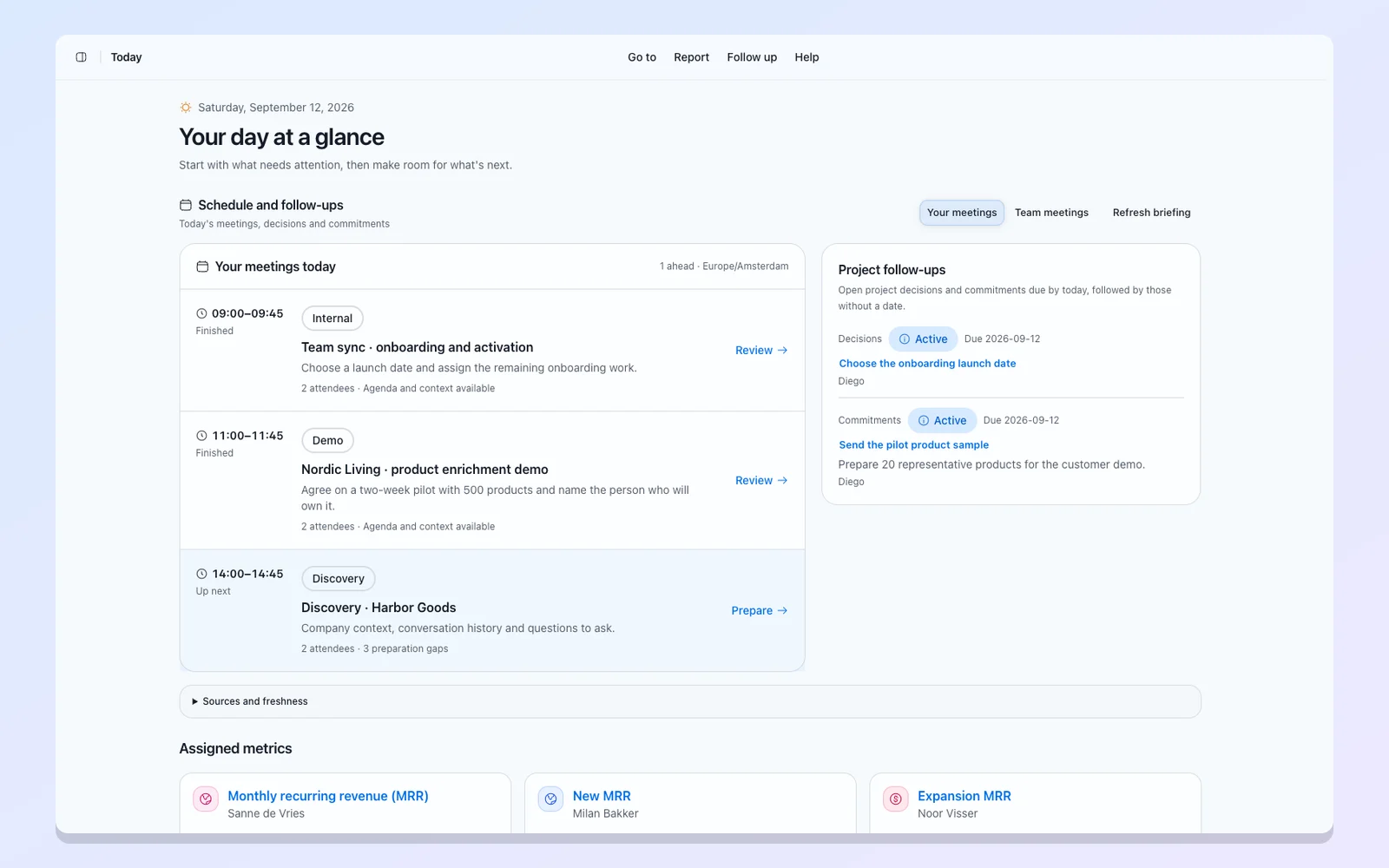
Three loops that run every week
Each one starts with a record we already have and ends where a colleague can act. Every feature page goes deeper.
A conversation becomes evidence, then a decision
The transcript lives on the meeting. Meeting intelligence proposes observations with the span they came from, and the server verifies that span before anything is stored. You approve, edit or reject each proposal. What stays is evidence carrying the exact quote, and the decision that follows records the alternatives and the reasoning beside it.
See meetings and evidence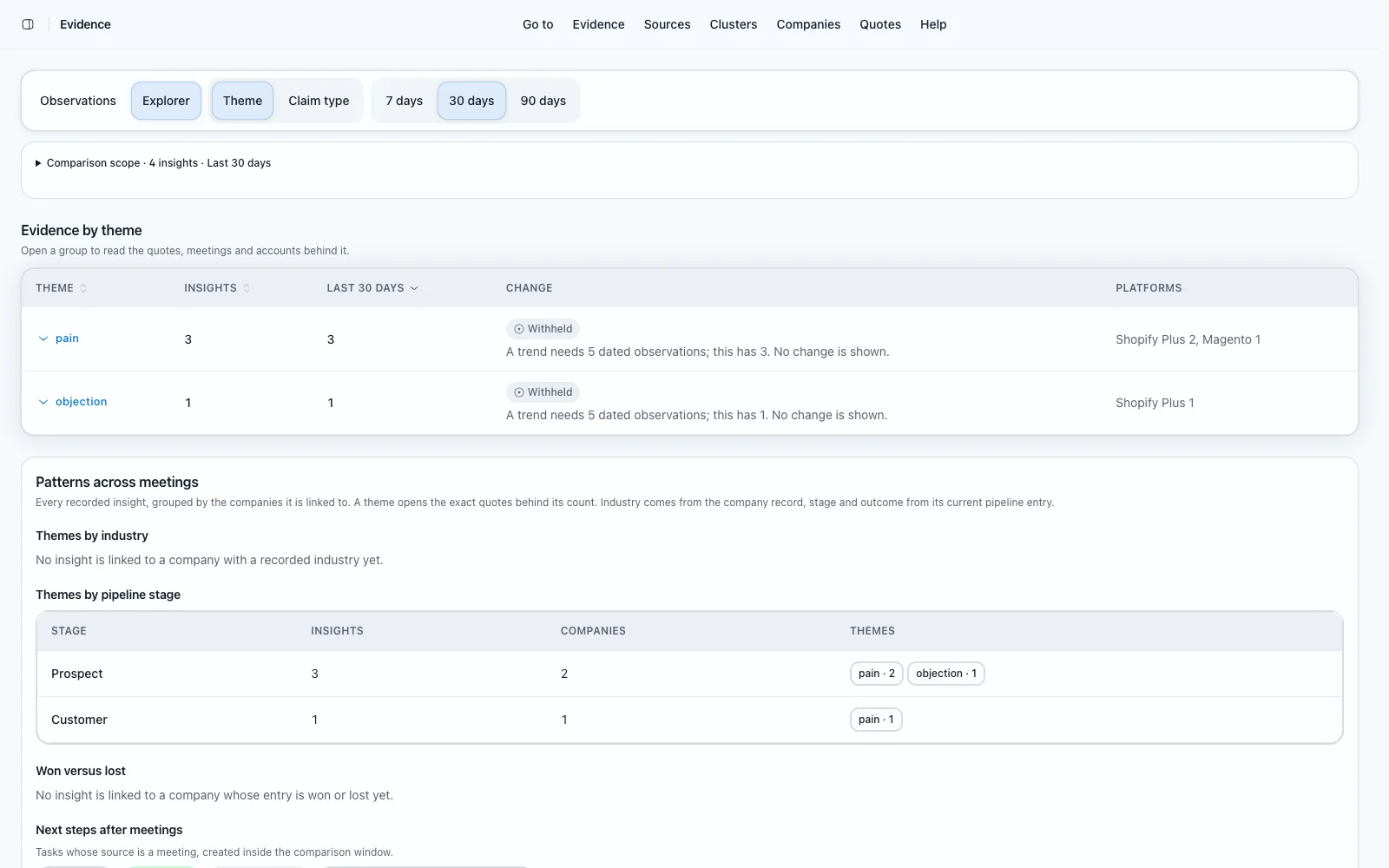
What is in Growth-OS
Six areas we run the company from. Every card opens the page that explains it.
Companies and pipeline
Company profiles, contacts and commercial context, with the stage an account sits in and the conversations attached to it.
Meetings and evidence
Transcripts stay with the observations taken from them. Every claim keeps the quote it came from and the meeting where it was said.
Decisions
Alternatives, evidence and reasoning on the record, with a process scaled to what the decision costs and a view of what is waiting.
Objectives and bets
Objectives with a metric, a baseline and a target. Strategic bets with the open questions and experiments that would settle them.
Competitor intelligence
Competitor profiles and battlecards beside the number of recorded conversations that actually mentioned them. Every count opens the evidence behind it.
Finance
Budget, expenses, subscriptions, payments, invoices and a review page, so the cost of a growth motion sits next to the motion.
A week in Growth-OS
Monday morning to Friday afternoon, on our own records.
- 1
Monday starts on Today
Today reports what changed, what needs attention, what needs a decision and what we are learning. An item that needs attention names the condition it met: overdue, unowned, undated, standing still, or stalled in review.
- 2
Open the company before the call
The company page carries the contacts, the commercial context and the fit against the current ICP revision. The battlecard for the competitor in this deal is one page away, with the conversations that mentioned them.
- 3
Review the transcript into evidence
After the call the transcript goes on the meeting record. You approve, edit or reject each proposed observation, and what you keep carries the exact words from the transcript.
- 4
Record the decision, then read Friday
A decision keeps its alternatives, the evidence under it and the reasoning together, so the question does not reopen from memory. On Friday, Today shows what moved since Monday.
What Growth-OS will not do for you
Worth knowing before you start, so nothing surprises you later.
Campaigns do not send
A campaign is a plan with a hypothesis and a frozen list of who you meant to reach. No email, no message and no recipient list leaves the system. Sending still happens in the tool you already use for it.
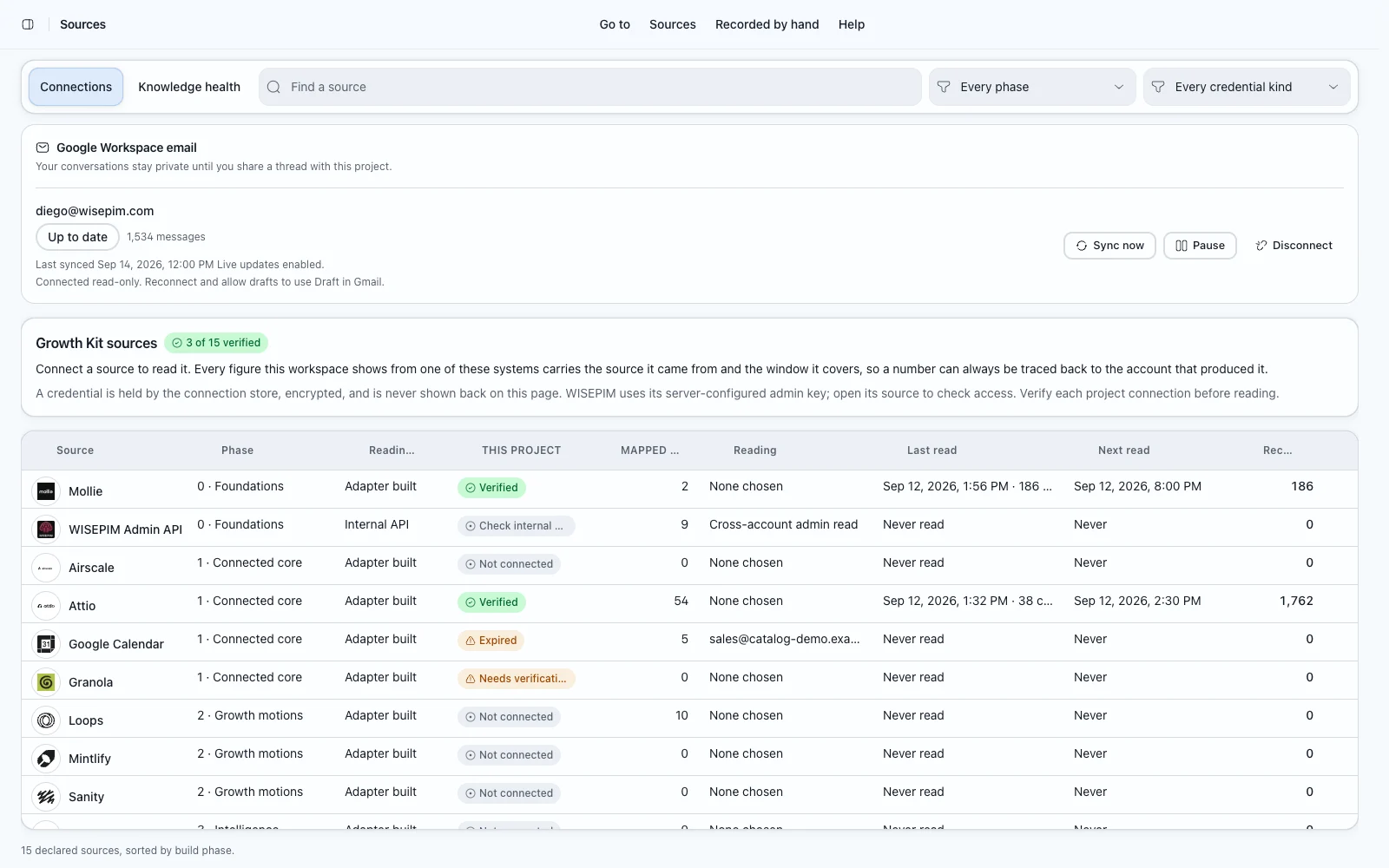
Sources need connecting
Growth-OS is designed to read Search Console, Google Calendar, PostHog, Attio, Loops, Sanity and a few more. The Sources page shows, per source, what it would read and what its real state is.
AI does not write the record
Ask Growth Kit answers only from this project’s own records and cites what it read. Extraction and drafts are proposals. A person approves, edits or rejects each one before it becomes a record.
Start with it tomorrow morning
Start on Today, then work from the area you own. The guides explain every page, and where each one stops.