The same cost counted twice
A supplier invoice entered again as an expense, or a matched invoice adding a second cash receipt. Both are called out rather than quietly doubling a total.
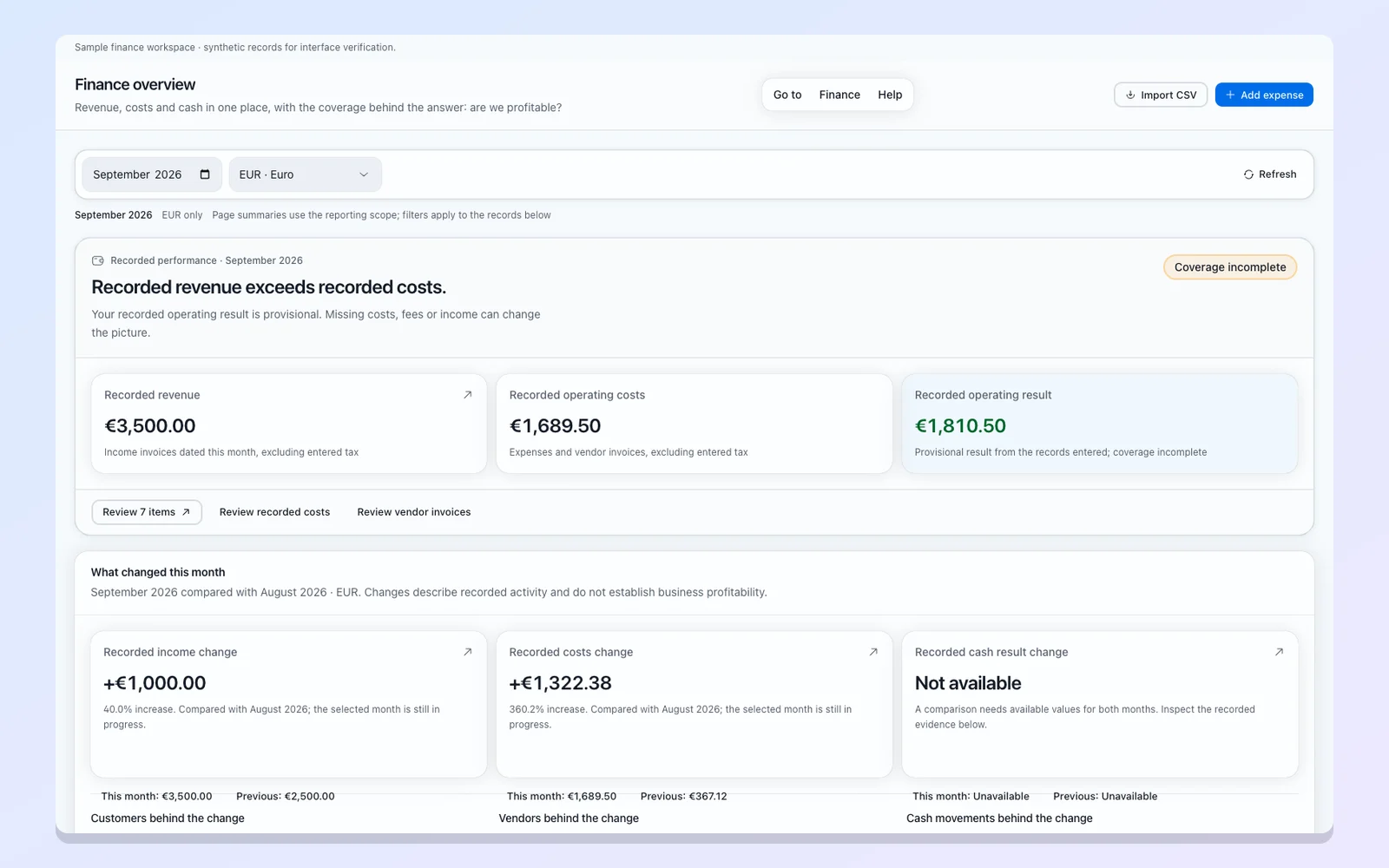
Revenue, costs and cash, with the coverage stated beside it.
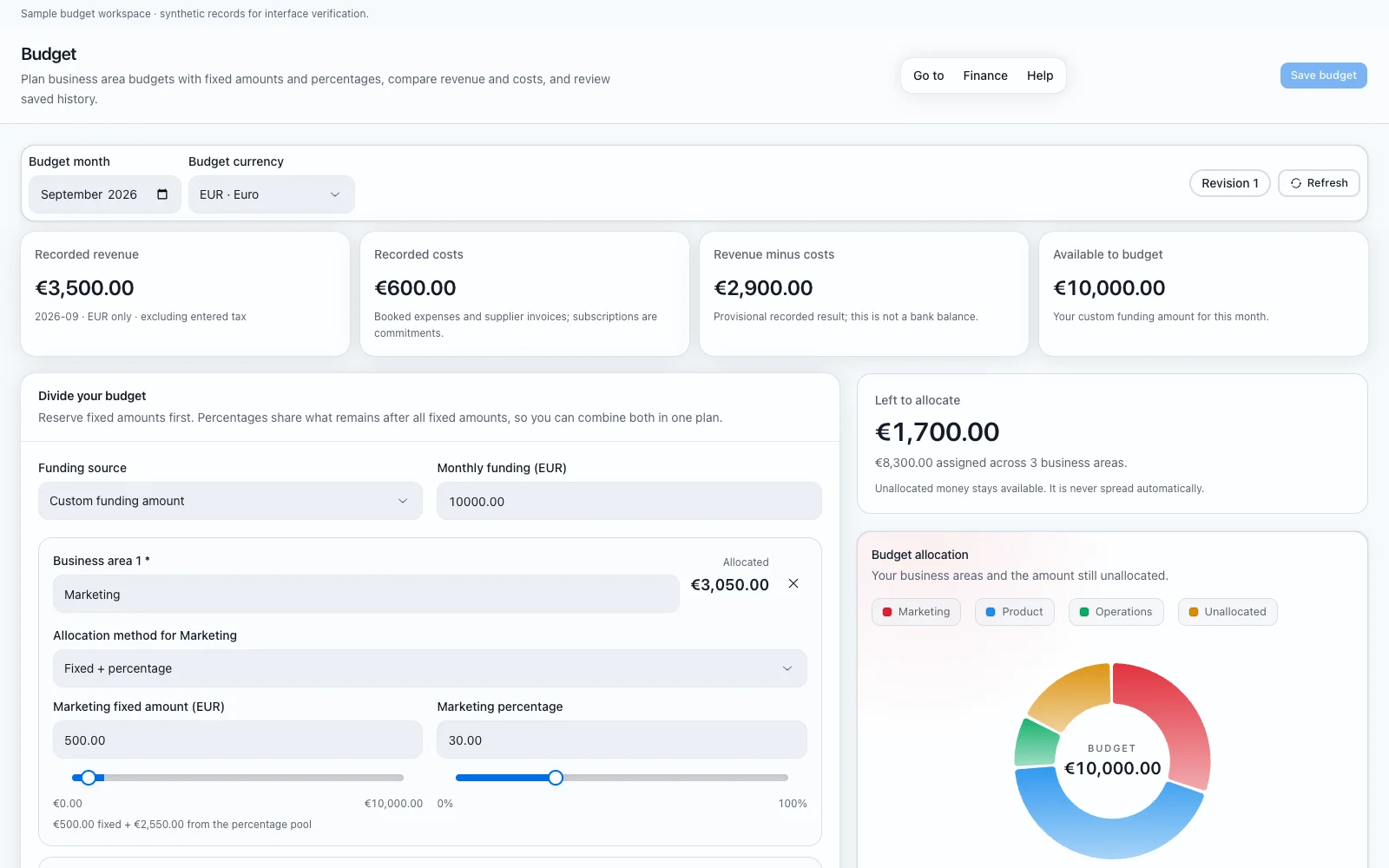
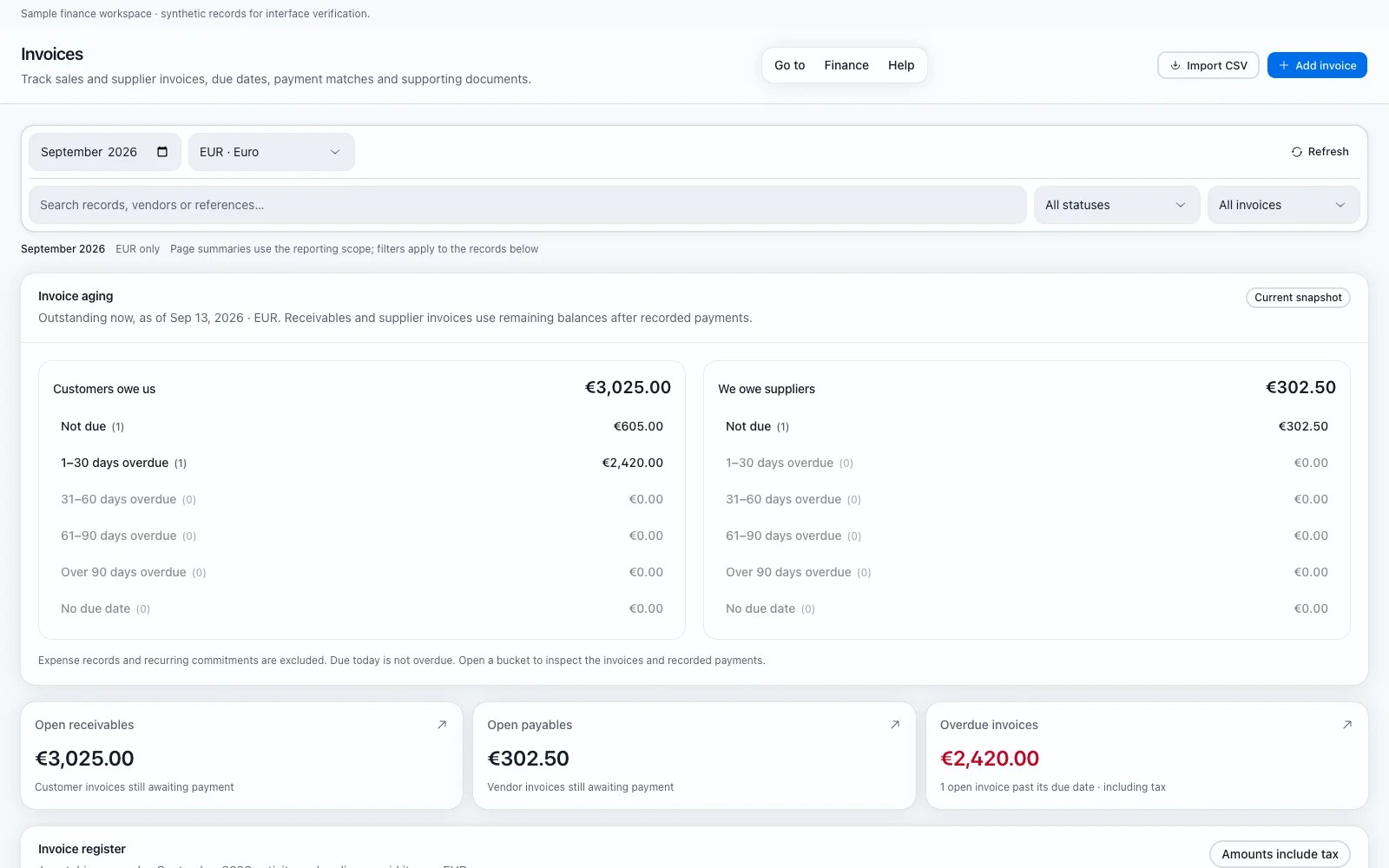
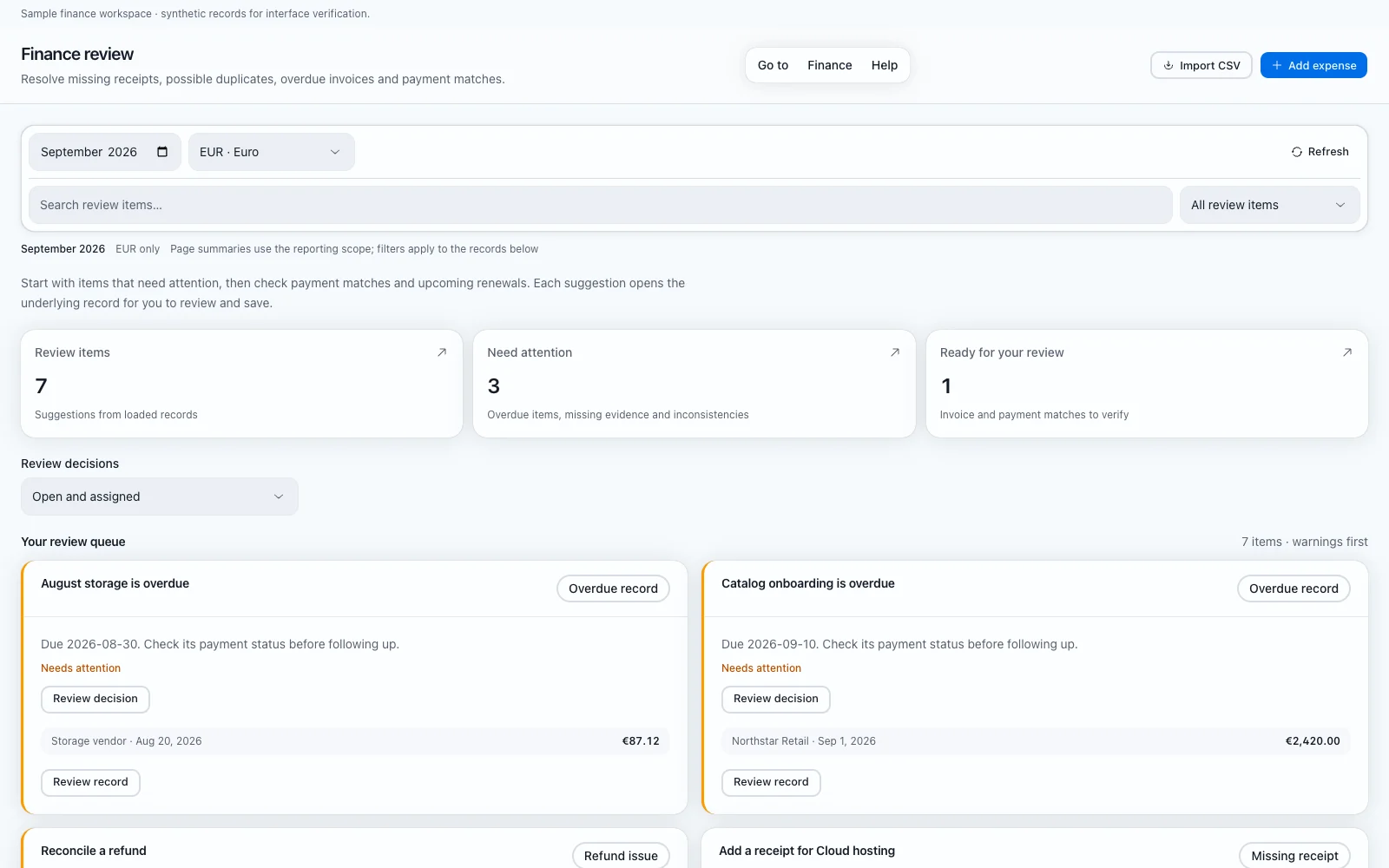
Seven pages over one project ledger: the overview, the budget, expenses, subscriptions, payments, invoices and the review queue. Amounts are stored as integer minor units in euros, dollars or pounds. Every figure states what it covers, and the monthly close asks you to acknowledge what the evidence does not establish.
In the workspace
What goes wrong when this work lives in spreadsheets, documents and one person's memory.
A supplier invoice entered again as an expense, or a matched invoice adding a second cash receipt. Both are called out rather than quietly doubling a total.
An area still referenced by non-cancelled costs or commitments cannot be removed, so the plan and the ledger stay in agreement.
A CSV batch commits whole or rolls back whole, and bulk categorisation validates every selected record before any of them change.
In the app
Captures of Growth-OS itself, rendered with sample data rather than our own records.
Highlights
Fixed amounts are reserved first, percentages apply to the remaining pool, and the largest fractional shares take the rounding cents, so a hundred percent allocates the pool to the cent.
Possible duplicates, missing receipts, unpaid invoices, upcoming renewals and proposed payment matches, each with its reason and a record of who resolved it and why.
A missing exchange rate withholds the euro total rather than guessing, and a truncated ledger says that it was truncated.
From an empty record to something you can act on, in the order you do it.
Record or import
Enter an expense or an invoice, or preview a CSV first. An invalid row blocks the batch instead of landing half of it.
Classify the funding
Every outgoing cost is necessary, budgeted or unclassified, and a budgeted one names an area that exists in that month's saved plan.
Reconcile
Match a payment to an invoice by its provider payment id, after a person has checked the customer and the amount. A provider payment can be allocated once.
Review, then close
Work the exception queue, then run the monthly checklist across all three currencies.
Honest limits
Payments are stored records carrying a last recorded status. Nothing can be sent, refunded or moved from any Finance page, and reversing a payment record recalculates a balance rather than issuing a refund.
The operating result is provisional. It is not a statutory profit and loss statement and not a bank balance, and the monthly close asks you to acknowledge that before it saves.
These pages share records with this one, so what you write here shows up there.
The page opens on this project's records. The in-app guide describes every field.