The decision everybody remembers differently
Six months on, the reasoning is gone and the argument restarts from zero, usually with the person who shouts first.
The reasoning, kept with the choice, at a ceremony that fits the stakes.
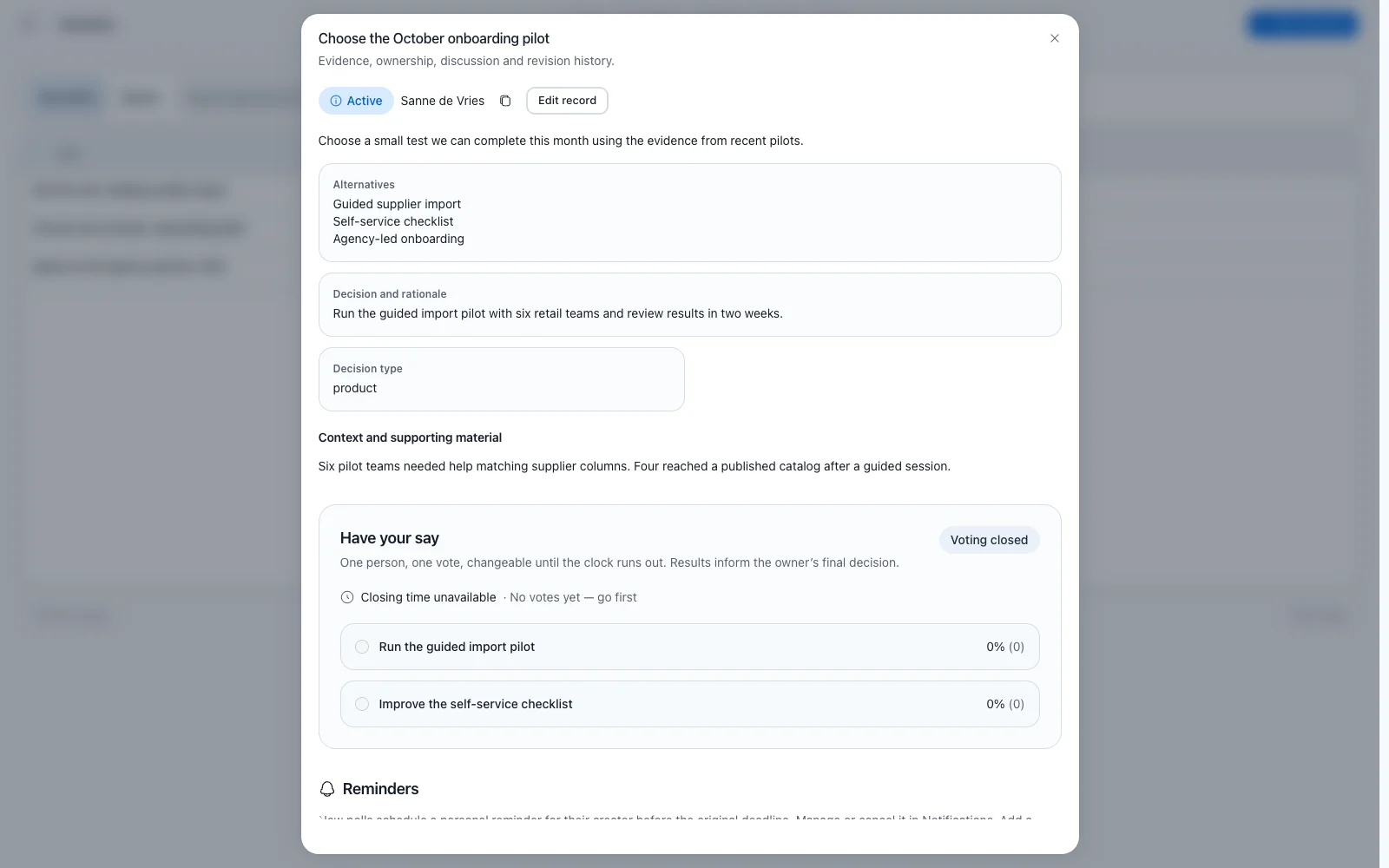
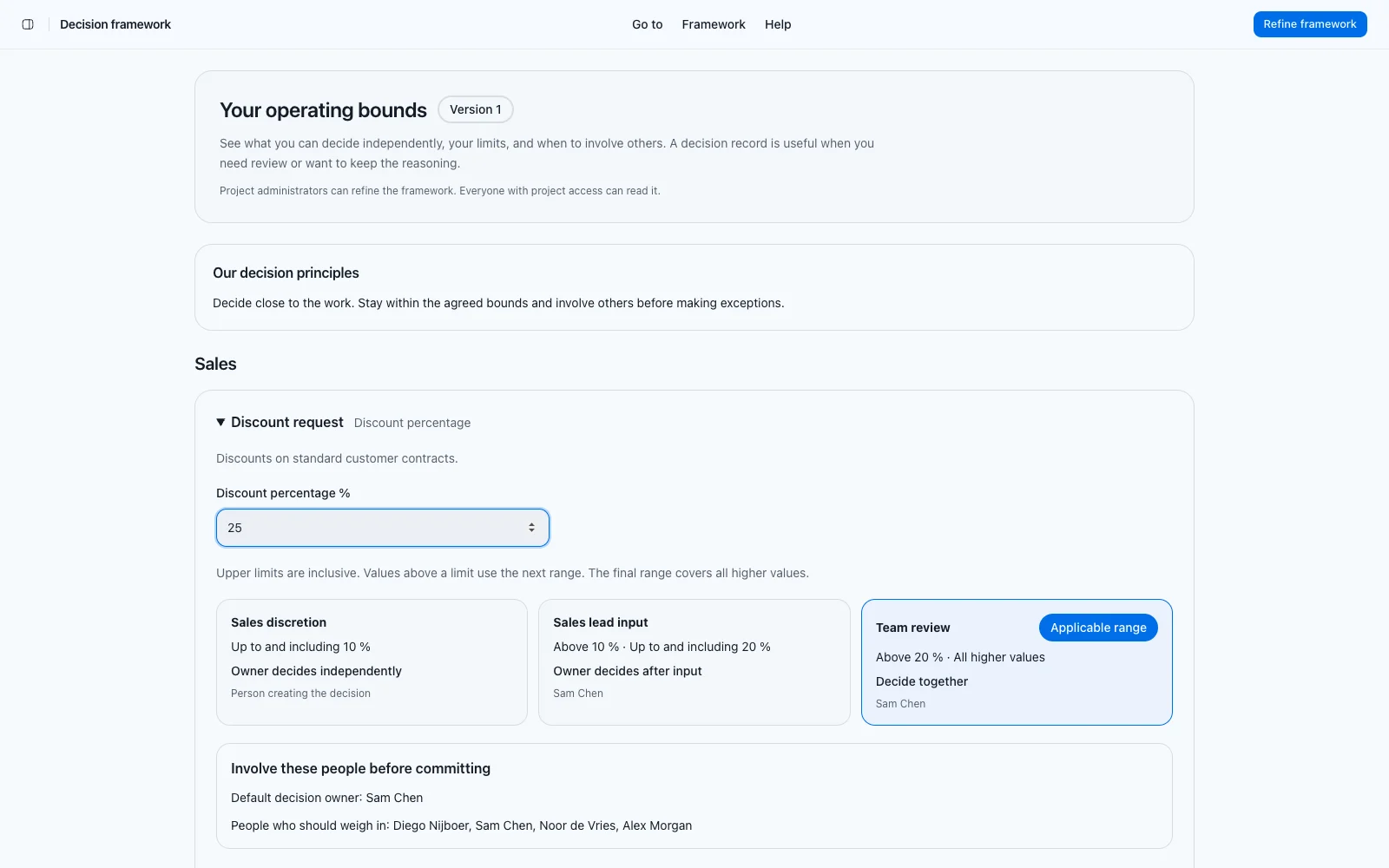
A decision record holds the alternatives, the evidence and the rationale. The framework maps a decision type and a proposed value onto authority ranges, so a small reversible call does not get a forty minute review and an ICP change does not get a hallway chat. Process quality is assessed on its own, separately from how the decision turned out.
9
cells of reversibility by stakes
3
ceremony levels they map onto
0
outcome inputs in the process check
In the workspace
What goes wrong when this work lives in spreadsheets, documents and one person's memory.
Six months on, the reasoning is gone and the argument restarts from zero, usually with the person who shouts first.
A five hundred euro tool gets a committee. A pricing change gets a thread. The ladder sizes the ceremony to reversibility and stakes instead.
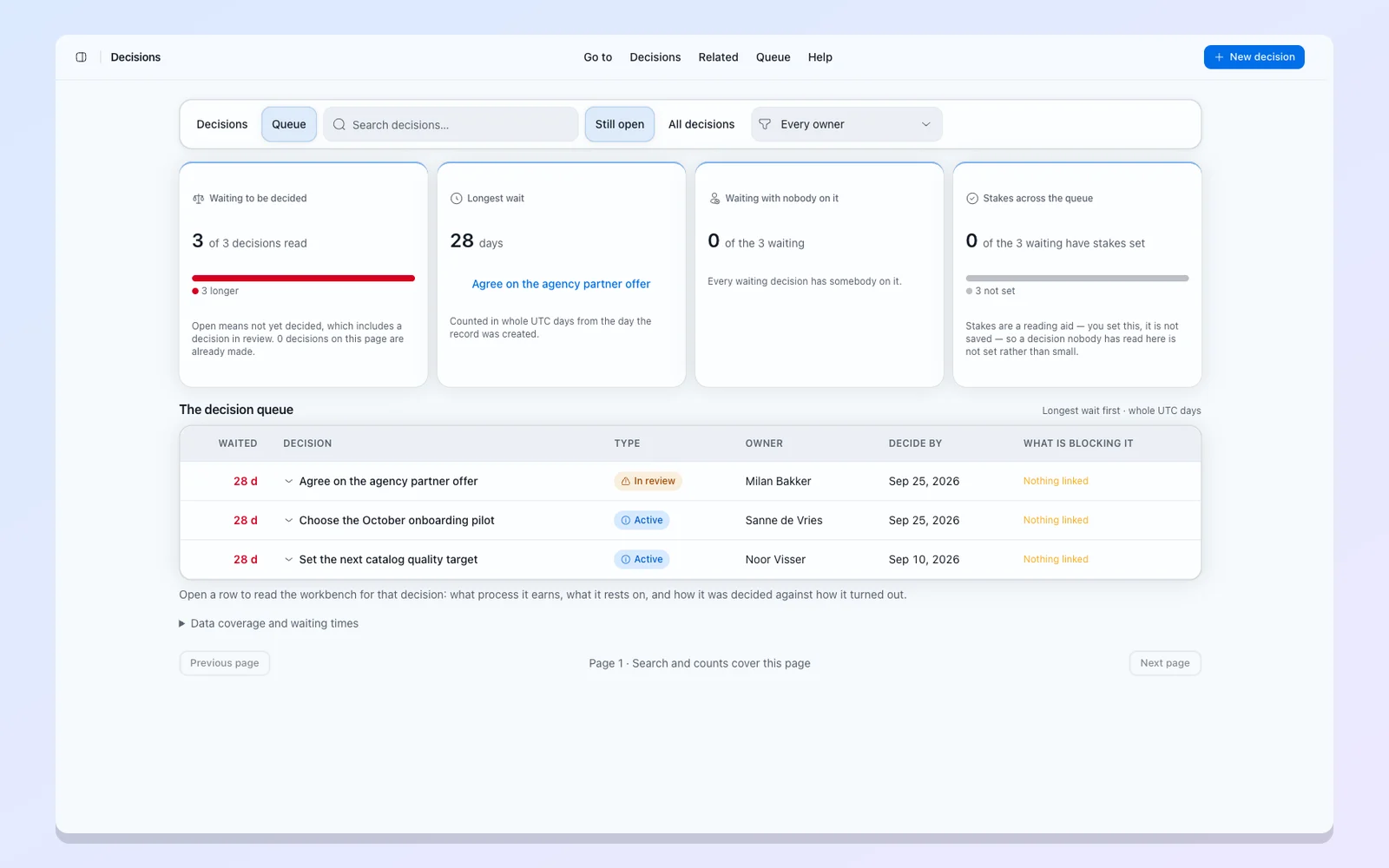
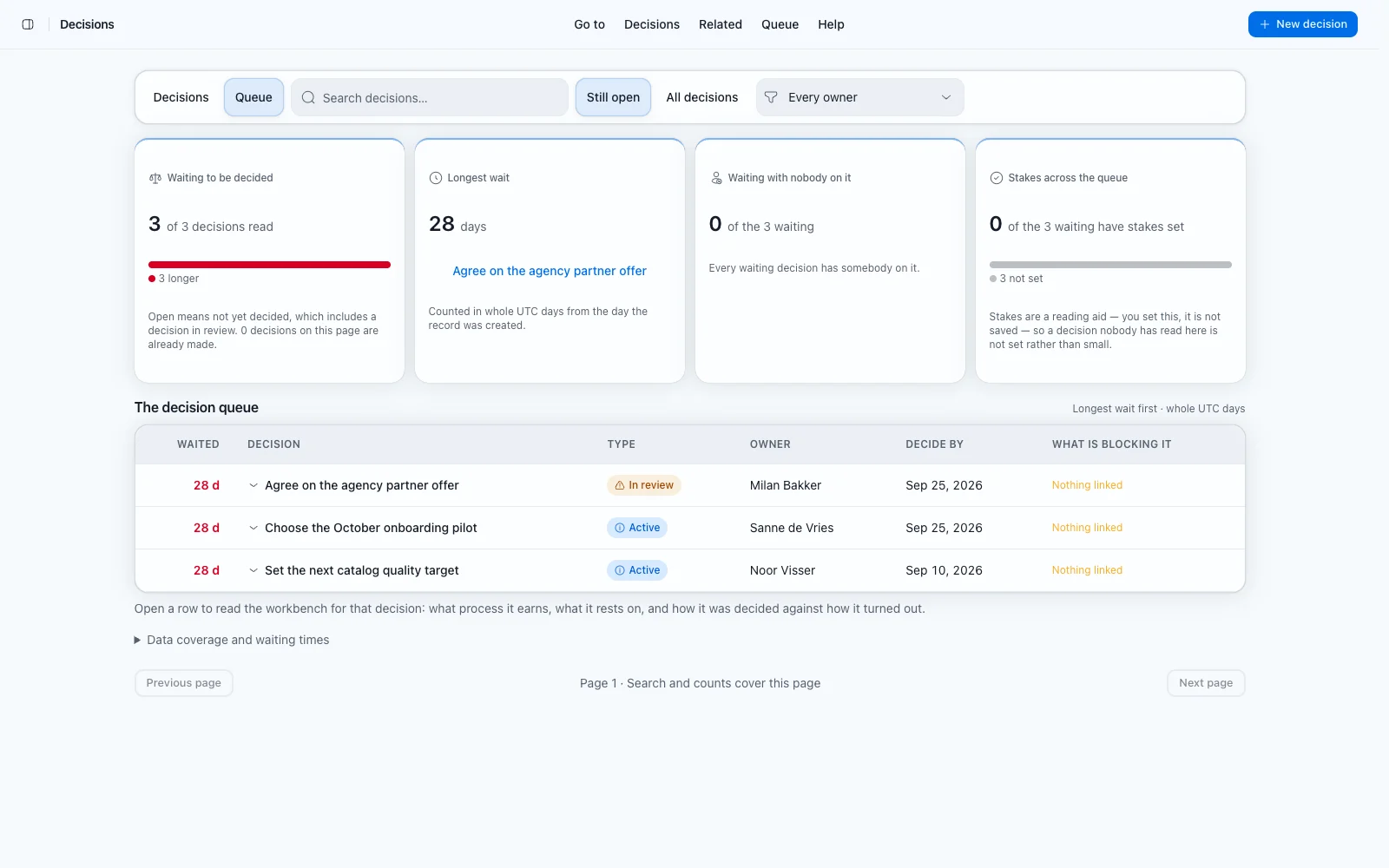
The queue orders open decisions by wait, longest first, and names what each one is missing.
From an empty record to something you can act on, in the order you do it.
Pick the decision type and the proposed value
The matching saved defaults apply: owner, participants, mode and the prompts for that range.
Work the four steps
Overview, details, insights and reasoning, then voting. Linked bets appear as the assumptions the decision rests on.
Record the choice and the reasoning
The owner writes both and moves the status. A tally never does that on its own.
Keep the commitment
What was promised, to whom, with one owner and a due date. A decision that ends in a paragraph ends there.
In the app
Captures of Growth-OS itself, rendered with sample data rather than our own records.
Highlights
The process assessment takes no outcome at all. A good result cannot launder a bad process, and a bad result cannot condemn a good one.
A saved decision keeps the framework version, the rule and the matched range it was decided under. Editing the framework later does not rewrite what you decided.
A poll takes two to eight options and one vote per person, changeable until it closes. Closing it never picks a winner and never marks the decision made.
Honest limits
Expected value, sensitivity and option value are prompts rather than computations, because they need figures no record holds. A base rate only reports once there are five comparable recorded attempts.
The AI decision brief offers reasoning prompts, not factual citations, and its guidance can be wrong. Nothing here grants authority, counts approvals, or sends a notification on your behalf.
These pages share records with this one, so what you write here shows up there.
The page opens on this project's records. The in-app guide describes every field.