The procedure that exists and cannot be found
It is in a doc somewhere. Under pressure nobody finds it, so everybody improvises and the result varies by who was on shift.
How we do the thing, written where you will find it under pressure.
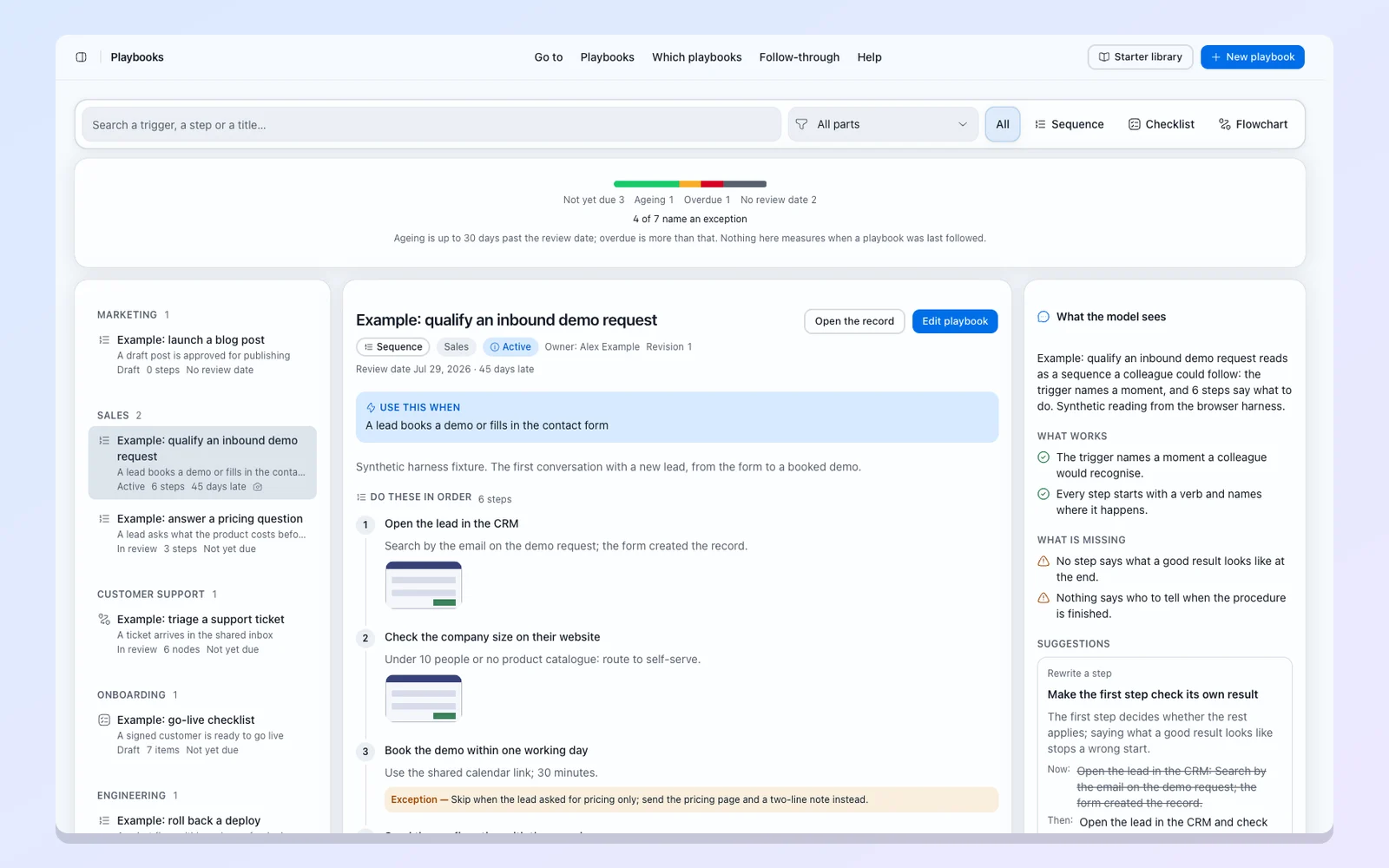
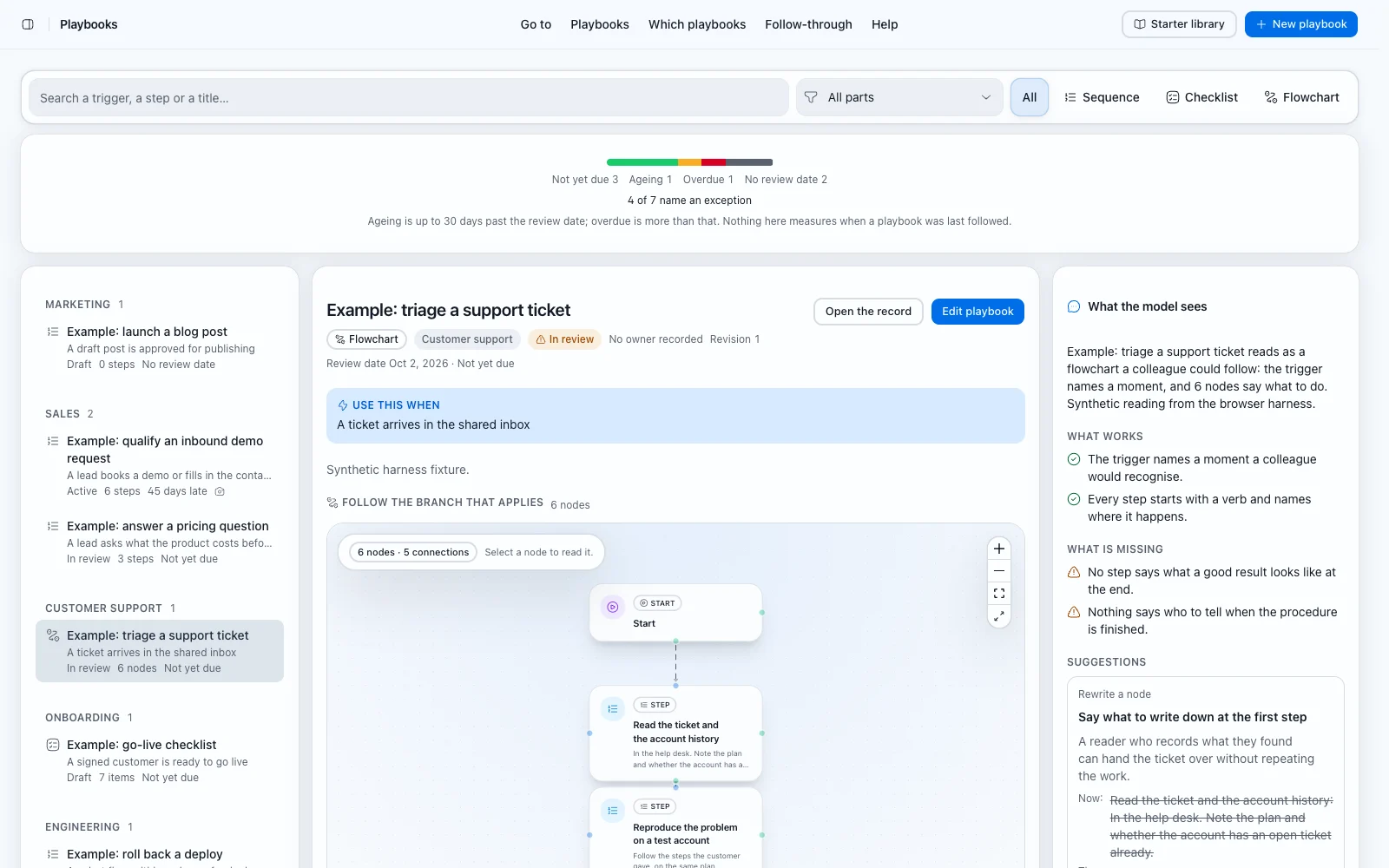
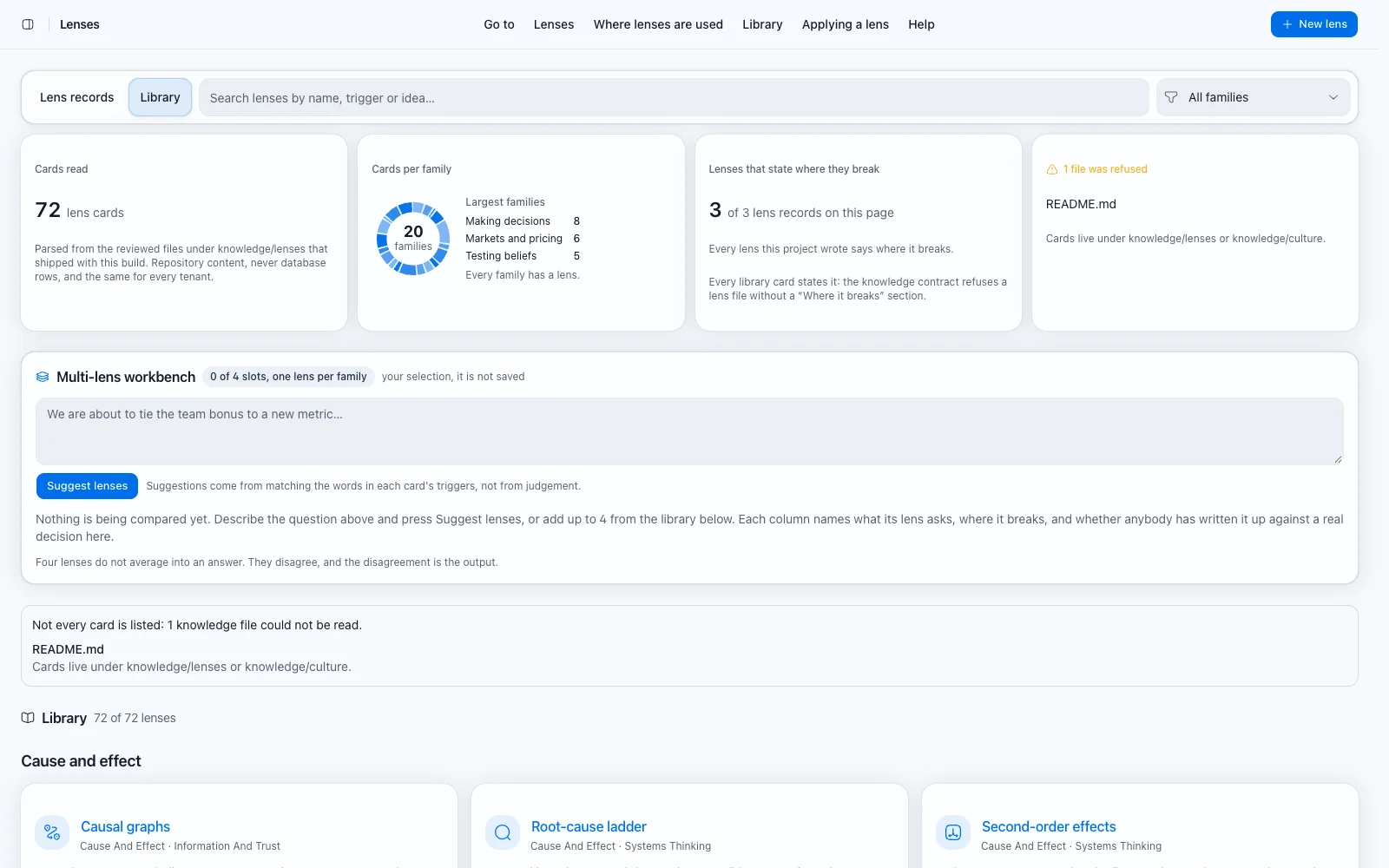
A playbook states when to use it, the steps, the screenshots and the exceptions, as a sequence, a checklist or a flowchart. Beside them sit the lens library of reviewed ways to look at a problem, the workbench that runs several lenses at once, workshops built on imported cards, and brainstorms that can end in a poll.
In the workspace
From an empty record to something you can act on, in the order you do it.
Pick the shape and the part of the business
Sequence, checklist or flowchart, filed under one of nine areas so the list groups the way people look.
Write the trigger, then the steps
The last row stays empty for the next step, and a pasted list splits into steps on its own.
Add the screenshots and the exceptions
The cases where the steps do not apply are the part that saves somebody an hour.
Name an owner and a review date
Required before it can go active, because a playbook nobody owns goes stale quietly.
In the app
Captures of Growth-OS itself, rendered with sample data rather than our own records.
What goes wrong when this work lives in spreadsheets, documents and one person's memory.
It is in a doc somewhere. Under pressure nobody finds it, so everybody improvises and the result varies by who was on shift.
A suggestion names the revision it read and says so, rather than editing whatever now occupies a removed step's slot.
A saved workshop keeps the original prompts and a snapshot of the card it came from, so editing the library later does not rewrite what you ran.
Highlights
Use this when is both the first line and what search matches, so the playbook is findable at the moment you need it.
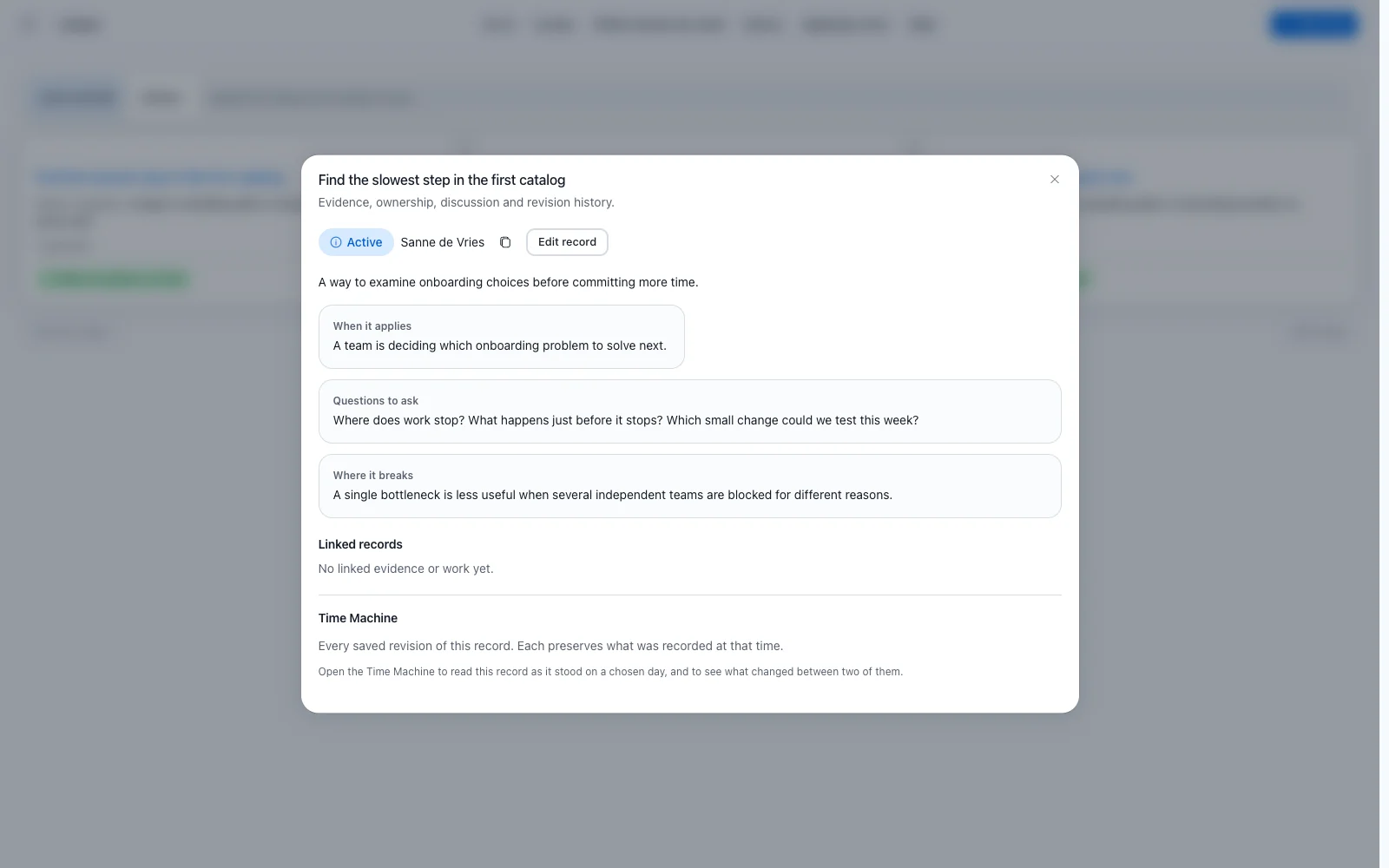
Every save also writes numbered lines, so Ask Growth Kit, Time Machine and the record dialog keep reading it.
Completing a workshop needs every step checked, an output written, and at least one next action.
Honest limits
Freshness is measured from the review date. Growth-OS cannot know when a playbook was last followed, and the insights verdict is an opinion about the text rather than a claim that any automation exists.
Workbench results are exploratory and session only. They clear when you leave, so copy what you want to keep. Lens cards are reviewed repository content and cannot be added from the screen.
These pages share records with this one, so what you write here shows up there.
The page opens on this project's records. The in-app guide describes every field.