Booking the stand on a feeling
Nobody checked whether one person worth meeting is in the room. The invoice arrives anyway, and the debrief is about the coffee.
Judge attending, exhibiting and speaking separately, before you book.
An event record holds the title, the start date, the location, the attendee list, the stated cost and your participation. Planning reads six signals from our own records and judges the three ways of showing up on their own terms, because a stand is paid for before anybody walks past it. Afterwards you write what happened and compare it to what you expected.
In the workspace
What goes wrong when this work lives in spreadsheets, documents and one person's memory.
Nobody checked whether one person worth meeting is in the room. The invoice arrives anyway, and the debrief is about the coffee.
Nothing modelled yet is a different answer from not worth it. The page lists the figures it is missing instead of scoring you zero.
Nothing reads figures out of your outcome prose. You type the observed figures yourself, next to the ones you expected.
In the app
Captures of Growth-OS itself, rendered with sample data rather than our own records.
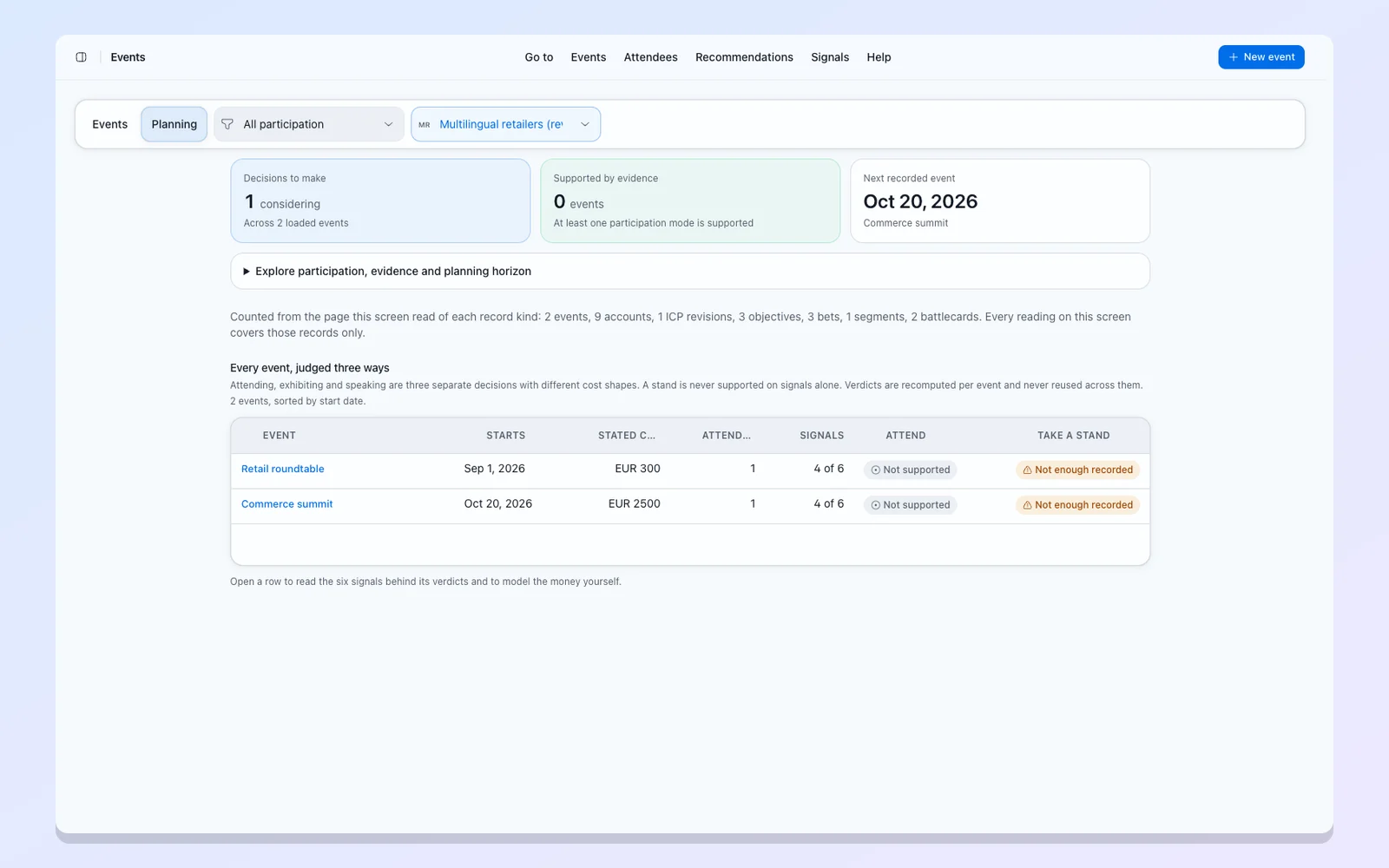
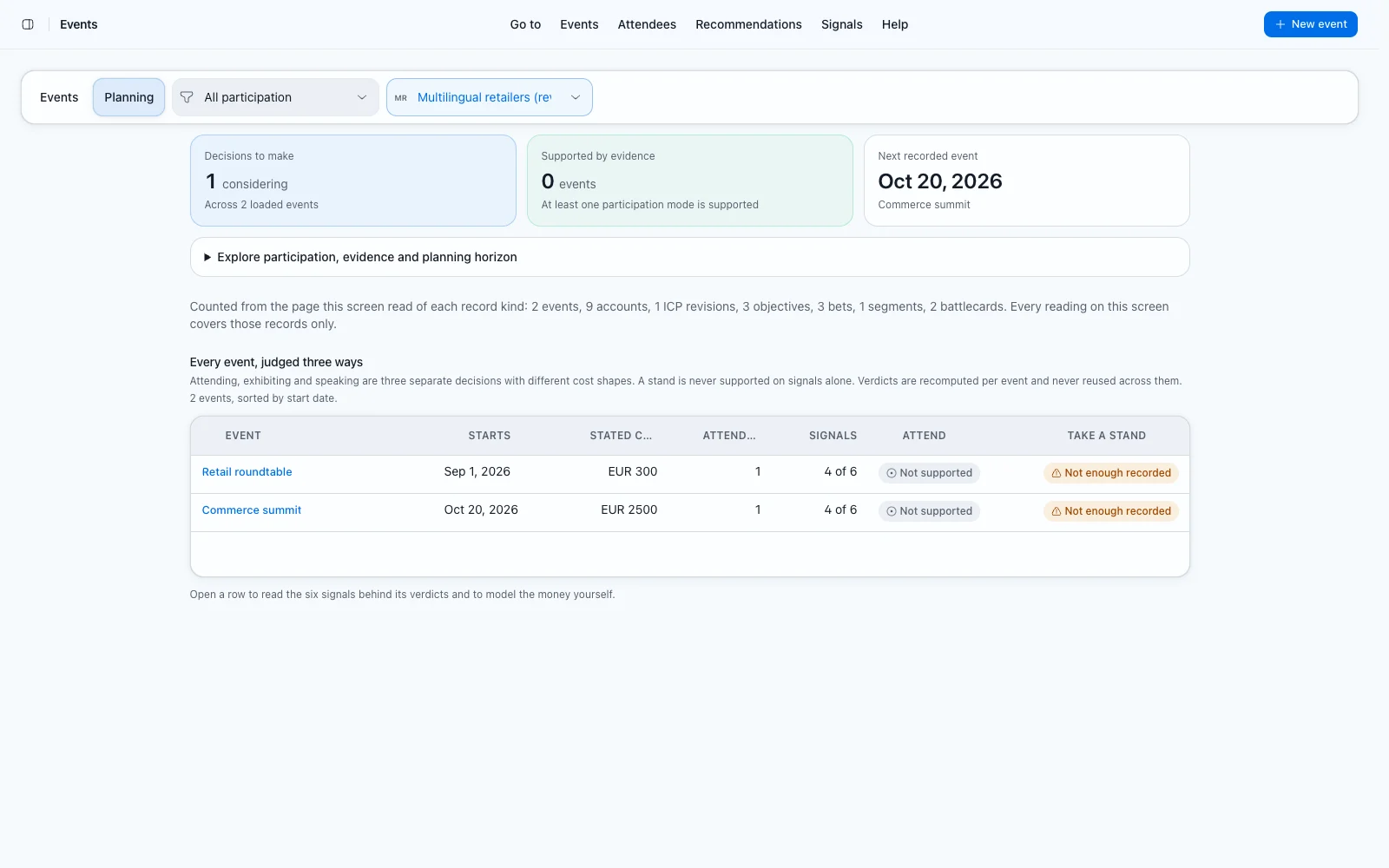
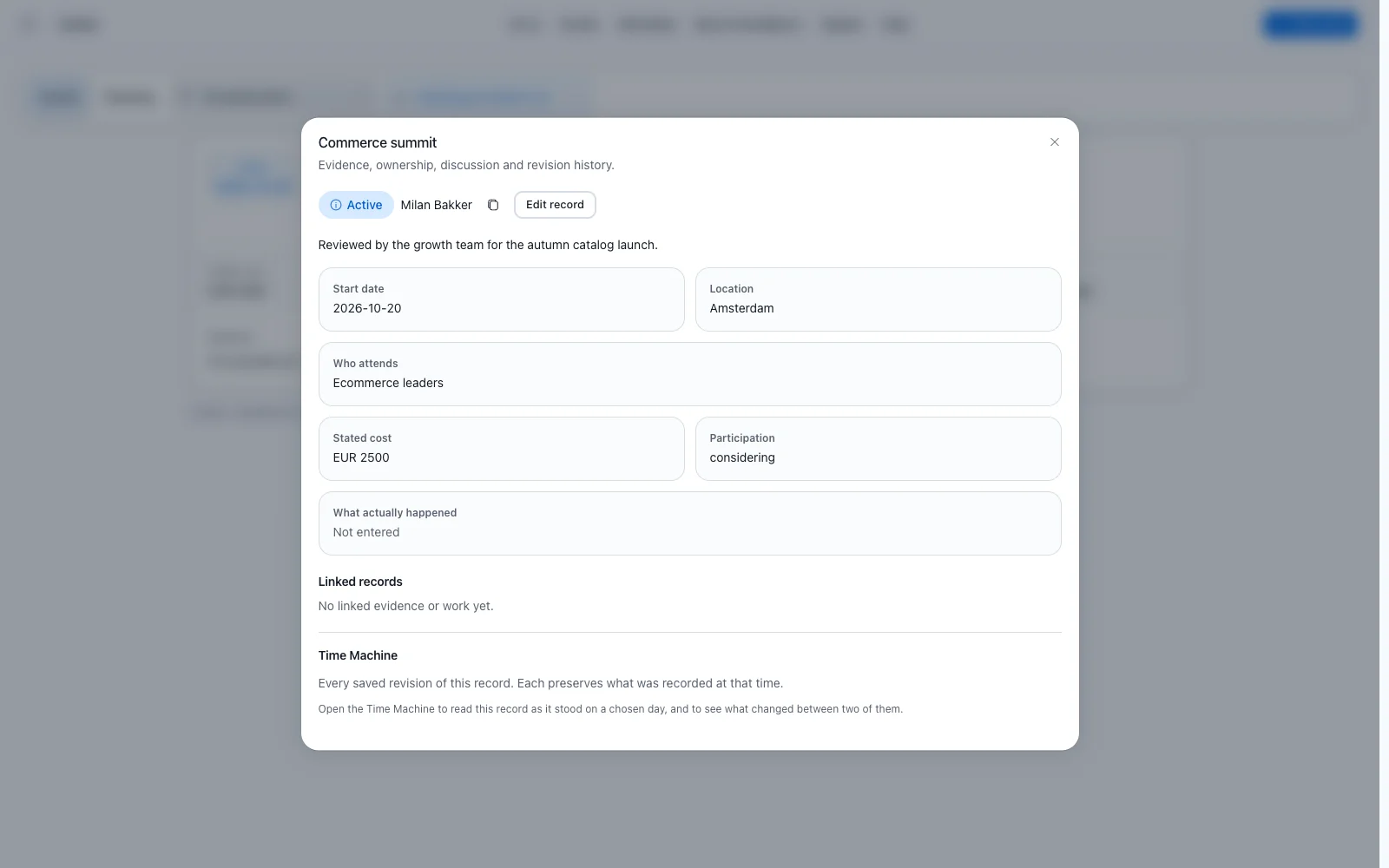
From an empty record to something you can act on, in the order you do it.
Create the record
Title, start date and participation set to considering. Everything else can follow.
Write what you know
Location as your records name it, attendees one per line, and the cost the event itself states.
Open planning
Filter by participation, pick an ICP revision, read the three verdicts, and expand the signals behind each one.
Model it, then close the loop
Cost, expected qualified conversations, conversation to deal rate, value of a won deal, and a currency. After the event, write the outcome and type what actually happened.
Highlights
One name per line, each matched on its own against company titles and domains. Lines that match nothing are listed rather than dropped.
ICP density among recorded attendees, accounts we already track, competitors we hold a card for, partners, whether records name the location, and whether an objective or bet exists.
Once you write the outcome, expected and observed appear in the same four terms, with two lists: what it lets you change, and what it does not let you say.
Honest limits
Growth-OS has measured none of those four figures. There is no attendance data, no conversion rate and no deal value behind them, and the numbers live on the page rather than on the event record.
Partners reads unknown permanently, because no record kind stores a partner relationship. It is excluded from every verdict rather than counted as a miss.
These pages share records with this one, so what you write here shows up there.
The page opens on this project's records. The in-app guide describes every field.