A week in Growth-OS
A teammate goes Monday to Friday in Growth-OS: the Today page, a meeting you walked into prepared, a decision with a real second option, the roadmap vote, and reading the week back.
WISEPIM Growth-OS
Product
Monday: open Today before anything else
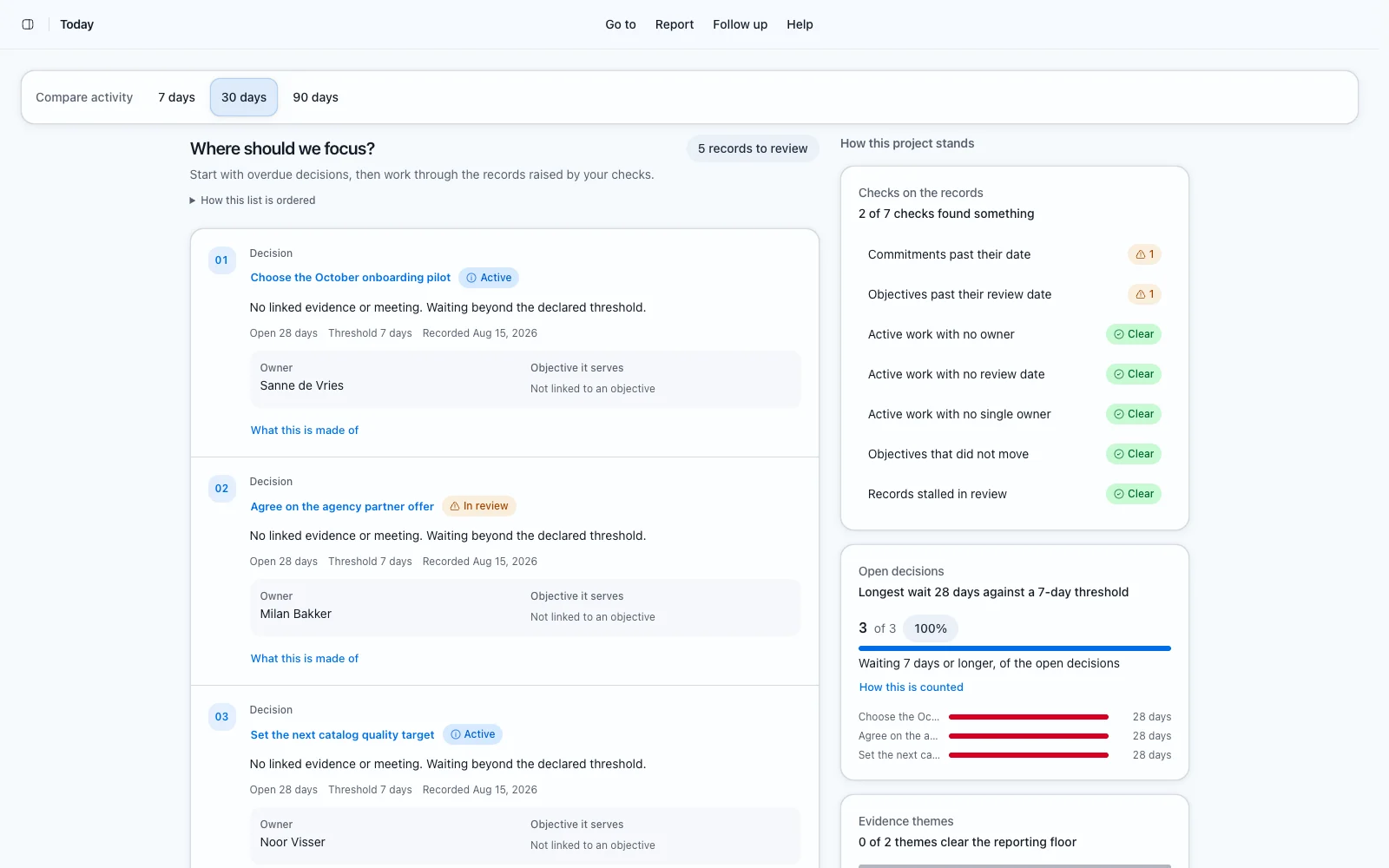
Today is the first page of the week. It opens with a briefing for the local day, the meetings on your calendar, and the open decisions and commitments that are due by that day, including the follow-ups nobody put a date on. Beside that sits the task queue: overdue, due today, needing attention, upcoming, with your own sprint tasks in a second column.
None of it depends on a model. Tasks read straight from the authenticated task records, and a meeting read and a task read cannot overwrite each other with an error. If the calendar briefing fails, the page falls back to saved meetings, decisions and commitments from their own libraries and says plainly that calendar events may still exist. A failed read keeps the data it already had instead of turning into a zero.
Tuesday: walk into the call already knowing the account
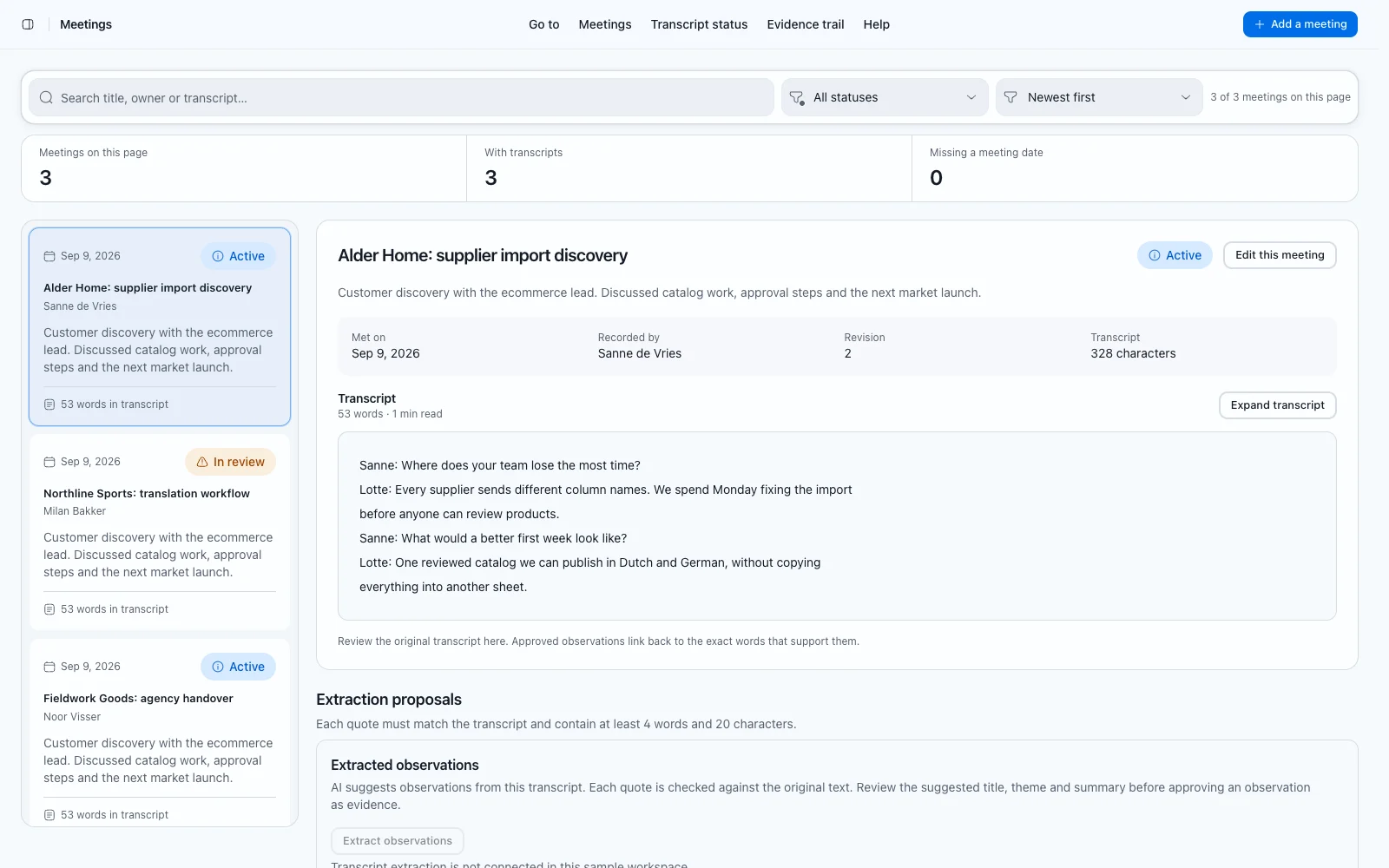
Every meeting on Today links to its own record, so preparation is one click rather than a hunt through three tools. For an external meeting the record opens with a stored snapshot of the matched company website under the header, captured once by an editor who allowed it, so you are reading what they publish rather than what you remember.
Afterwards the transcript is what matters. Queue it for extraction and the proposals come back as candidate observations, each with the character span it came from. You approve the ones that are real, edit the wording of one, and reject the last with a reason. The approved ones become ordinary evidence records on the account, carrying the quote.
Wednesday: a decision with a real second option
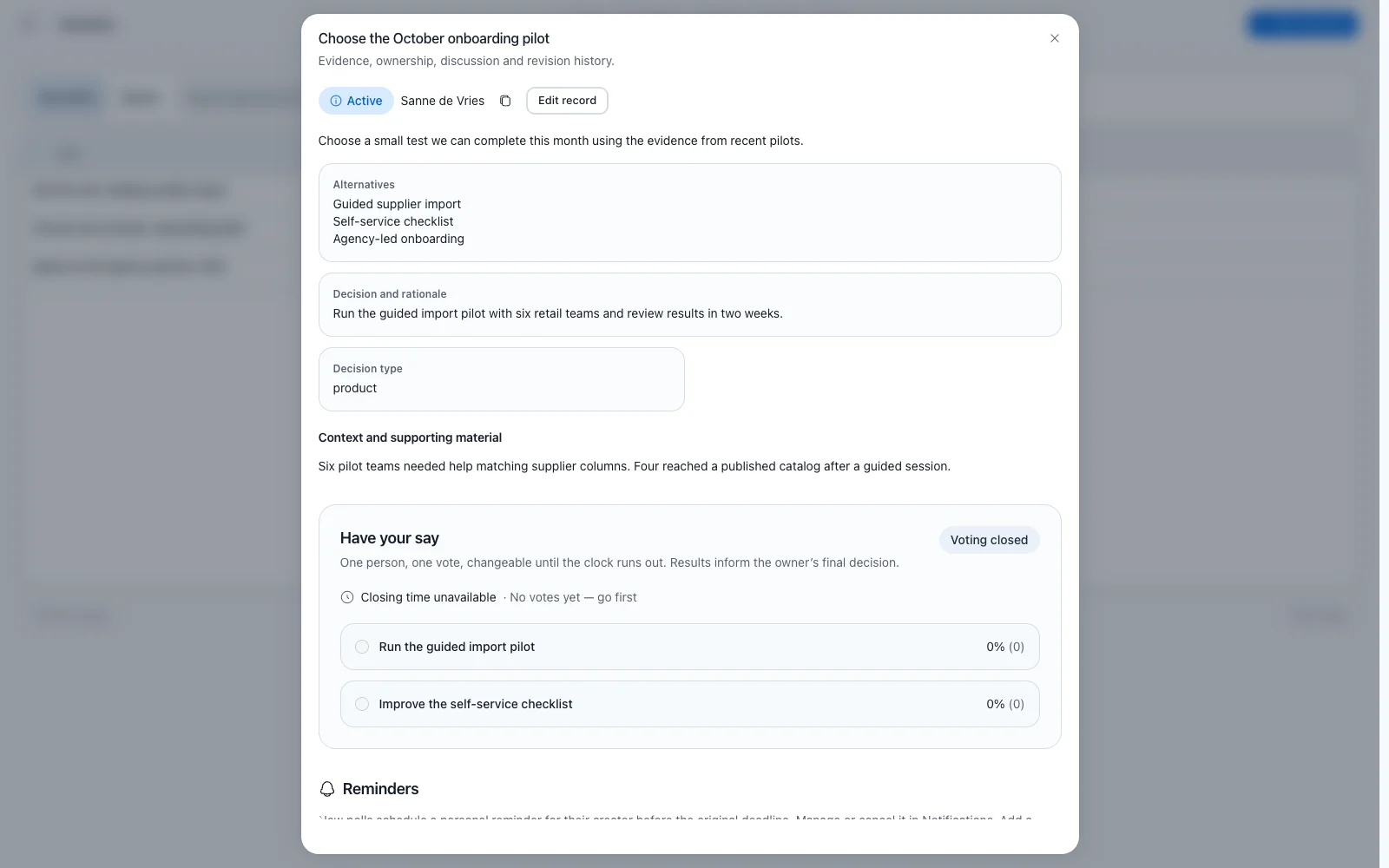
A decision opens as a workspace with four steps: overview, details, insights and reasoning, and voting. The overview shows what is missing, who owns it and by when. Details is where the alternatives live, which is the one part people skip when a decision happens in a thread. Insights groups the linked evidence, the assumptions and the reasoning somebody actually wrote.
Voting shows who has responded, not what they chose. Named choices appear only after you save your own vote, so nobody anchors on the first answer. A missing vote is advisory and never blocks recording the outcome, because a decision that waits for a full roster is a decision that does not get made.
Thursday: the roadmap vote costs you a minute
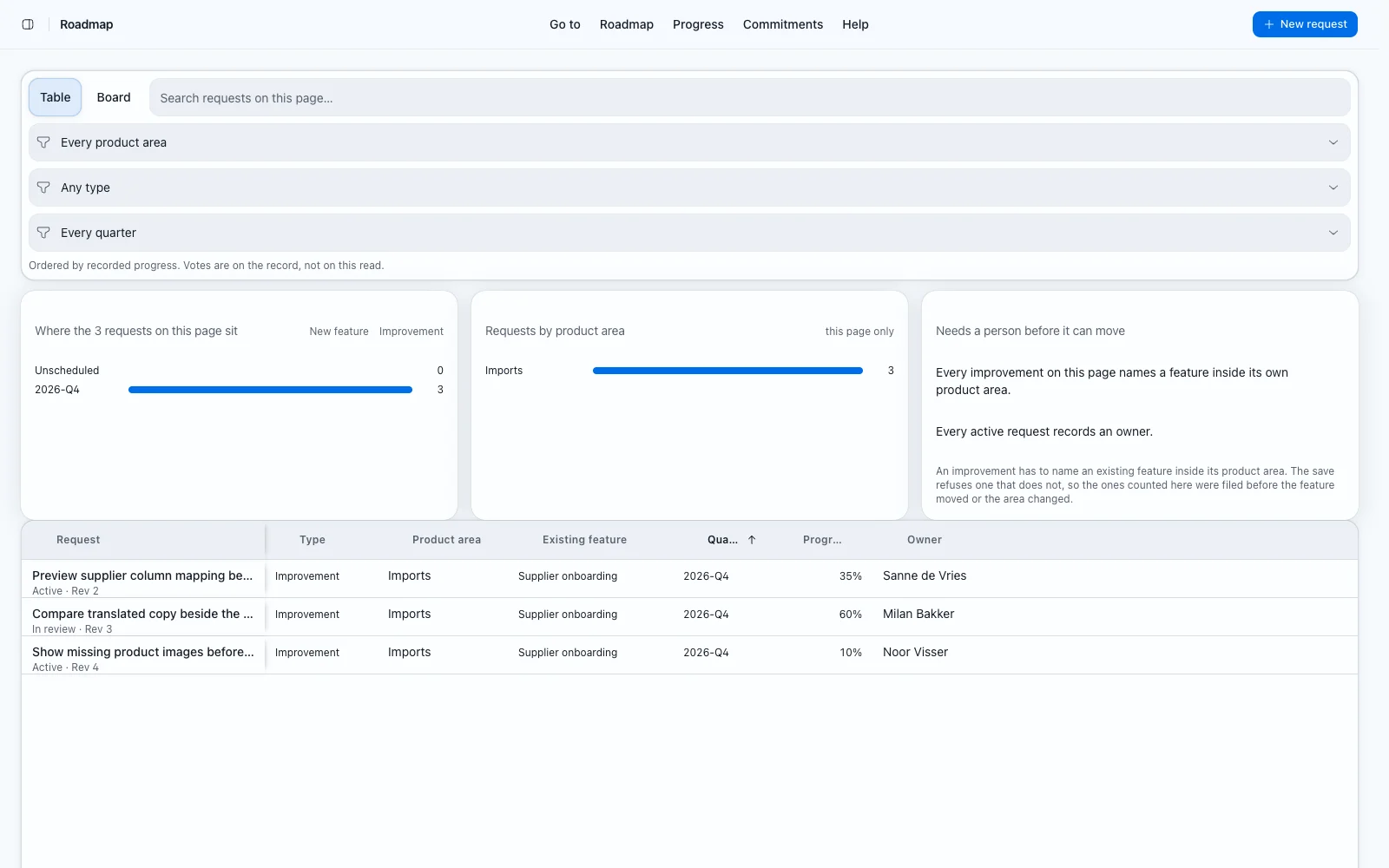
Roadmap holds new features and improvements, and an improvement has to name the existing feature it improves, so the list stays readable when it grows. Filter by quarter, status or search on the current page, then vote. One vote per person per request, and you can take it back without an approval dialog.
Comments keep their author and the time they were written. Every edit stores an immutable snapshot, so the wording a request had in July is still readable in September. That matters more than it sounds: half the arguments about priority are really arguments about what the request used to say.
Friday: read the week back
Fifteen minutes at the end of the week is enough if the records are honest. Open the evidence explorer and look at which themes actually moved, with the quotes underneath each count. Open the decision queue and see what has been waiting longest. Open one decision you closed and check whether it was decided well, separately from whether it turned out well.
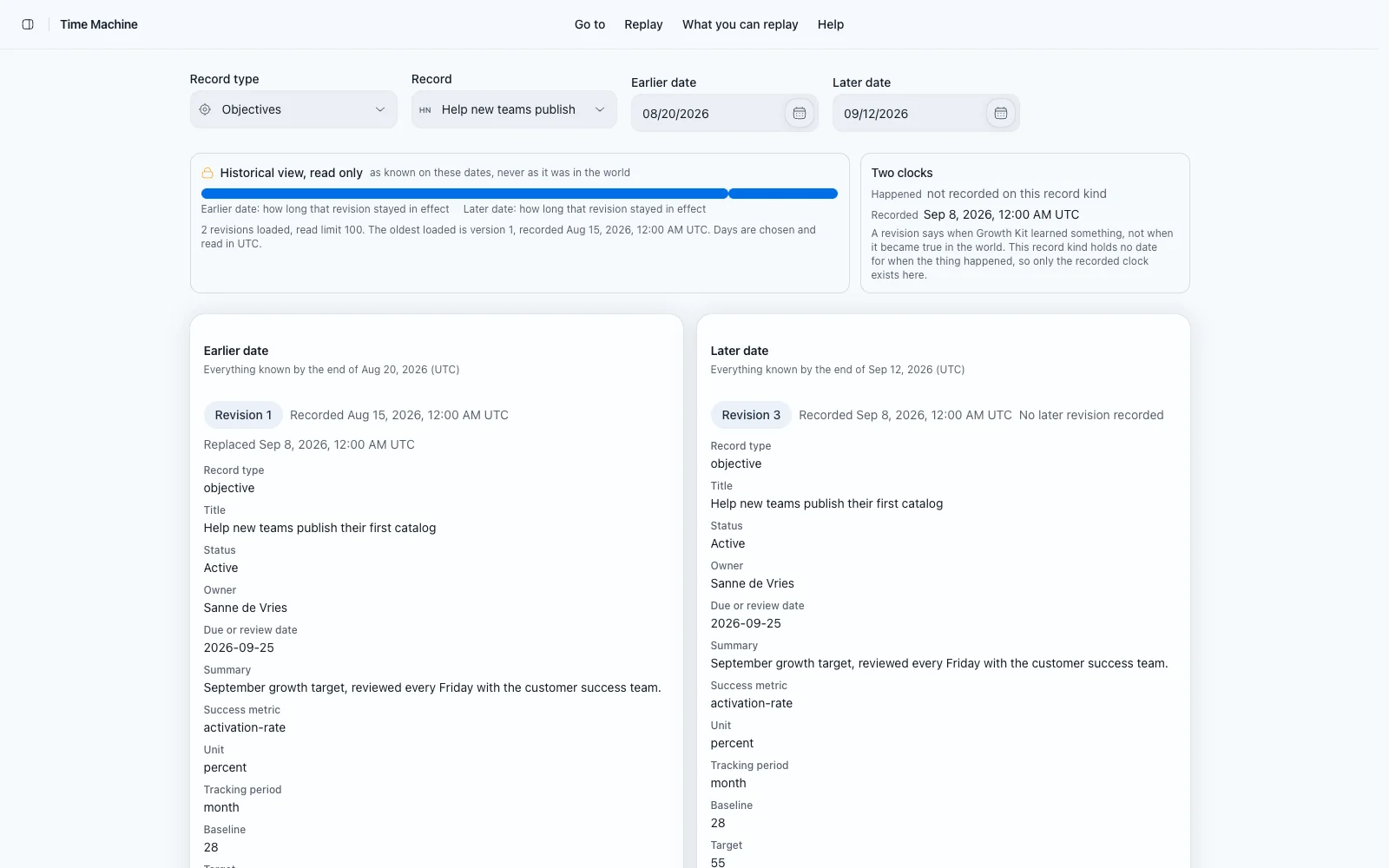
When somebody disagrees about what we believed at the time, Time Machine settles it. It reads a record as Growth-OS recorded it at a chosen instant and shows the field-level difference between two instants. Where the stored history cannot answer, it says unavailable instead of guessing.
- Evidence explorer: which themes came up, and the exact quotes behind each count.
- Decision queue: what has waited longest, in whole calendar days.
- One closed decision: process verdict first, outcome second, never mixed.
- Time Machine: what the record said before we changed our minds.
“A week is only reviewable if somebody wrote down what was known at the time.”
Where this lives in Growth-OS
Keep reading
Related articles
What Growth-OS will not do, and why
Campaigns do not send. No source is connected until a person connects it. Fit is a rule comparison. The boundaries are the reason the records stay trustworthy.
Why every insight in Growth-OS carries its quote
The exact-quote rule, how meeting intelligence proposes observations that a person approves, and the explorer that opens the transcript behind every count.
Do your next piece of growth work here
Sign in and start on Today. The guides explain each page and what it will not claim.