Objectives and metrics
An outcome with an owner, a number that has to move, and a date to read it again.
On this page
Where this comes from
This guide is distilled from docs/GROWTH-METRICS.md and src/features/growth-kit/help/content/strategy.ts. When the guide and Growth-OS disagree, that document is the one to trust, and the difference is worth reporting.
An outcome, not an activity
Launch three campaigns cannot be right or wrong: it is finished when the work is done, whatever happened to the business. An objective names the change we want as a number, so it can also be missed.
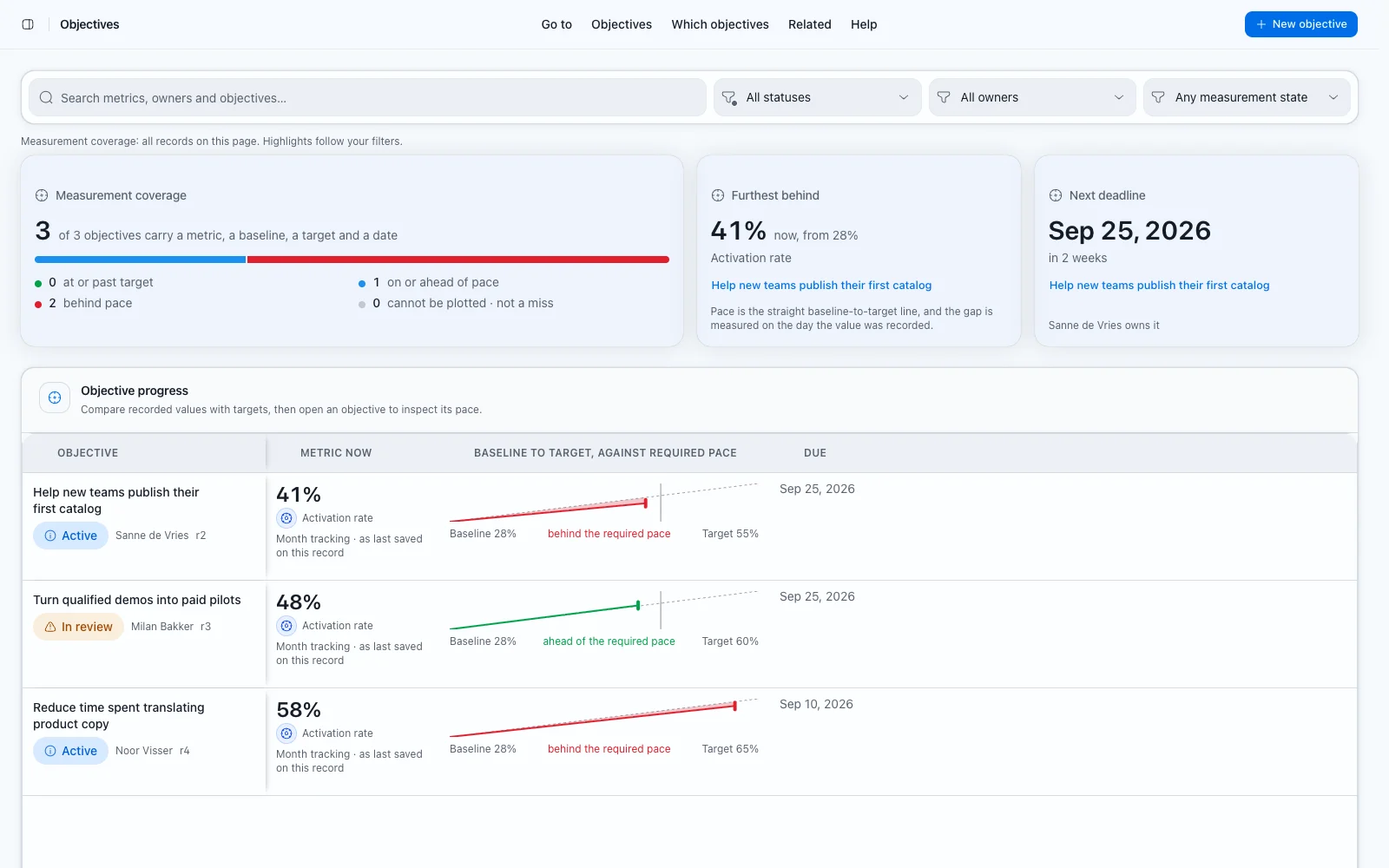
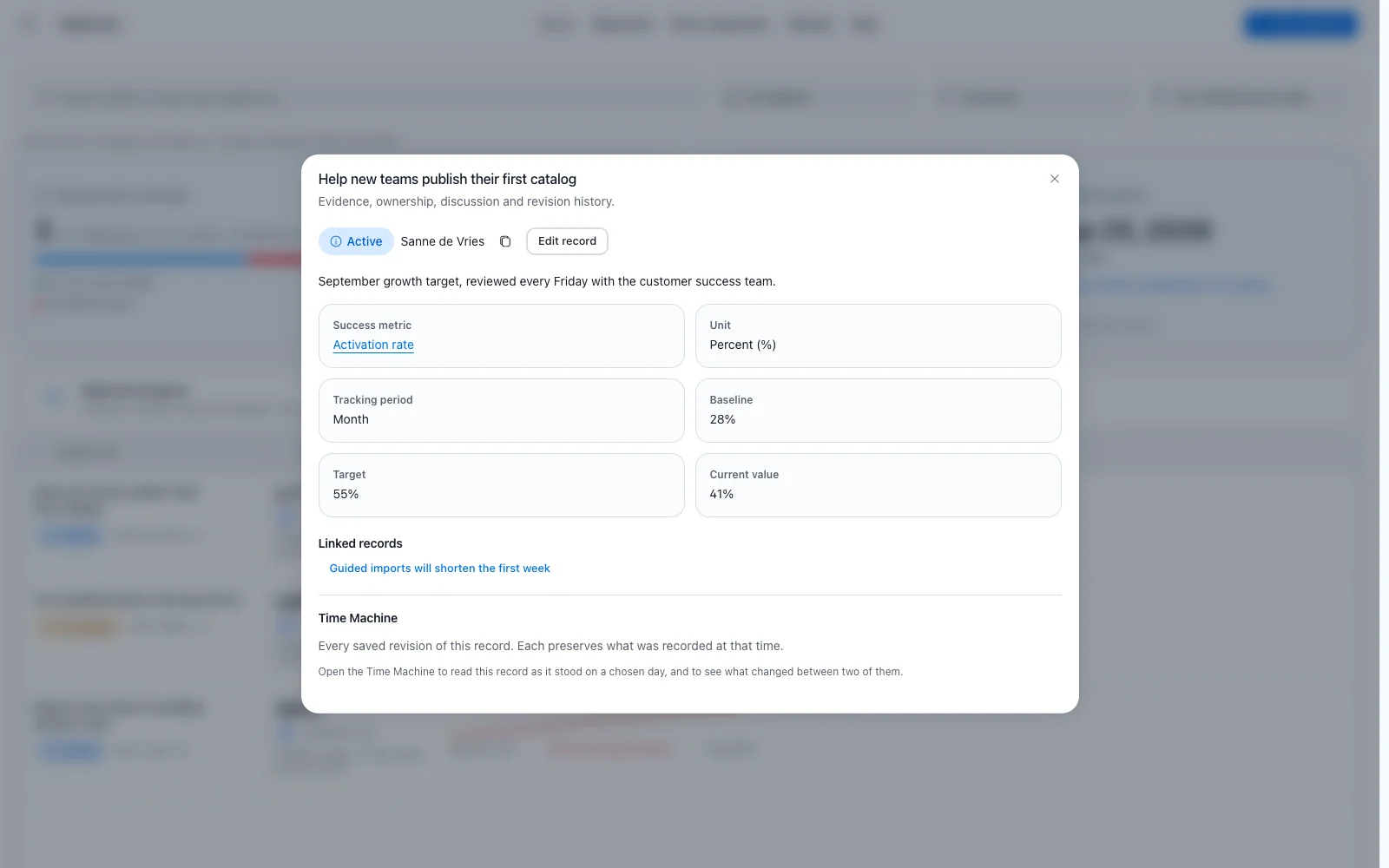
Success metric, baseline and target are required, and current value is the field you keep coming back to. An objective with no current value is reported as not measurable yet, naming that field, which is a different statement from no progress.
Write the baseline before the target
Look up where the number stands today and record that first. Doing it the other way round is how a baseline ends up being the target minus a round number.
Give the objective one name, not a team, and a review date you would actually spend on it. An objective saved as active without both is refused with the missing field named. Then link the strategic bet above it and the experiments testing it: an objective under no bet, and an objective nothing is testing, are both reported as findings.
Progress is read, not entered
No field on the objective says how far it has come. The share of the distance covered is derived from your baseline, current value and target, and direction is read from the record rather than assumed: a target below the baseline is a decrease, and covering ground means the number going down.
Three standings are kept apart, because a clamped figure hides two cases: behind baseline, in progress, and at or past target. A value that slipped behind the baseline and one sitting exactly on it both read as nothing covered, and only the standing tells them apart. Nothing here is a forecast.
The metric library
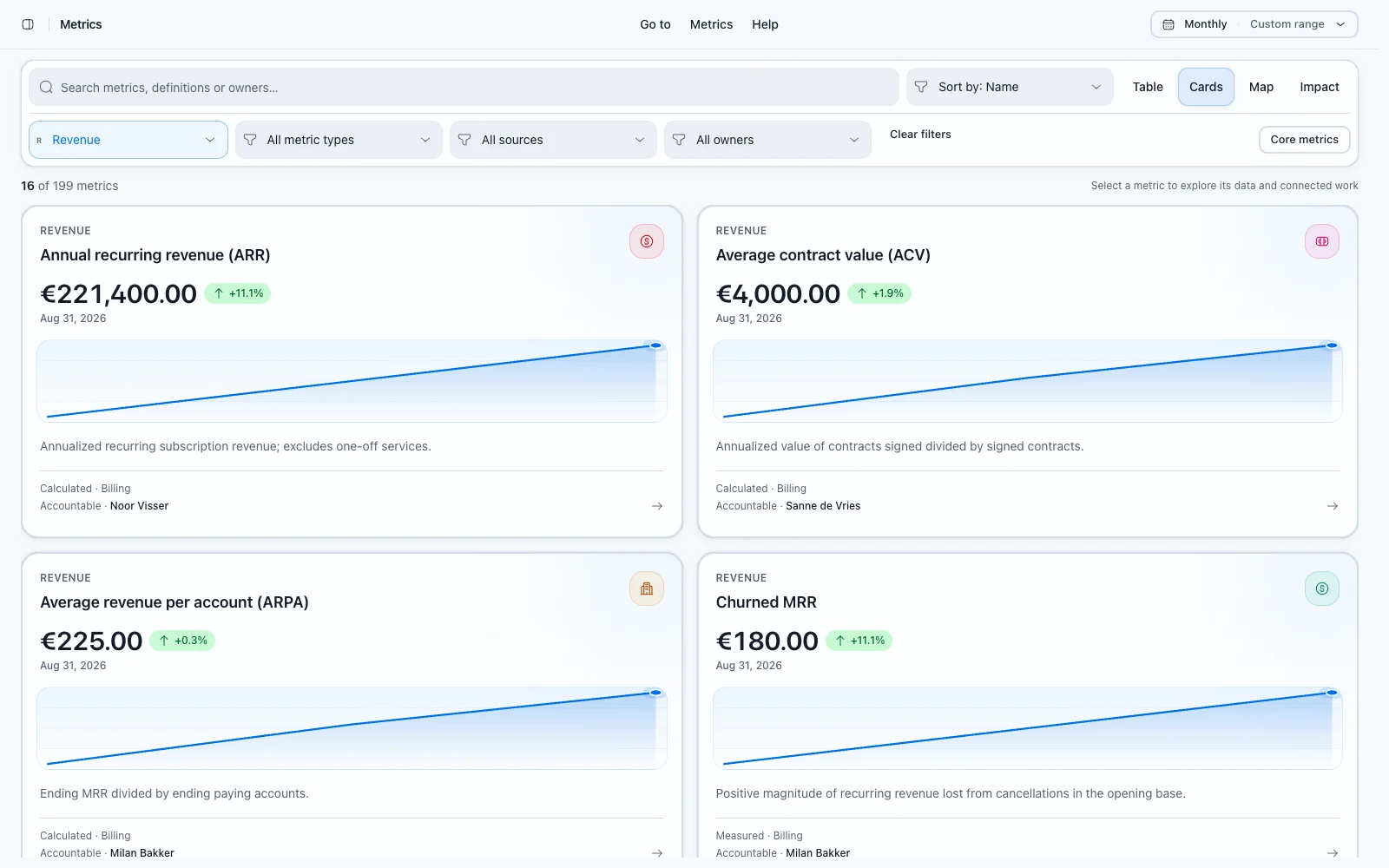
Metrics keeps definitions read-only and shows dated measurements and calculated results, so an objective and an experiment can point at the same identity instead of two spellings of one name. Objectives record values and targets; experiments record a separate threshold and result.
Choose a date range and a reporting period, and calculations combine only matching currencies, populations and periods. Record a correction to keep the original in history, and withdraw an invalid input to make the results that depend on it unavailable rather than wrong. Editors record source inputs by hand; provider ingestion is not connected.
Was this page helpful?
Feedback is stored only in this browser in the starter implementation.