Ask Growth Kit
What it reads, how citations are checked, and the questions it will not answer.
On this page
Where this comes from
This guide is distilled from src/features/growth-kit/help/content/conversations.ts. When the guide and Growth-OS disagree, that document is the one to trust, and the difference is worth reporting.
Only this project, only what you may read
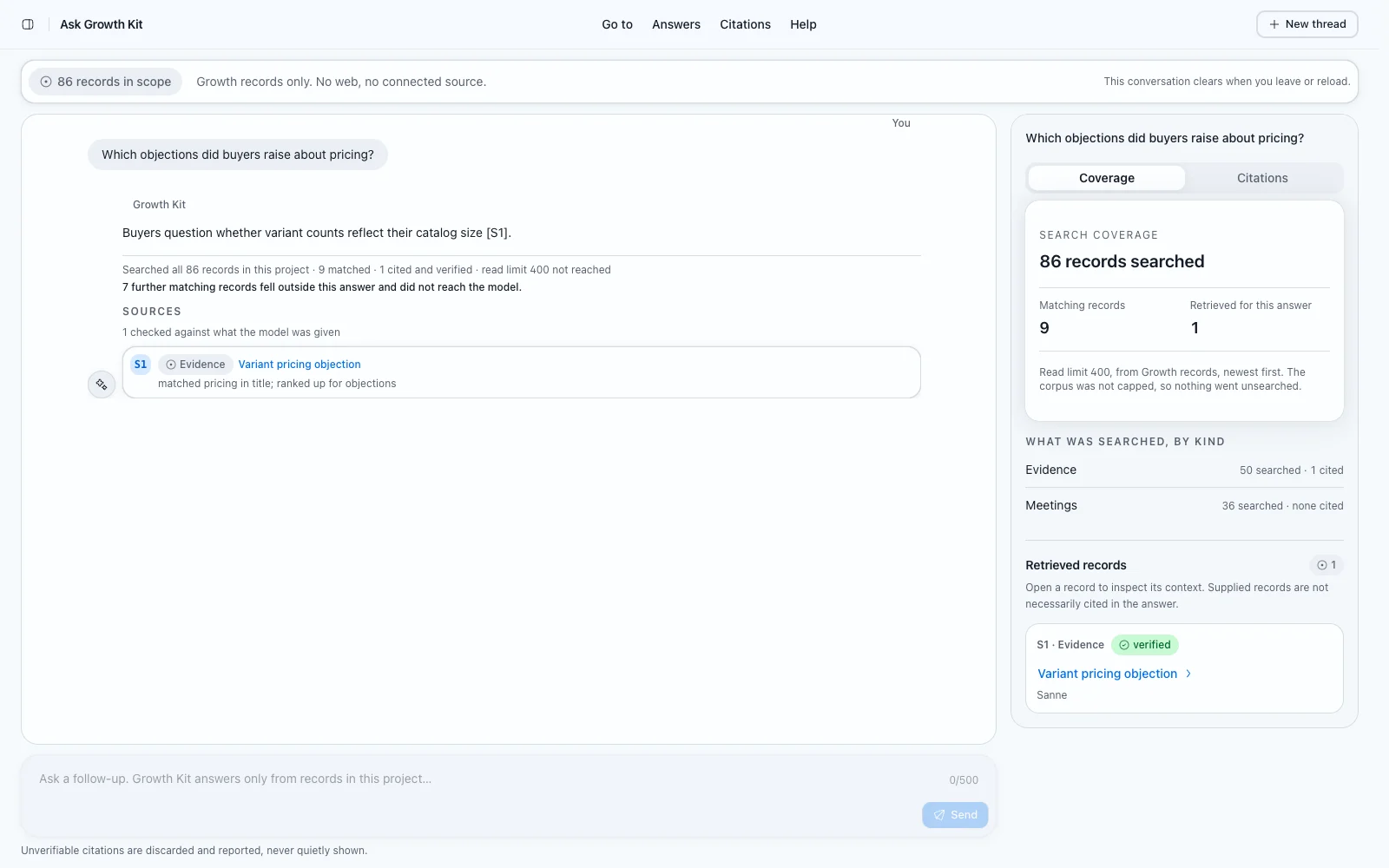
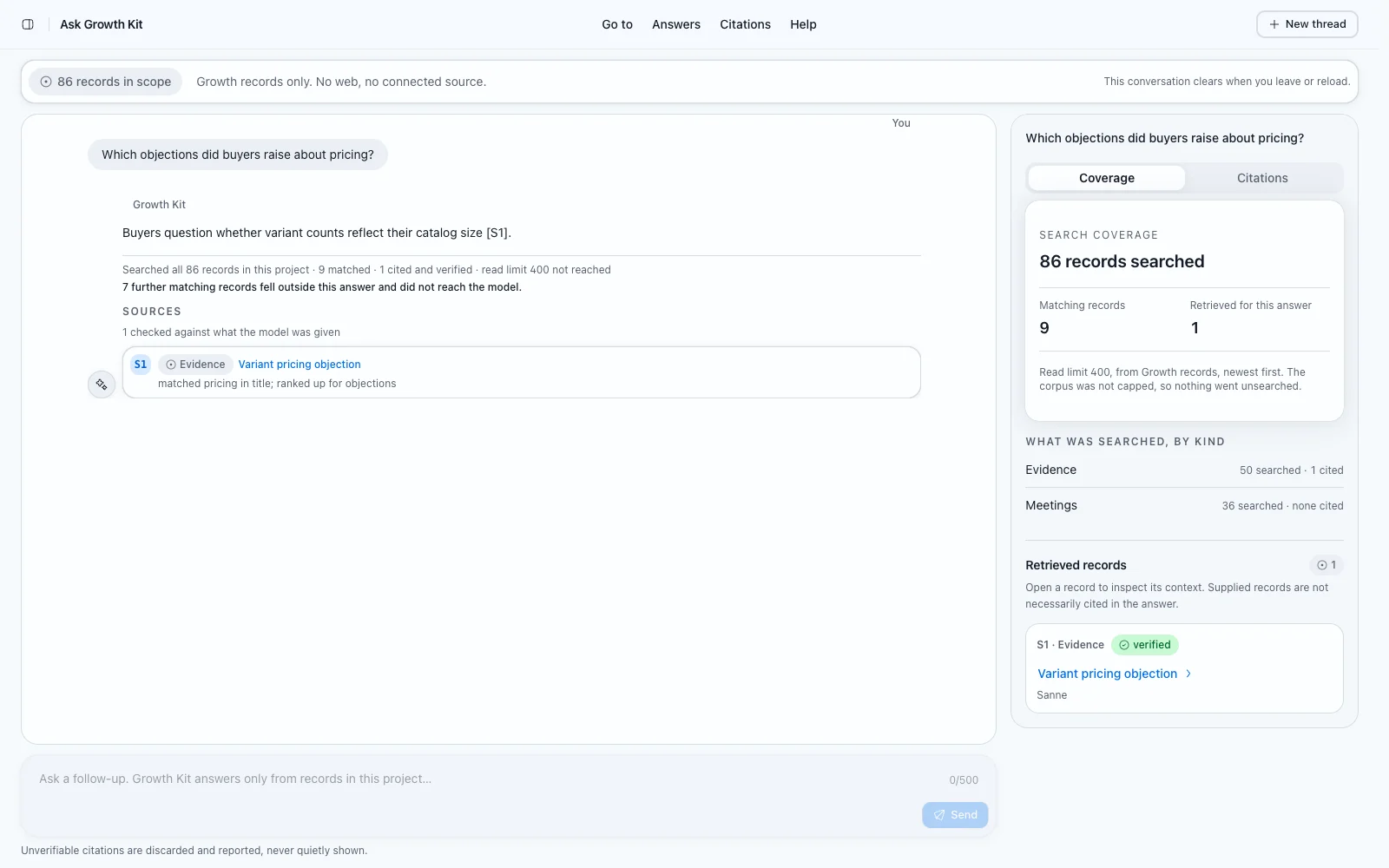
Ask searches the records your role already lets you read in this project. It does not browse the web, reach another project or another organization, and does not answer from what a model knows about product information management in general.
Recorded text travels to the model as data, never as instructions. A transcript that says to ignore the instructions is quoted material to be described, not a command. Nothing anybody writes in a record changes what Ask does.
Read the count line first
Under every answer is one sentence saying how many records were cited, how many matched and how many were searched. Cited two of three matched out of forty searched is a different answer to the same words than two of thirty.
Every record an answer claims to rely on is checked against the records that were actually supplied. A reference to anything else is dropped before you see it and counted, so a fabricated source cannot reach the page. When no citation survives, the answer is shown and marked unverified with the matching records beside it.
Matching is on words, not meaning
Your question is split into words and looked for in a record's title, owner, summary and the fields its kind declares. A hit in the title counts most, then the owner, then the summary, then a declared field. A question about churn will not find a record that only says cancelled, so use the vocabulary of our own transcripts.
The limits are all stated on the page: the 400 most recently updated records are searched, the first 4,000 characters of a field are scanned, at most eight records come back, and each field reaches the model cut to 1,500 characters with shortened records marked as shortened.
What it cannot do
Ask will not use outside knowledge, invent a number, date, owner, customer or competitor, or describe a record it was not given. It writes nothing: no record is created or changed, and an answer is not stored as a finding.
When our records do not hold the answer it says so and names what is missing. That is the most useful output on the screen. Write the meeting, the evidence record or the objective it named, then ask again.
Your question is sent in the request body and never put in the address, so it stays out of browser history and request logs. A copied link reopens Ask empty; send the question in the message beside it, or send the cited record instead.
Was this page helpful?
Feedback is stored only in this browser in the starter implementation.