Bets, experiments and open questions
What we are betting on, what is testing it, where the constraint is, and which beliefs went stale.
On this page
Where this comes from
This guide is distilled from src/features/growth-kit/help/content/strategy.ts. When the guide and Growth-OS disagree, that document is the one to trust, and the difference is worth reporting.
Three record kinds that are easy to collapse into one
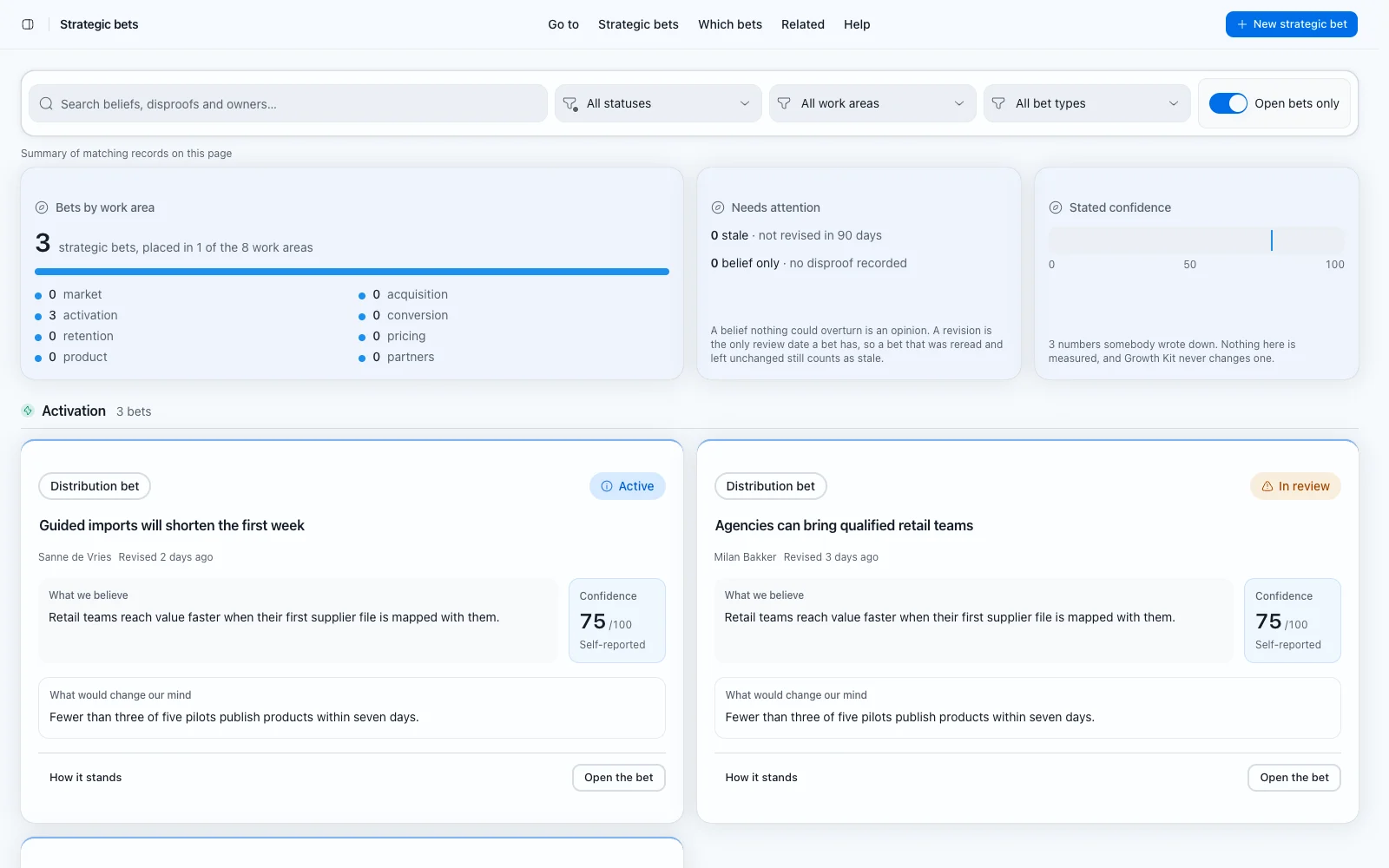
A strategic bet is a belief we are already acting on, because waiting would cost more than being wrong. An open question is something we cannot answer yet and want prioritised. An experiment is a falsifiable test with a hypothesis, a success threshold and a stopping rule.
The same sentence written as the wrong one of those three either cannot be lost, cannot be prioritised, or cannot be run. Keeping them apart is what lets the portfolio say anything at all.
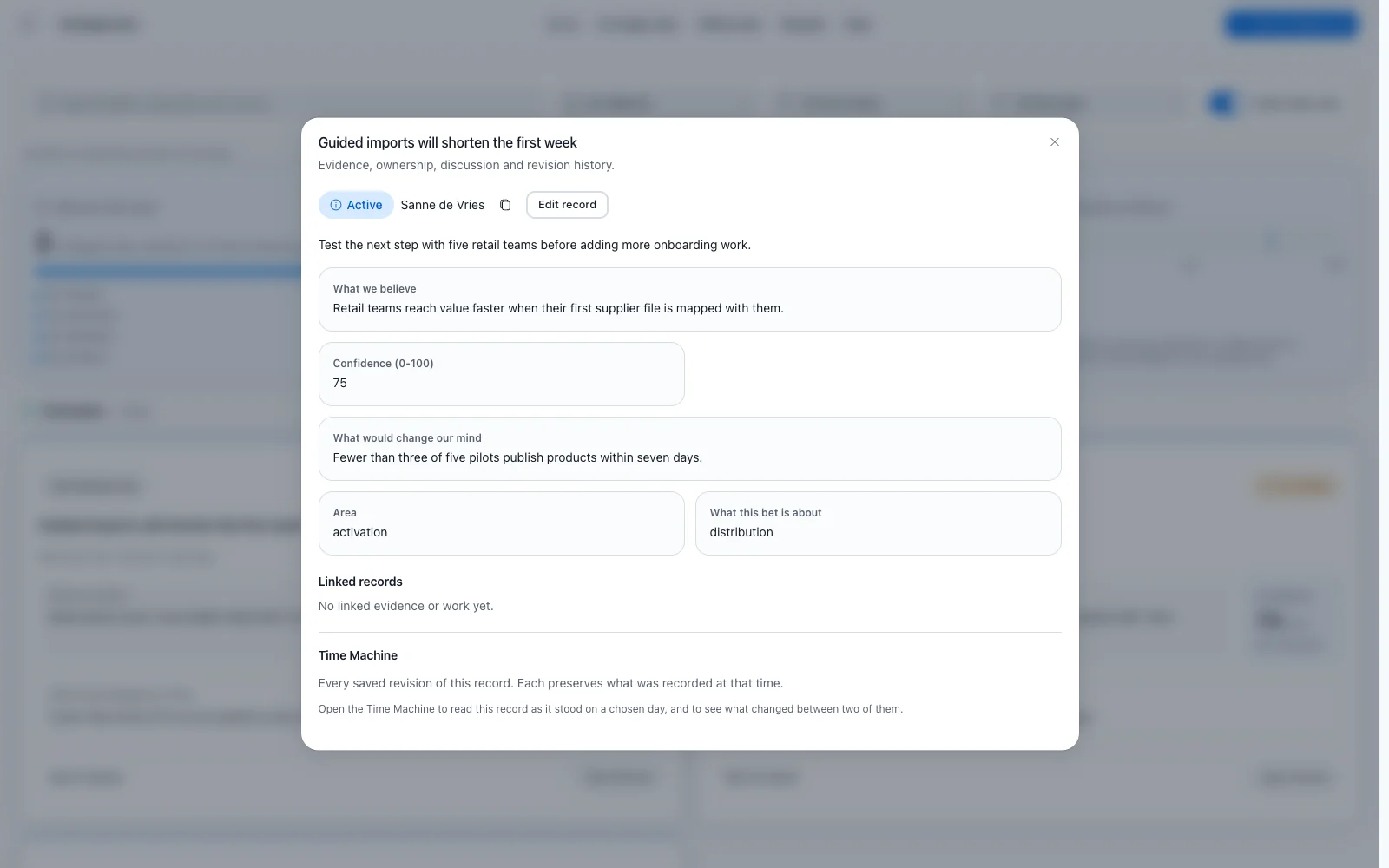
A bet states its own disproof
Confidence is a whole number from 0 to 100 that a person typed. Nothing measures it, nothing adjusts it, and it is read back exactly as recorded.
What would change our mind is the field that does the work. Months later anyone can check whether that thing happened. A bet without it cannot be lost, which also means it cannot teach us anything. A bet with no revision for 90 days is reported as not revisited inside a planning cycle, and the page says plainly that the date behind that is when the record was last saved, not when anybody re-examined the belief.
An experiment you could lose
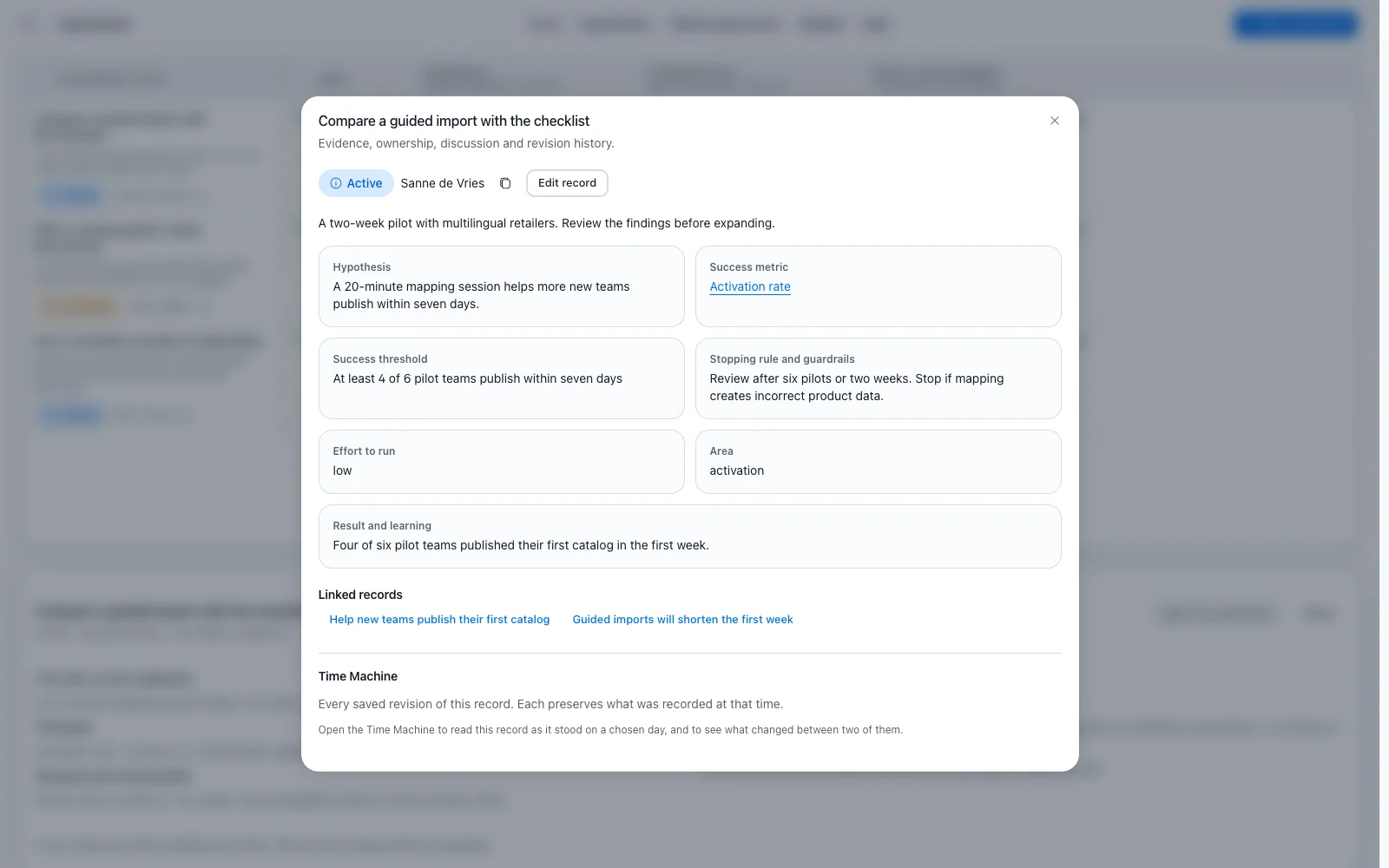
The threshold and the stopping rule are required, and both have to exist before the run. Afterwards, any outcome can be read as support. An experiment record with no stopping rule is classified as an exploration rather than an experiment, so the portfolio balance does not read as more controlled testing than is happening.
Finished means written down. An experiment is not finished when somebody moves it to done; it is finished when the result and learning field says what happened and the belief it informs has been revisited. A concluded experiment with nothing written is reported as its own finding.
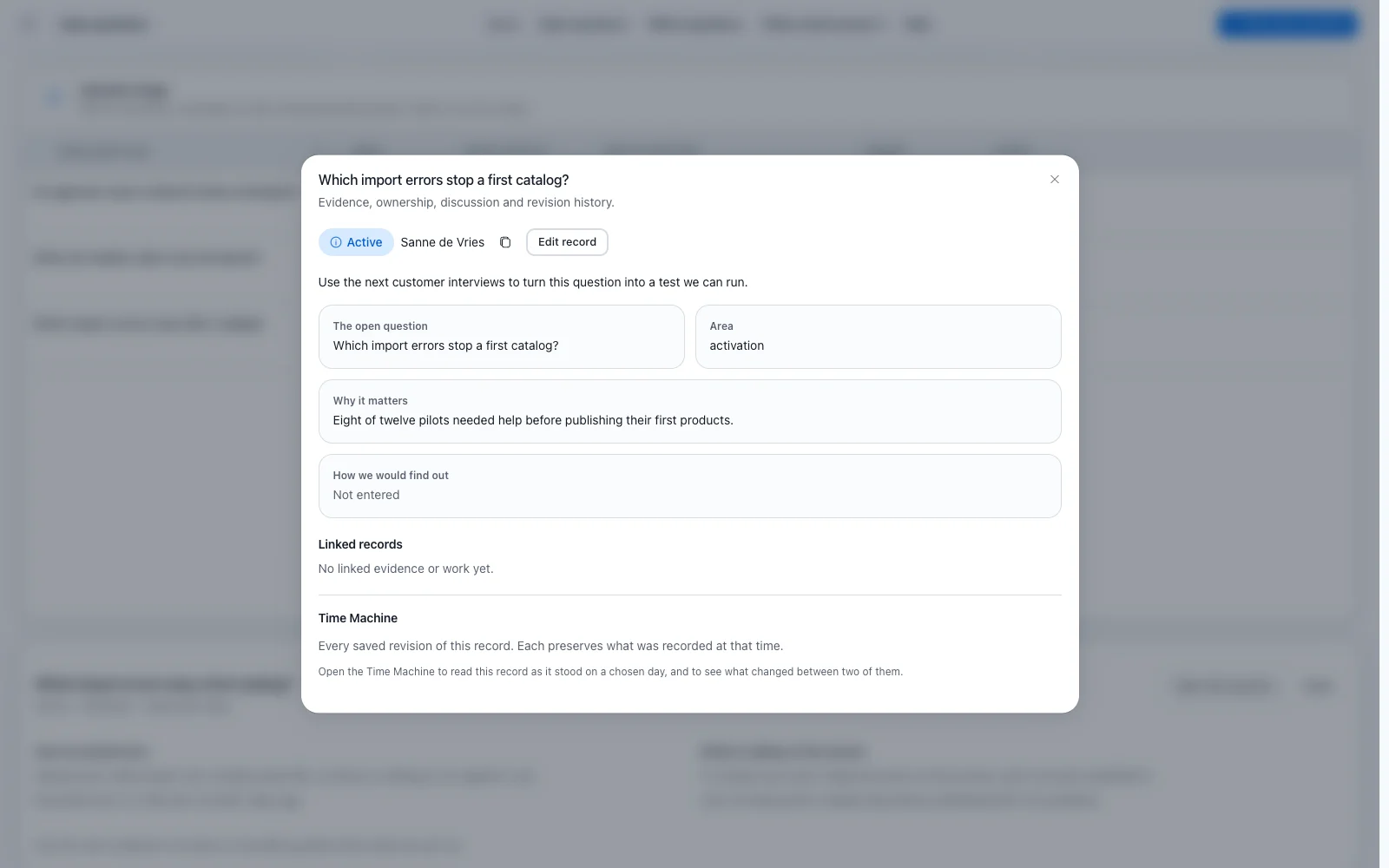
Open questions are ranked by consequence
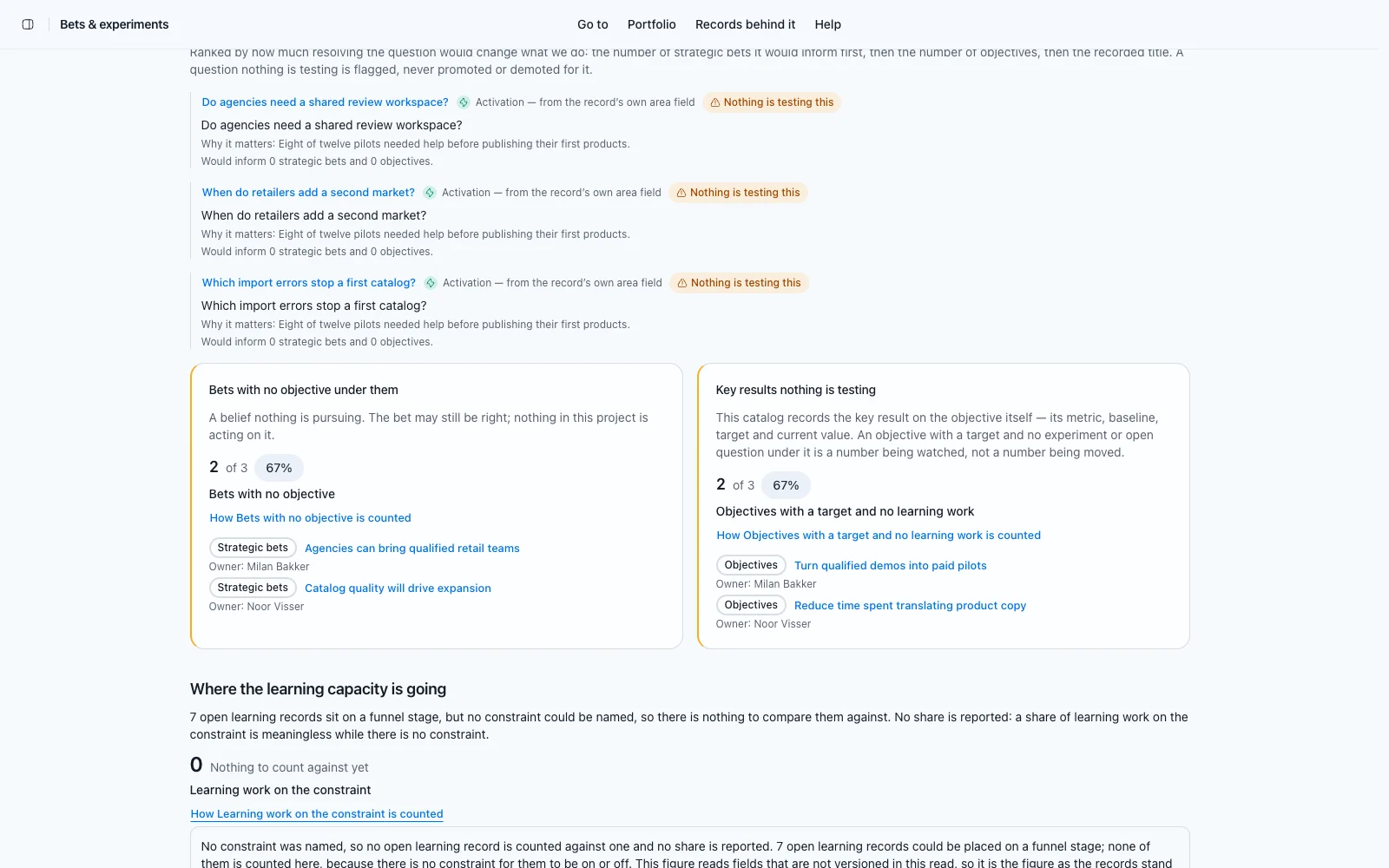
The register orders questions by how many strategic bets resolving one would inform, then by how many objectives, then by title. Not by age, and not by how loudly the question was asked. Links are the only thing that connects a question to a bet; nothing infers it from wording.
How we would find out is optional and it is the difference between a question and a complaint. A question with no route to an answer stays in the register and never turns into work, because nobody reading it knows what to run.
What the portfolio will and will not claim
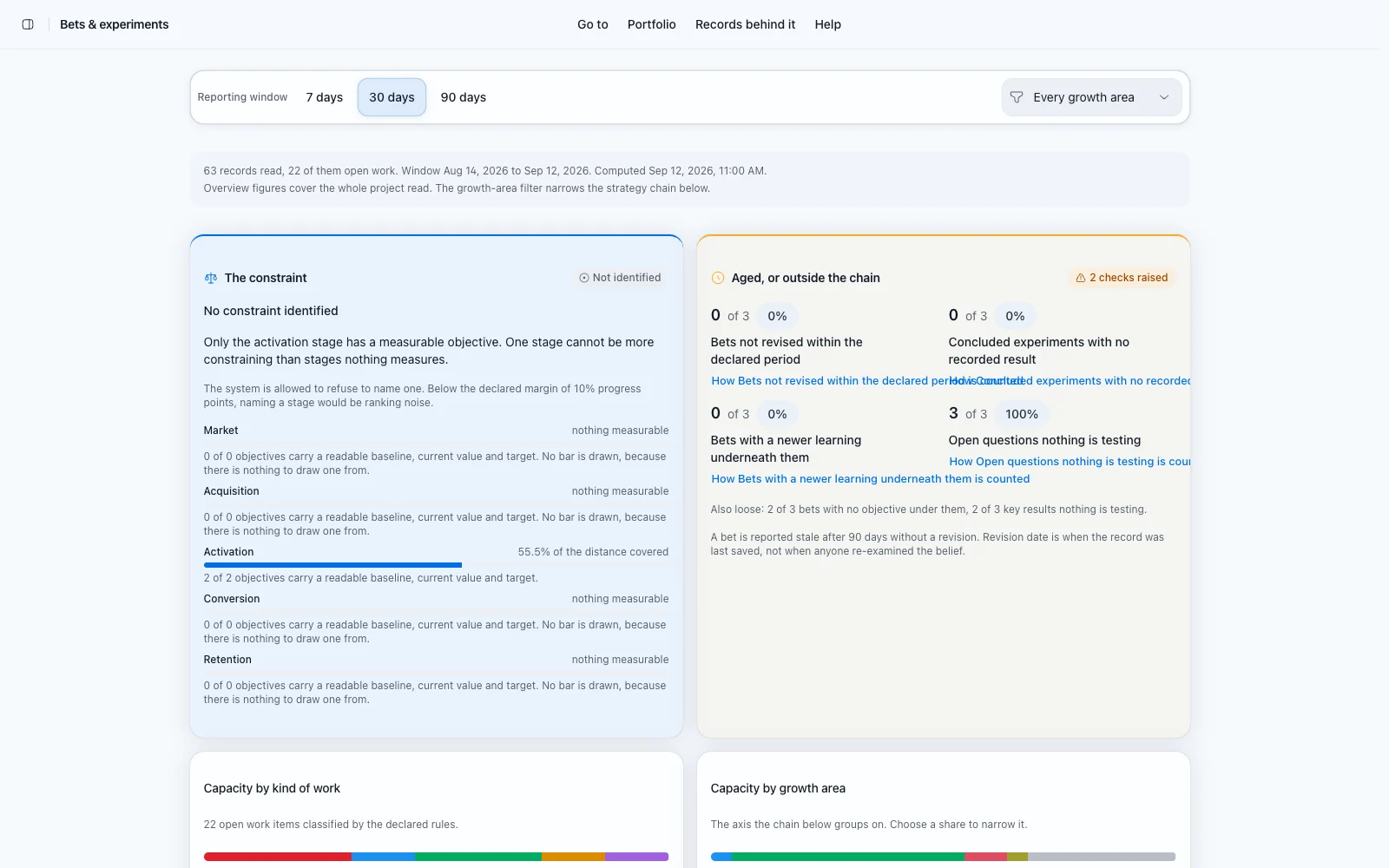
Every figure names its own denominator: what was counted, out of what, over which window, from which source, and the record ids behind it. Two figures never share a label, and a share of an empty denominator is a distinct state rather than zero percent.
There is no default constraint. The page either names a transition and carries the stage evidence for it, or it says which evidence was missing. A stage is named only when it stands at least ten progress points apart from the next worst, and a tie is reported as a tie.
Five scoring dimensions stay separate: impact, confidence, ease, learning value and strategic relevance. A dimension nothing recorded stays unscored and names its reason, and a combined figure appears only beside all five parts with at least two of them scored. Every row opens the record it names, because the fix is always in a record.
Was this page helpful?
Feedback is stored only in this browser in the starter implementation.