Competitor intelligence and battlecards
Research a competitor, write the card, and see which recorded conversations mention them.
On this page
Where this comes from
This guide is distilled from src/features/growth-kit/help/content/market.ts. When the guide and Growth-OS disagree, that document is the one to trust, and the difference is worth reporting.
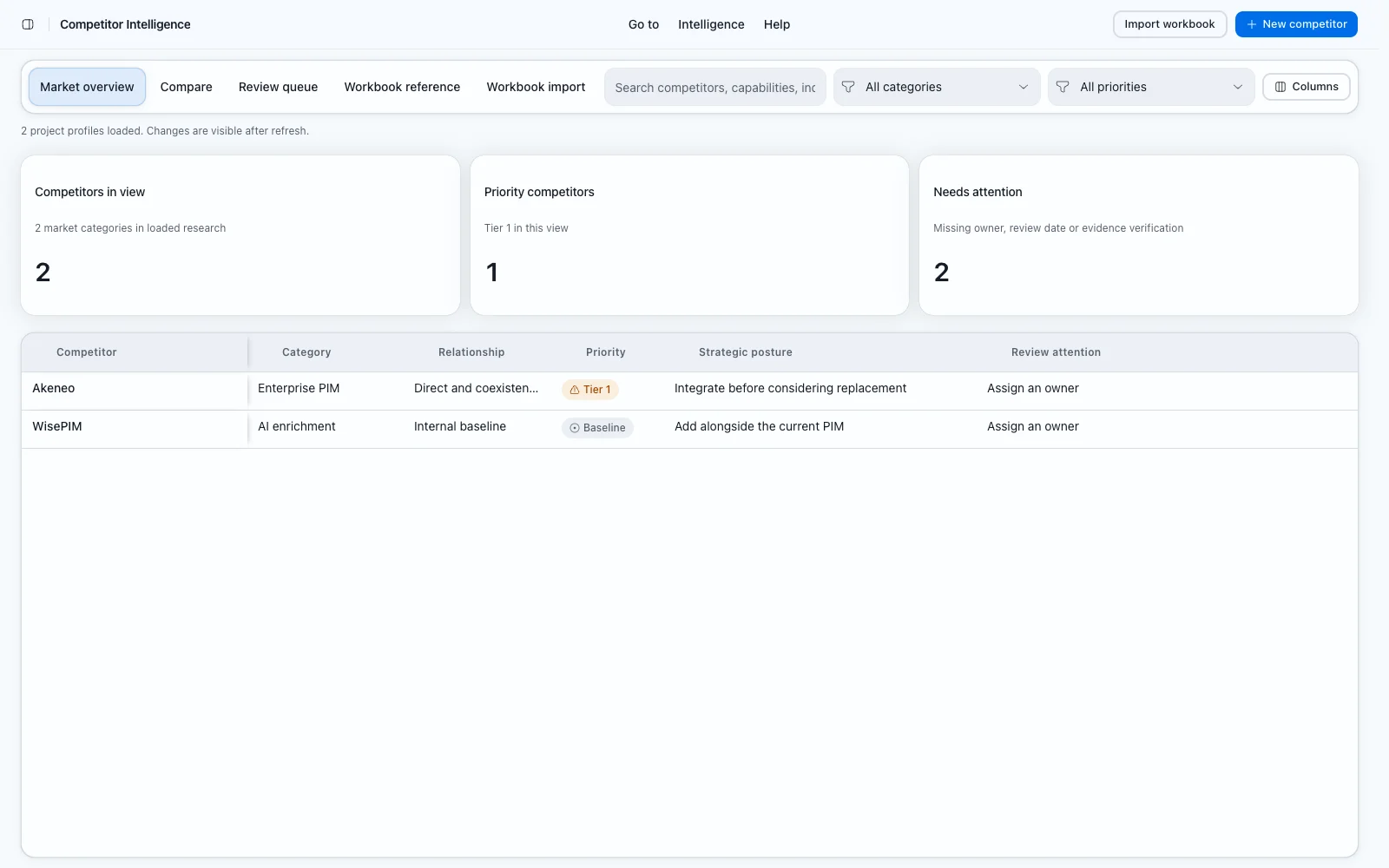
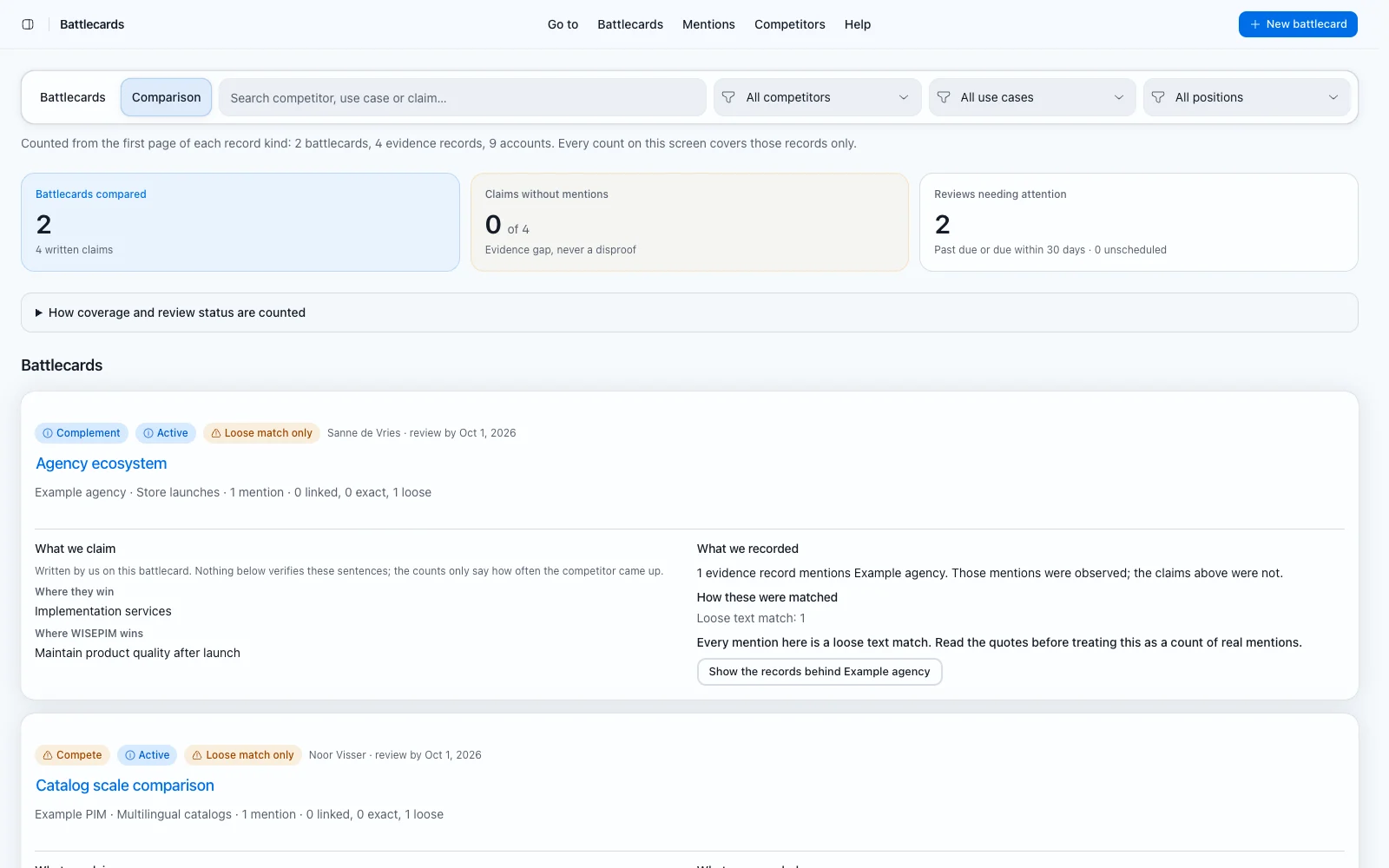
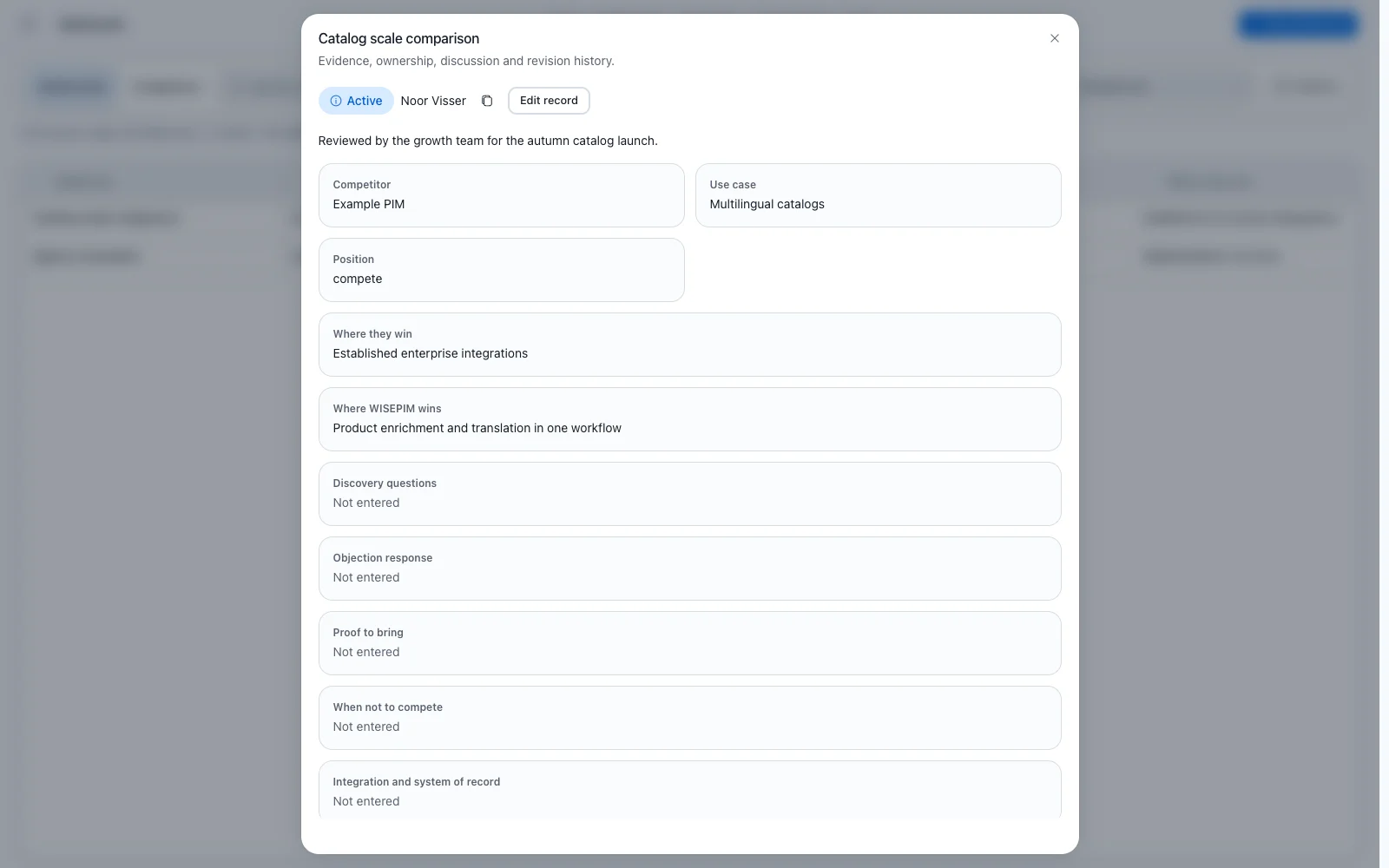
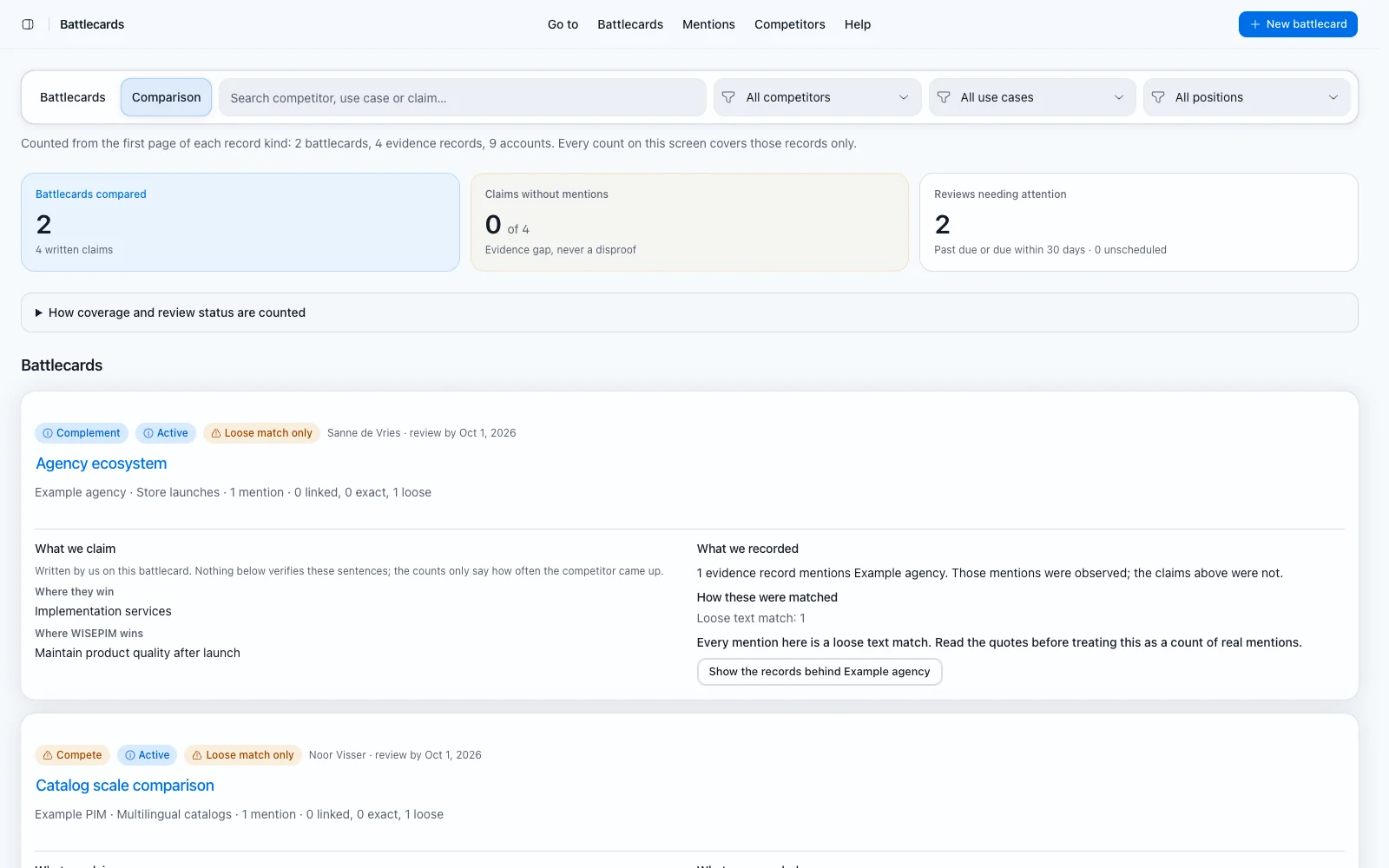
Research first, card second
A competitor profile keeps company, stack, pricing, feature, messaging and source research together. Import an .xlsx workbook up to 10 MB and every row keeps its sheet, its row number, its source values and its dates. Imports start unreviewed, verification is set per source, and a reimport never overwrites a saved profile.
A saved profile can prepare a battlecard draft with discovery questions, objections and proof, and the card links to the profile revision it used.
One competitor, one use case
Both are required, and one card per pairing is what keeps a claim answerable. A card covering three use cases cannot be reviewed, because the sentence that is wrong for one of them is right for the others.
Position is a decision rather than a rating: compete, complement or decline. Decline is a real answer and a useful one, because it tells a seller not to spend the meeting on it.
What we claim and what we recorded stay apart
Where they win and where WISEPIM wins are sentences we wrote. Nothing in Growth-OS verifies them. Beside them the explorer counts the evidence records that mention the competitor, and every count states how it matched: linked by a person, an exact name match, or a loose match on part of the name.
A loose match is a caution, not a mention. Open the evidence record and read the quote before you use the number. A card with no matched evidence is reported as a gap in what we recorded, explicitly not as evidence against the claim.
Write the competitor name the way people say it
Matching runs on the name, across the quote, the record title and our summary, so the spelling is load bearing. An abbreviation collects loose matches instead of mentions, and a card with no competitor name can never be matched at all.
Competitive claims go stale faster than most records, so a card shows its owner and its review date, or says that one is needed.
Was this page helpful?
Feedback is stored only in this browser in the starter implementation.