Culture, messaging and availability
How we work, how we talk about WISEPIM, and who is reachable this week.
On this page
Where this comes from
This guide is distilled from src/features/growth-kit/help/content/operating.ts. When the guide and Growth-OS disagree, that document is the one to trust, and the difference is worth reporting.
A principle with an example
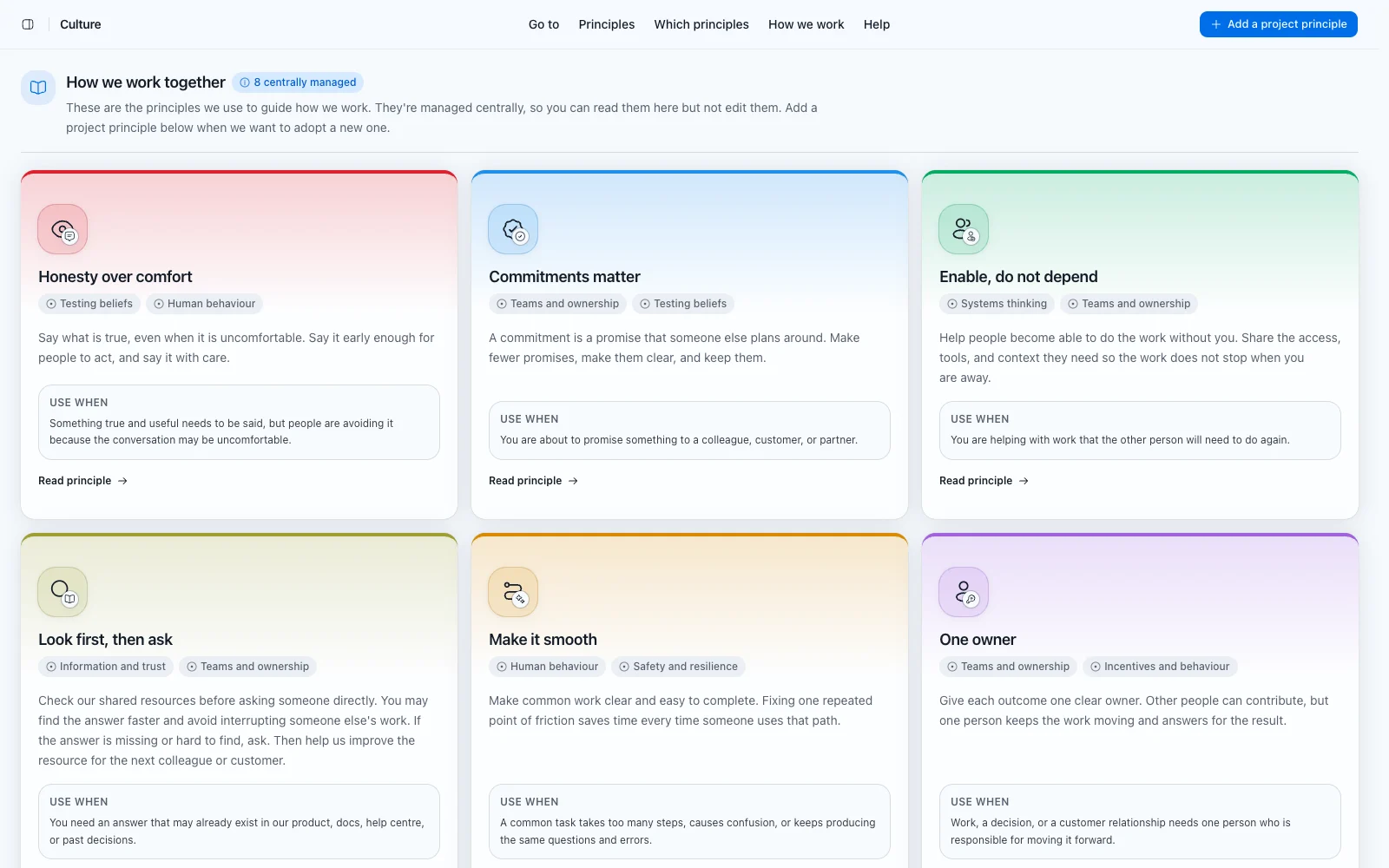
Every culture record carries a required example of what good looks like. That field is what separates a principle from a slogan: a reader who has never seen the behaviour can recognise it from the example alone. Use one moment from your own week, not an anecdote from another company.
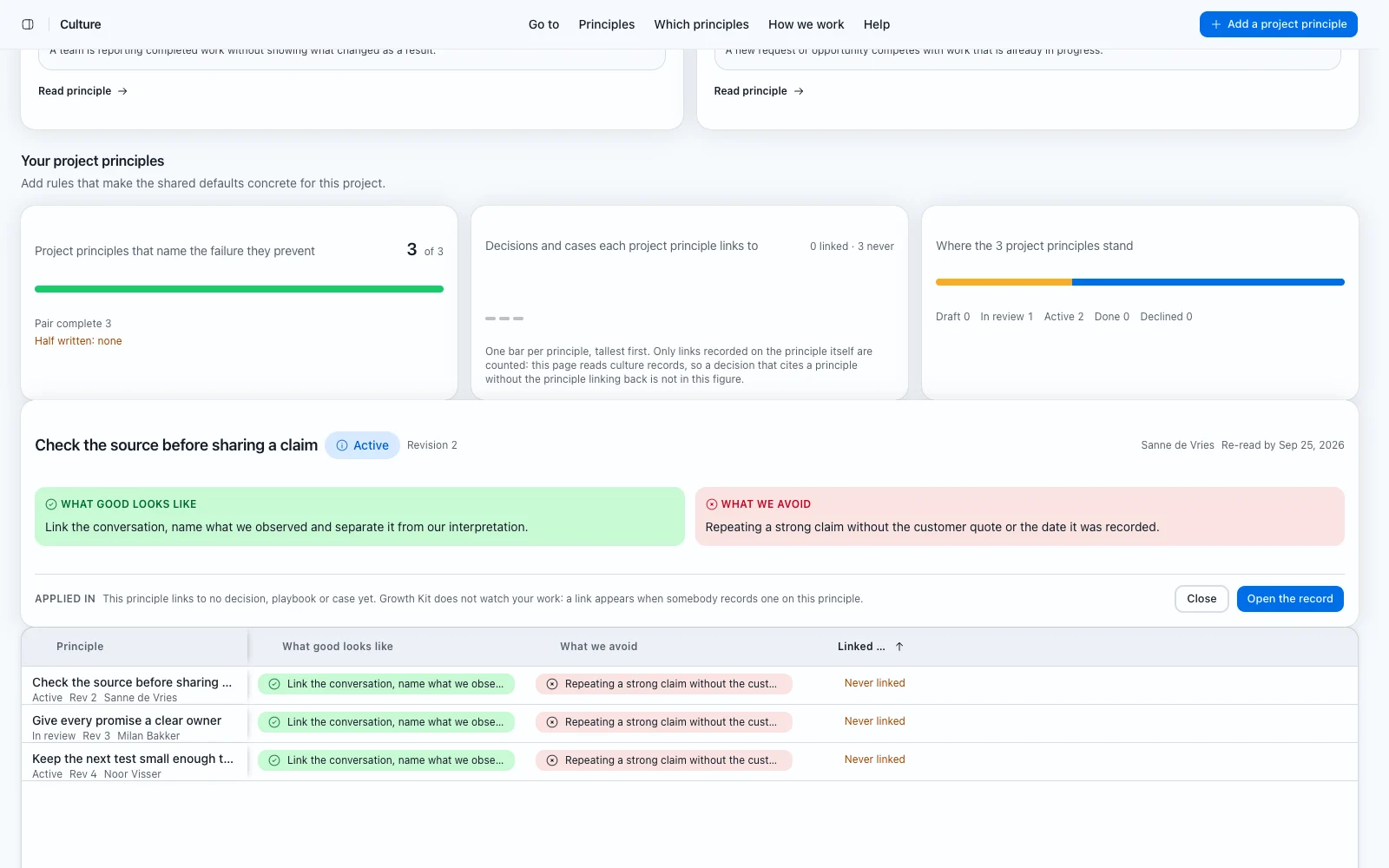
The anti-pattern is the other half and it is the one that makes a principle testable. Name the behaviour that keeps happening instead, in the words people actually use, and a review can check the record against the week rather than against an opinion.
Two homes for a principle
The principles at the top of the page are centrally managed defaults, the same for every project, so you can read them but not edit them there. The records below are this project's own. A principle the whole company runs on belongs in the reviewed library; how this project applies it, with this team's examples, belongs in a record here.
A record saved as active needs one owner and a review date, so a principle cannot become active with nobody answerable for it.
Messaging is the positioning drafts are held to
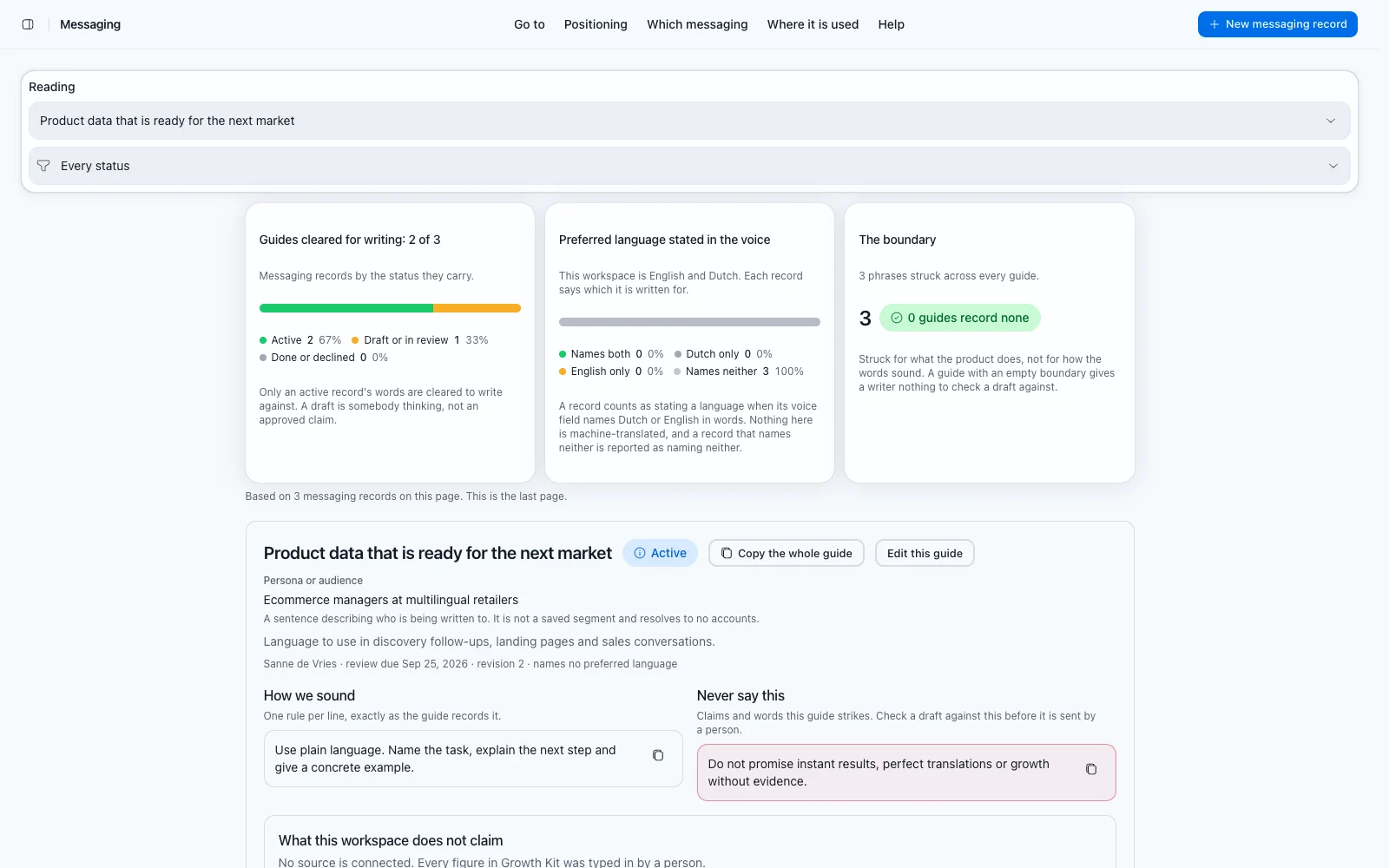
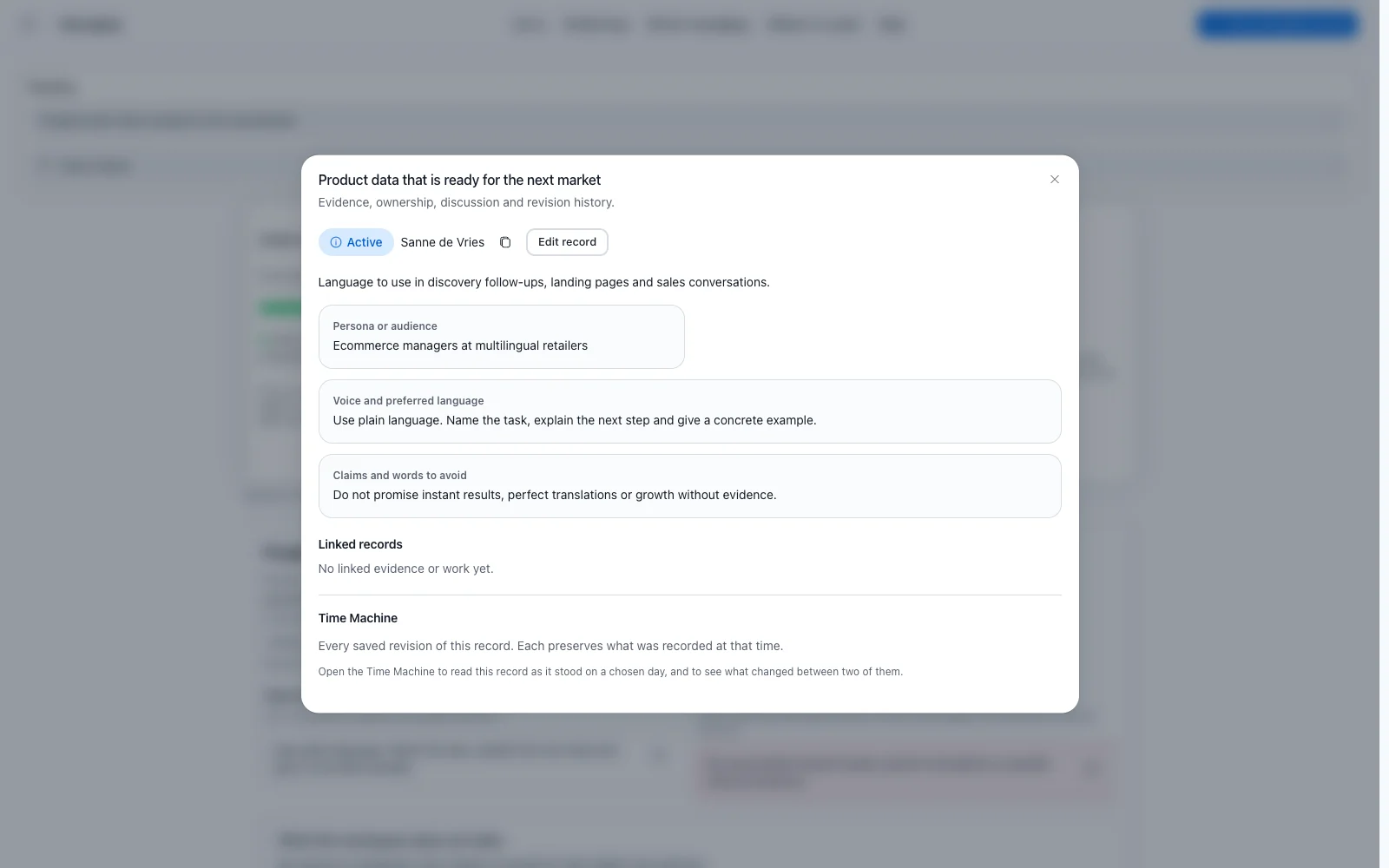
One audience per record. The audience and the voice are both required, so a record always says who it is about, and splitting two audiences into two records is what makes either of them usable.
Write preferred language rather than adjectives. We say catalogue, not PIM instance is usable; professional and approachable is not. The claims and words to avoid field is not a style note: it is the field a draft generator is told to obey and the field a reviewer can point at when a draft overclaims.
Campaigns reads at most twenty messaging records when it prepares a draft, and there is no way to choose which twenty. Keeping the set small is what keeps the voice one voice.
Availability describes the schedule, not the person
Availability shows current assignments, recorded meetings for a Monday to Sunday week, current meeting and busy indicators, and the notes teammates choose to share. Meetings combine saved project meetings and calendar snapshots, matched by user ID or attendee email, and cancelled events, declined attendees, solo blocks and all-day events are left out.
The in-a-meeting indicator follows the recorded schedule and disappears after the scheduled end. It describes the schedule, not live attendance. Missing data does not mean somebody is free.
Set as busy lets you point at an open project task or write a short reason, and choose a duration or keep it on until you clear it. Your keep in mind notes are yours to add, edit and remove, and they are visible to the project during overlapping weeks.
Was this page helpful?
Feedback is stored only in this browser.