Booking the stand on a feeling
Nobody checked whether one person worth meeting is in the room. The invoice arrives anyway, and the debrief is about the coffee.
Beoordeel bezoeken, exposeren en spreken apart, voordat je boekt.
Een eventrecord bevat de titel, de startdatum, de locatie, de deelnemerslijst, de opgegeven kosten en jouw deelname. De planning leest zes signalen uit onze eigen records en beoordeelt de drie manieren van aanwezig zijn elk op hun eigen voorwaarden, want een stand betaal je voordat er iemand langsloopt. Achteraf schrijf je op wat er gebeurde en leg je dat naast wat je verwachtte.
In de werkruimte
Wat er misgaat als dit werk verspreid staat over spreadsheets, documenten en iemands geheugen.
Nobody checked whether one person worth meeting is in the room. The invoice arrives anyway, and the debrief is about the coffee.
Nothing modelled yet is a different answer from not worth it. The page lists the figures it is missing instead of scoring you zero.
Nothing reads figures out of your outcome prose. You type the observed figures yourself, next to the ones you expected.
In de applicatie
Vastgelegde schermen uit Growth-OS zelf, met voorbeelddata in plaats van onze eigen records.
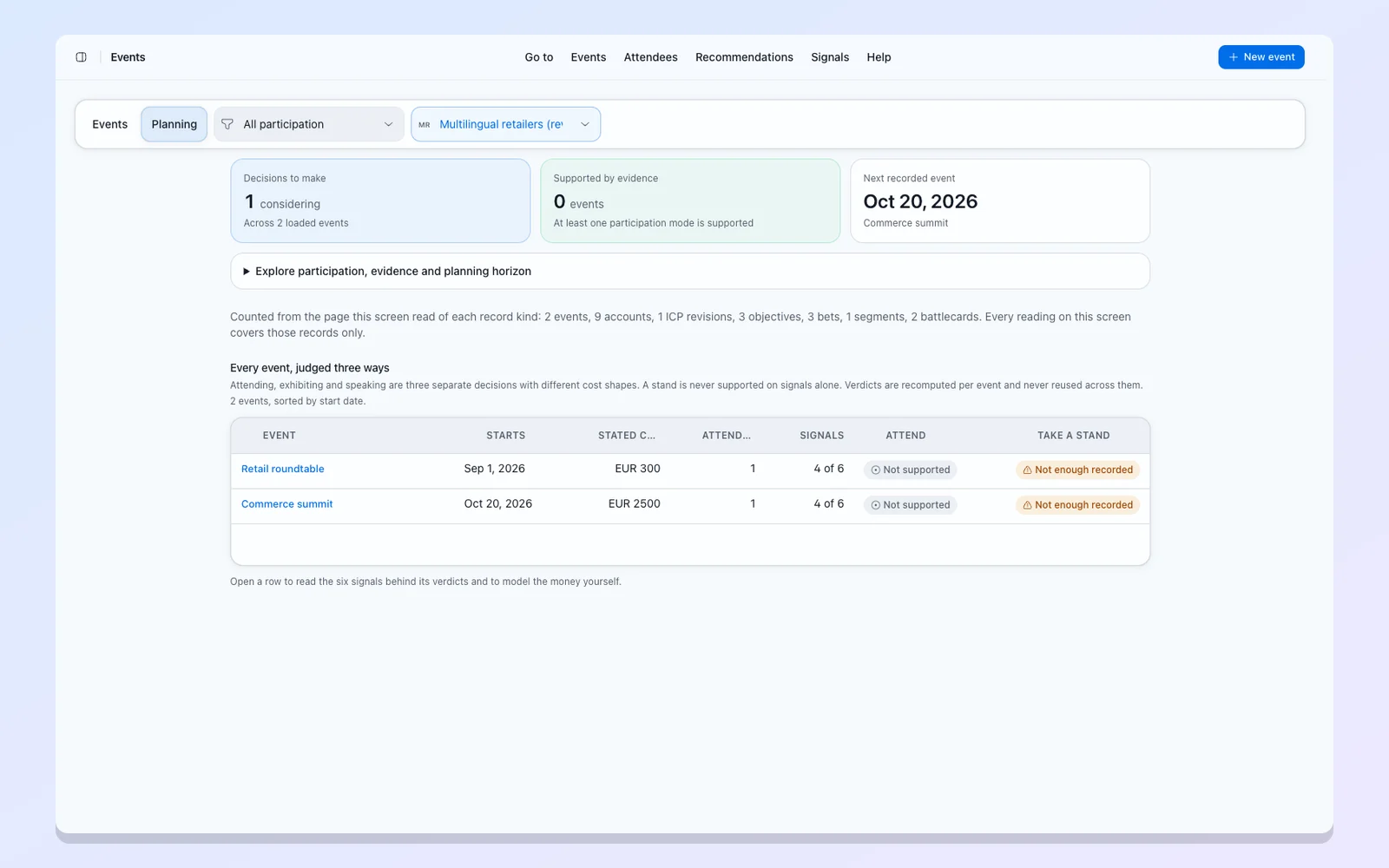
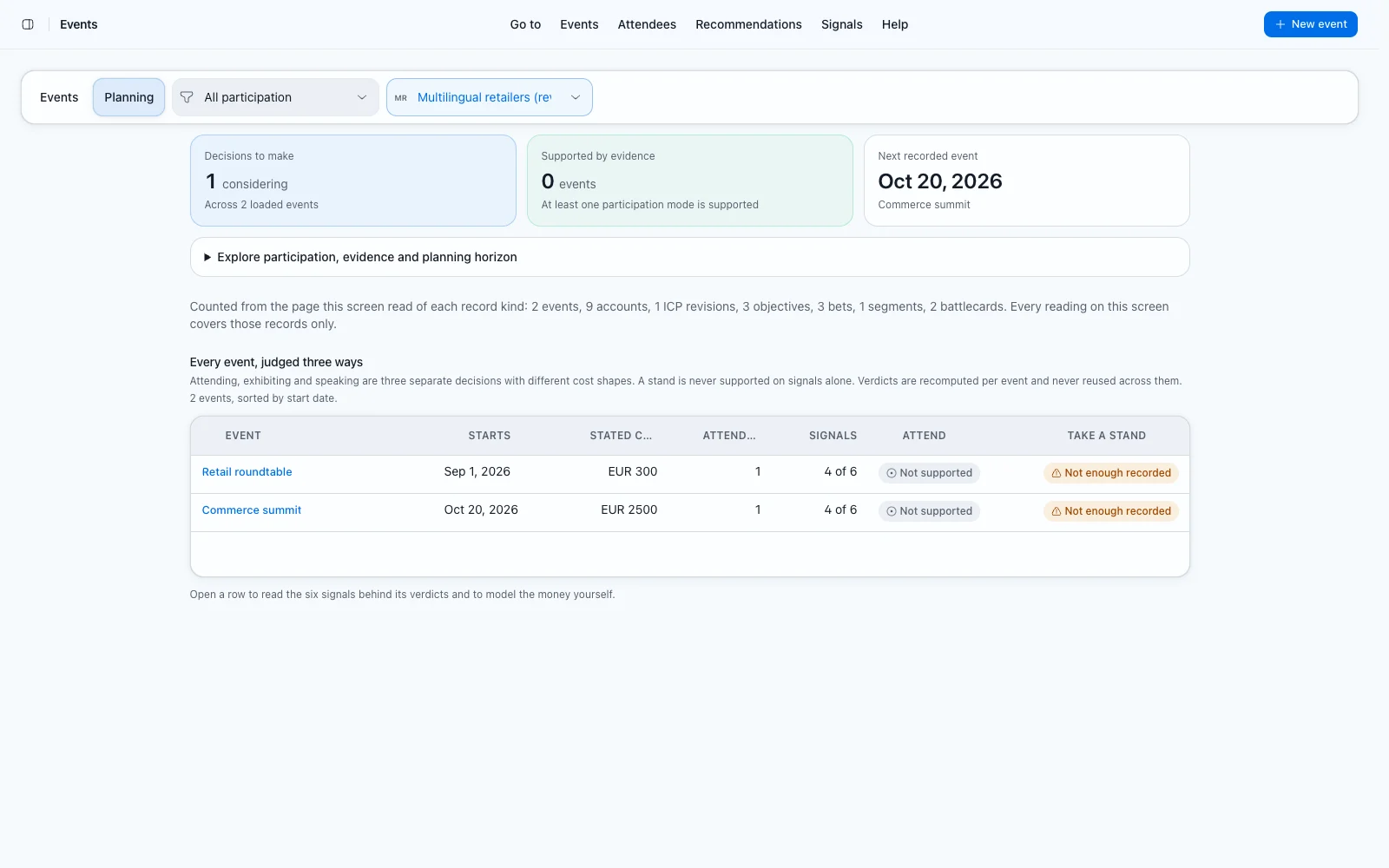
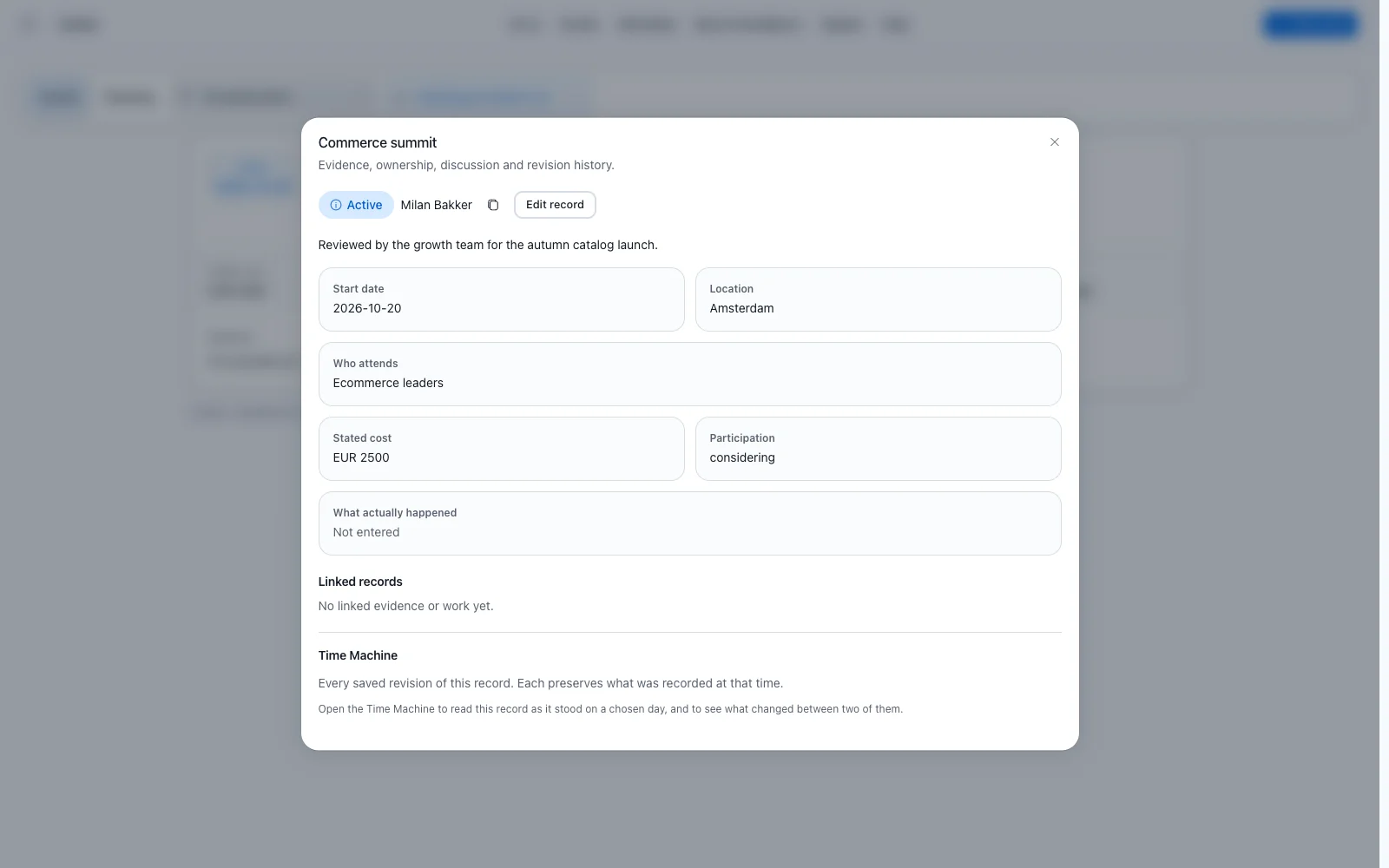
Van leeg record tot iets waar je op kunt handelen, in de volgorde waarin je het doet.
Create the record
Title, start date and participation set to considering. Everything else can follow.
Write what you know
Location as your records name it, attendees one per line, and the cost the event itself states.
Open planning
Filter by participation, pick an ICP revision, read the three verdicts, and expand the signals behind each one.
Model it, then close the loop
Cost, expected qualified conversations, conversation to deal rate, value of a won deal, and a currency. After the event, write the outcome and type what actually happened.
Kernpunten
One name per line, each matched on its own against company titles and domains. Lines that match nothing are listed rather than dropped.
ICP density among recorded attendees, accounts we already track, competitors we hold a card for, partners, whether records name the location, and whether an objective or bet exists.
Once you write the outcome, expected and observed appear in the same four terms, with two lists: what it lets you change, and what it does not let you say.
Eerlijke grenzen
Growth-OS has measured none of those four figures. There is no attendance data, no conversion rate and no deal value behind them, and the numbers live on the page rather than on the event record.
Partners reads unknown permanently, because no record kind stores a partner relationship. It is excluded from every verdict rather than counted as a miss.
Deze pagina's delen records met deze, dus wat je hier schrijft komt daar terug.
De pagina opent met de records van dit project. De ingebouwde gids beschrijft elk veld.